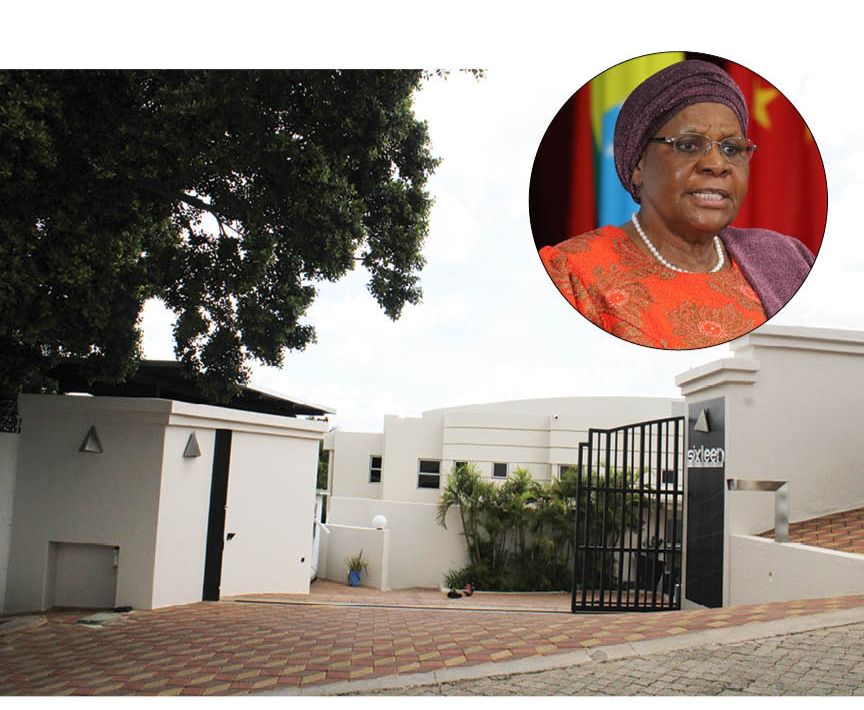




President Netumbo Nandi-Ndaitwah’s ascendance to State House has created a sense of near-euphoria in some quarters in Namibia.
Be that as it may, her characterisation of corruption as ‘treason’ should be lauded by all Namibians who have the country’s interests at heart.
As with most post-colonial states, Namibia has not escaped the scourge of corruption.
Finally, however, there appears to be an appetite to get rid of a cancer that is deeply entrenched in state institutions and lubricates Swapo’s political, social and cultural networks.
In Africa, as political scientists Patrick Chabal and Jean-Pascal Daloz would remind us, anti-corruption discourse is primarily rhetorical and clampdowns are often a convenient way of eliminating political rivals rather than trying to reform the political ‘order’.
We have witnessed euphoria before: when Hifikepunye Pohamba became president in 2005.
He too was lauded as being ‘tough on corruption’ and the architect of an anti-corruption commission that was as effective in dealing with corruption as the Catholic church in dealing with priests sexually abusing young boys.
LEST WE FORGET
Despite president Nandi-Ndaitwah’s noble intentions, we need to remember that Swapo has no history of not being a corrupt party.
Historically, corruption has been witnessed by the likes of Andreas Shipanga, who was on the receiving end of malfeasance by the party’s top leadership in exile.
Acts of corruption since independence are way too many to be discussed here.
To deal with corruption, we must look at our entire political system for what it is and not the way we want it to be.
Stating that ‘corruption is ‘treason’ does not deter the government technocrat, state-owned enterprise executive or minister from looting state resources.
Corruption is acceptable to some provided that those who profit redistribute the loot appropriately.
The Fishrot saga illustrated how millions in public funds were channeled to various Swapo functionaries and acquaintances for personal benefit and the party’s 2017 election campaign.
Further, it has become customary for past tender recipients to contribute to Swapo’s fundraising events with an implied message of ‘do not forget me’.
It is crucial to separate speeches from their substance.
Unsurprisingly, Swapo’s effort, or lack of it, on fighting corruption almost appears to be an afterthought.
It is referenced only twice in Swapo’s Election Manifesto of 2024 and not at all in its implementation blueprint, the Swapo Party Manifesto Implementation Plan (2025-2030).
As with Pohamba’s reign, the expectation that corruption will be dealt with runs faster than government’s willingness to tackle it.
THE PARADOX
President Nandi-Ndaitwah faces a double-edged sword.
To effectively deal with corruption, she would inadvertently decimate the party that put her in power.
Hence, she will need to tread carefully as some comrades are more equal than others.
On another level, it is time for the public to ask critical questions about legal instruments such as the Former President’s Pension and Other Benefits Act (Act 18, 2004) and the Presidential Remuneration and Other Benefits (Act 5, 2016).
Is it morally justifiable for a former president to be given N$40 million cash, or a house of that value built for them, upon stepping down?
In the case of the third administration, this benefit was bestowed on the elected president and the acting president who served a mere 13 months to complete the former president’s term after his unfortunate demise.
Can this be justified in a country where 1.4 million live in poverty? If not, how can it not shock our national conscience?
THE CIRCLES OF ACCUMULATION
There appears to be an unconscious tendency to concentrate attention on corruption at the top as if such practices are confined to the political and economic elite.
Such nuances aside, ordinary citizens usually expect to exchange political support for concrete help as it’s the only way politics makes sense to them.
Thus, material benefits derived from corrupt acts are justified for as long as it remains between the patron and the client.
Put differently, corruption allows patrons to contribute to the collective image of their communities.
For example, the conspicuous display of wealth in Namibia hardly shows signs of resentment as those who overconsume represent those who cannot consume, but want to.
Known dodgy characters are idolised, and young people want to be like them.
In the circles of accumulation, the current beneficiaries of black economic enpowerment are numerically insignificant – they would all easily fit in a University of Namibia lecture hall.
MORAL FABRIC
For these reasons, president Nandi-Ndaitwah’s battle against corruption will only succeed if it transcends her presidency and if the moral fabric of her party and society changes for the better.
We are a country that craves opulence in our everyday lives.
Corruption can be a matter of survival for a lowly paid civil servant and an impetus for upward mobility for the political and economic elite.
As is the nature of politics, the president needs to be reminded that at times people around her vouched for her because they want to ‘eat’, and the ordinary citizens who voted for her want to ‘eat’.
The question is, who is going to ‘eat’ more?
In addition, why did the president fire the deputy prime minister? It cannot be because of the tobacco pipe.
- Rui Tyitende is a political scientist based in Windhoek.
In an age of information overload, Sunrise is The Namibian’s morning briefing, delivered at 6h00 from Monday to Friday. It offers a curated rundown of the most important stories from the past 24 hours – occasionally with a light, witty touch. It’s an essential way to stay informed. Subscribe and join our newsletter community.

The Namibian uses AI tools to assist with improved quality, accuracy and efficiency, while maintaining editorial oversight and journalistic integrity.
Stay informed with The Namibian – your source for credible journalism. Get in-depth reporting and opinions for
only N$85 a month. Invest in journalism, invest in democracy –
Subscribe Now!