







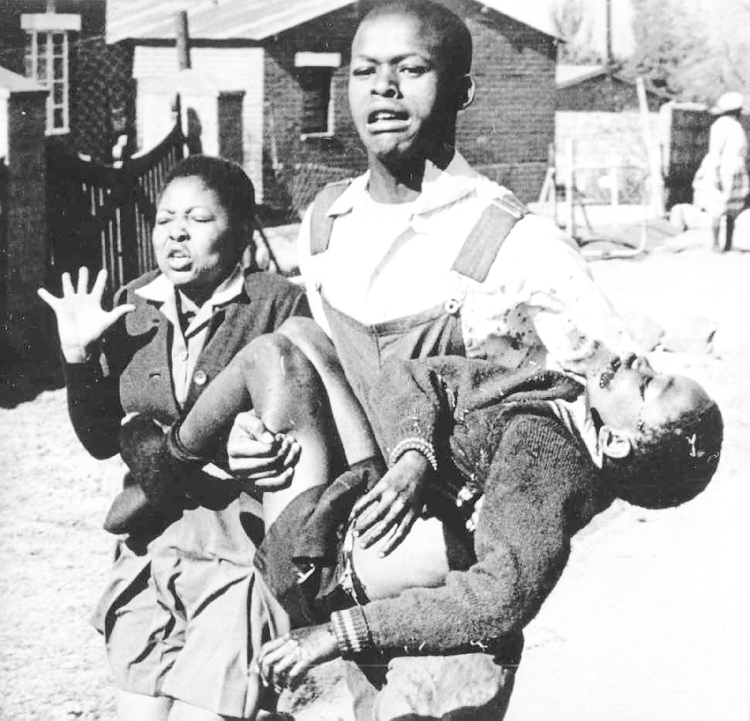
The Day of the African Child has been celebrated on 16 June every year since 1991,when it was first initiated by the Organisation of African Unity (OAU).
It honours those who participated in the Soweto Uprising in 1976 and raises awareness of the continuing need for improvement of the education provided to African children. In Soweto, South Africa, on June 16, 1976, it is estimated that between 10 000 and 20 000 black school children from numerous Sowetan schools began to protest in response to the introduction of Afrikaans as the medium of instruction as well as the poor quality of the education they were receiving. The rally was meant to be a peaceful protest with the intentions to plea with government not to make Afrikaans compulsory in schools. Things got out of control when the police were called in to disperse the crowds and riots broke out. As they marched to Orlando Stadium these young students were met with fierce police brutality. The number of protesters killed by police is usually given as 176, but estimates of up to 700 have been made.
The events of the day highlight a few individuals who took part in the protest. Among those killed, was Hastings Ndlovu, the first child to die from the shootings. Ndlovu’s death did not become as iconic as Hector Pieterson’s because no photographer was present to record it and his name was not immediately known.Twelve year-old Pieterson was one of the casualties of the 1976 uprising. He was killed by a shot fired directly at him, contrary to police claims that he was killed by a bullet ‘ricocheting off the ground’. Pieterson was rushed to a nearby clinic where he was pronounced dead. The Hector Pieterson Memorial and Museum was later opened in Soweto near the place where he was shot in Orlando West, on 16 June 2002. This was done in honour of Pieterson and those who died in the country during the 1976 uprising.We also remember Tsietsi Mashinini, who led the students in protest. Mashinini became a historic icon for his contribution in student politics that led to the protests.
At the time that the peaceful protest was agreed upon, Mashinini was the president of Soweto Students Representative Council (SSRC).
The horrific events of 16 June had resulted in Mashinini having been the most wanted man in the country then. The police offered a R500 reward for anyone with information that would have led to his arrest. In August 1976 Mashinini left South Africa for Botswana and later proceeded to the West Coast of Africa. He finally settled in Liberia where he died in 1990.
In the protests of the following two weeks, more than a thousand protesters were injured. Although the protests of 16 June 1976 resulted in a number of casualties, the youth of 1976 played a role in fighting and overcoming the inequality and oppression caused by apartheid.
On June 16 every year, governments, NGOs, international organisations and other stakeholders gather to discuss the challenges and opportunities facing the full realisation of the rights of children Africa.
– capetalk.co.za; wikipedia.org/wiki/Soweto_uprising