




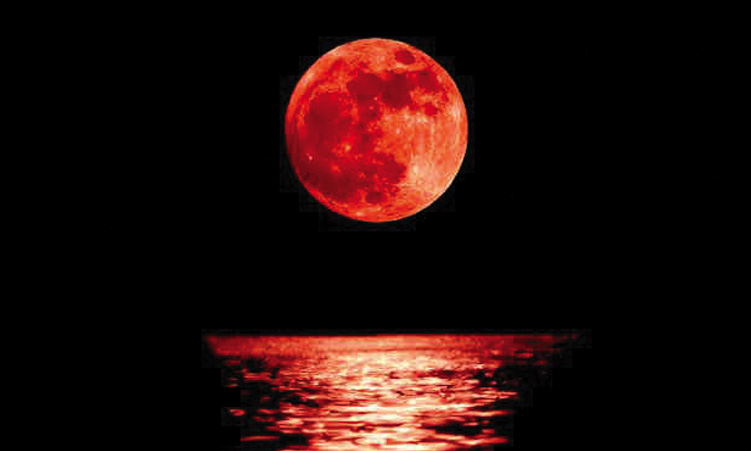
Skywatchers worldwide, including in Namibia, revelled in the total lunar eclipse, also known as a blood moon, on 7 September.
During a total lunar eclipse, the Earth slips perfectly between the sun and the moon causing a shadow to fall on the moon.
Instead of disappearing the moon glows deep red.
Why? Because the Earth’s atmosphere scatters blue light from the sun and only the red and orange light reach the moon that we saw.
This same principle underlies why the sun appears red and orange at sunrise or sunset.
What is blue light?
The sun’s light is not white (as we see it). It’s composed of all the colours of the rainbow and it comes in both short and long waves.
As the light travels towards the Earth it passes through Earth’s atmosphere. Short-wave light such as blue and violet light are more hazardous than long-wave light such as red and orange.
So our atmosphere scatters a significant amount of short-wave light because only a small fraction of short-wave light is needed to support life on Earth.
That’s also why the sky appears blue during the day.
The blue light being scattered prevents it from reaching our eyes. Only the red and orange light travel through the atmosphere.
The day you see the sun turn blue there is danger!
- Vilho Ndeunyema is a meteorologist
In an age of information overload, Sunrise is The Namibian’s morning briefing, delivered at 6h00 from Monday to Friday. It offers a curated rundown of the most important stories from the past 24 hours – occasionally with a light, witty touch. It’s an essential way to stay informed. Subscribe and join our newsletter community.

The Namibian uses AI tools to assist with improved quality, accuracy and efficiency, while maintaining editorial oversight and journalistic integrity.
Stay informed with The Namibian – your source for credible journalism. Get in-depth reporting and opinions for
only N$85 a month. Invest in journalism, invest in democracy –
Subscribe Now!