



Africa is one of the richest biorepositories on Earth, holding extraordinary microbial diversity, vast traditional medicinal knowledge, and populations that have, for centuries, contributed biological samples, genomic data, and indigenous expertise to the global health enterprise.
Yet when vaccines are developed, drugs reach the market, and patents are filed, Africa is rarely at the table where the rewards are divided.
From the negotiating floors of the World Health Organisation (WHO) to the bench-tops of laboratories at universities, the same pattern repeats: African biological resources flow outward, and the benefits – whether intellectual, economic or strategic – trickles back, if at all.
The Covid-19 pandemic taught us a painful lesson.
It made the disparity impossible to ignore. African nations shared pathogen samples with speed and transparency, honouring the spirit of international cooperation that underpins global health security.
In return, by late 2022, only a quarter of Africa’s population was fully vaccinated, while wealthy nations had secured doses in excess of their needs.
GOVERNANCE FAILURE
This was not simply a failure of logistics or manufacturing capacity.
It was a governance failure. A failure to design systems that guarantee reciprocity. That is why the WHO’s Intergovernmental Working Group is now negotiating the Pathogen Access and Benefit-Sharing system: an annex to the WHO Pandemic Agreement that will define binding rules for how pathogen materials and sequence data are shared, and how providing countries are compensated.
The central disagreement at these negotiations is deceptively simple: should access to pathogens be conditional on guaranteed benefits to the providing country?
The Global South says yes. Much of the Global North resists, framing conditionality as an obstacle to rapid pandemic response.
Without it, we simply repeat Covid-19’s inequity in different language.
While multilateral negotiations proceed, a parallel and deeply concerning trend has emerged.
Several high-income nations are now pursuing bilateral agreements with individual African countries, offering short-term health aid in exchange for long-term access to pathogen samples and health databases, sometimes spanning two decades.
As climate change accelerates pathogen emergence and shifts disease vectors across the continent, African surveillance data becomes even more strategically valuable.
Yet the proposed agreements treat this data as freely extractable rather than sovereign wealth.
These arrangements bypass the multilateral solidarity framework being built through the WHO and pose a direct threat to data sovereignty.
Data sovereignty, the principle that a nation retains authority over its own biological and digital resources, is not abstract.
When a foreign entity gains access to a country’s genomic sequences and outbreak surveillance data without binding benefit-sharing guarantees, that nation has surrendered one of its most valuable strategic assets.
For countries like Namibia, where biological diversity and indigenous health knowledge represent significant national wealth, this must be resisted with the same vigour we apply to any other domain of sovereignty.
EXTRACTION AND OWNERSHIP
Resisting extraction is only half the equation.
The other half, and arguably the more transformative half, is building the capacity to generate, analyse, and profit from our own biological knowledge.
Research into the antimicrobial properties of traditional medicinal plants, including species used by indigenous Namibian communities, represents exactly the kind of science that – if governed properly – can generate intellectual property, therapeutic leads, and economic value for the nations and communities that steward these resources.
The key word is ‘properly’.
Ethical research demands community-centred approaches: informed consent, transparent benefit-sharing with source communities, and governance structures that prevent biopiracy before a patent application is ever filed.
This work is not disconnected from the negotiations at the WHO. It is the foundation upon which Africa’s bargaining position must rest.
We cannot negotiate for fair compensation at international level if we lack the domestic scientific infrastructure to demonstrate what our biological resources are truly worth.
Perhaps the most lasting contribution we can make is ensuring that the scientists and laboratory professionals coming through our institutions understand not only the technical dimensions of their work, but also its geopolitical and ethical implications.
A medical laboratory scientist who can perform molecular diagnostics with precision is invaluable.
One who also understands data sovereignty, benefit-sharing obligations, and the history of biopiracy is indispensable.
BATTLEGROUNDS
In Namibian institutions, integrating these dimensions into our teaching and research supervision is no longer optional – it is essential.
The students we train today will be the ones defending Namibia’s biological sovereignty tomorrow, whether in a WHO negotiating room, a pharmaceutical boardroom, or a national laboratory.
Africa’s biological future will not be shaped by the nations that extract our resources.
It will be shaped by continent’s scientists, policymakers, and institutions who choose to build, protect, and govern those resources on our own terms.
The WHO negotiations on pathogen access and benefit-sharing are one battleground. Our own laboratories, universities and boardrooms are another.
The work is urgent. The stakes are existential. What remains is the courage and conviction to defend what is ours.
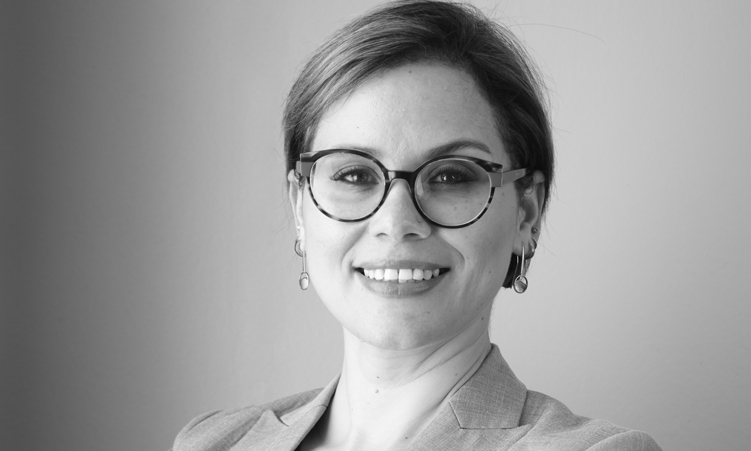
- Taime Sylvester is a researcher and senior lecturer in clinical health sciences at the Namibia University of Science and Technology. She represents Namibia in global negotiations at the World Health Organisation.
In an age of information overload, Sunrise is The Namibian’s morning briefing, delivered at 6h00 from Monday to Friday. It offers a curated rundown of the most important stories from the past 24 hours – occasionally with a light, witty touch. It’s an essential way to stay informed. Subscribe and join our newsletter community.

The Namibian uses AI tools to assist with improved quality, accuracy and efficiency, while maintaining editorial oversight and journalistic integrity.
Stay informed with The Namibian – your source for credible journalism. Get in-depth reporting and opinions for
only N$85 a month. Invest in journalism, invest in democracy –
Subscribe Now!