



THE powerful Dutch dairy industry is scrambling to cash in on exploding demand for whey, a cheese by-product once used mainly in cattle feed now turned global nutritional hit.
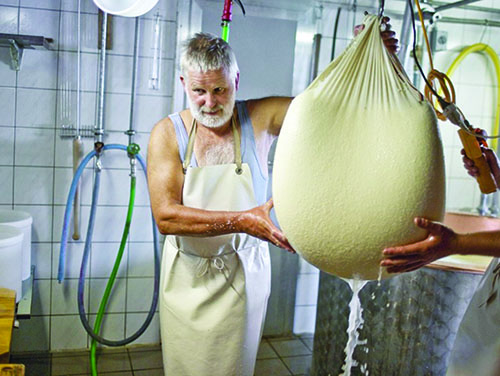
Over the last decade whey powder, produced when milk separates into curd during the cheese-making process, has become a multi-billion-euro industry.
Analysts say research has proven that whey, once the ugly step-sister to its more widely-consumed sibling, cheese, is in fact one of the planet’s best sources of natural protein.
From bodybuilding supplements to infant formula and fortified meals for the elderly, demand for whey has skyrocketed over the last five years, with even non-dairy companies wanting a piece of the action.
And analysts predict that is likely to keep growing, driven by a taste for imported dairy products from Asia’s growing middle class and the expanding ranks of elderly around the world.
Last year whey powder and proteins represented a global market of 7.6 billion euros (US$9.8 billion), up 36% from 2011, said Tage Affertsholt, dairy market specialist at the Danish-based 3A Business Consulting Group.
By 2017, the market will have expanded to nine billion euros, Affertsholt predicted.
The demand for whey “just keeps growing, irrespective of the relative poor performance of the global economy,” he told AFP.
“Some people used to say whey is a by-product. Today cheese has become something of a by-product.”
Investment in the whey industry since 2012 has topped three billion euros globally, including two billion euros in Europe.
“At one stage whey was worth pretty much nothing, only good to go into cattle feed,” Rabobank senior dairy analyst Kevin Bellamy told AFP.
“Today, whey forms a major part of many dairy companies’ profits.”
The Dutch dairy industry, renowned for its top-quality cheese, is fighting for its stake in the rapidly expanding market.
The Netherlands is already one of Europe’s top producers of demineralised whey powder – a key ingredient of baby formula – and Dutch companies are investing heavily in the research and development of whey-based products.
“All the major dairy companies in the world are squaring up for control of the liquid whey industry,” added Affertsholt.
One of the world’s largest dairy cooperatives, FrieslandCampina, now produces over 350 000 tonnes of “whey dry matter” a year.
“Whey is a ‘hot product’ that resonates with the consumer,” Fraser Tooley, FrieslandCampina’s business developer, told AFP.
FrieslandCampina has invested some 600 million euros to improve technology, processing capacity and quality systems at its plants, including whey production.
Last year, it opened an innovation centre at Wageningen University in the central Netherlands, staffed by around 320 researchers, many focused on whey.
Tooley said the centre is developing a range of new whey-enhanced products –including high-protein products for the elderly – but declined to go into more detail.
“Whey plays a core part in the company’s future strategy,” said Tooley.
SIGHTS SET ON CHINA
Fonterra plans to export whey from there to the massive half-billion-euro Chinese market, said Jan Willem van der Windt, the company’s European financial director. “Whey is not available (in China) because there’s no cheese production. We need to source this in Europe, where the cheese market is,” he said.
The Dutch dairy industry, which produces popular cheeses like Gouda, is therefore well-positioned to tap into rising demand for imported children’s milk formula among Chinese consumers, who are mistrustful of local products after several food scares.
“The demand for dairy products has shot up, particularly in developing countries like in China,” said dairy analyst Affertsholt.
In an age of information overload, Sunrise is The Namibian’s morning briefing, delivered at 6h00 from Monday to Friday. It offers a curated rundown of the most important stories from the past 24 hours – occasionally with a light, witty touch. It’s an essential way to stay informed. Subscribe and join our newsletter community.

The Namibian uses AI tools to assist with improved quality, accuracy and efficiency, while maintaining editorial oversight and journalistic integrity.
Stay informed with The Namibian – your source for credible journalism. Get in-depth reporting and opinions for
only N$85 a month. Invest in journalism, invest in democracy –
Subscribe Now!