



As the world marks International Women’s Day 2026 on Sunday, conversations about gender equality dominate headlines.
We speak of wage gaps, leadership gaps and opportunity gaps, yet we rarely confront the mechanism that sustains them – a global tax system designed to protect those who have the most.
A tax system that allows multinationals and the super-rich to escape accountability is also a system that shifts the burden onto others. And when revenue disappears, it is women who pick up the tab.
We are living through a period of visible setbacks.
Multilateral institutions are being weakened. Development aid is being cut. Social protection systems are under strain. These shifts create uncertainty and allow inequality to deepen without meaningful counterbalance.
Gender injustice sits at the centre of this crisis.
Women, particularly in the Global South, carry a disproportionate share of the burden created by unjust tax systems and austerity policies. When funding for childcare, healthcare or public services is reduced, women step in.
They absorb unpaid labour. They compensate for shrinking state support. The social organisation of care becomes even more unequal.
The numbers reveal the scale of the injustice. Across all regions, women still earn only 61% of what men earn per hour worked.
When unpaid care work is factored in – the invisible labour that sustains families and economies – women’s effective income drops to just 32%.
This is not simply inequality; it is structural injustice.
There has been progress. According to the World Bank’s Global Findex, 73% of women in low- and middle-income economies now hold a financial account.
More women are saving formally and participating in digital payments. Yet 700 million women remain excluded from the financial system altogether – without access to tools that enable economic resilience and autonomy.
Another World Bank report, ‘Women, Business and the Law’, makes a crucial point: The economic exclusion of women is not a technical oversight.
It is a political choice. Laws guaranteeing equality often exist on paper but are not fully implemented. As a result, women face barriers to employment, credit, entrepreneurship and ownership. Entire economies lose productivity and growth as a consequence.
This is not an administrative gap. It is a question of power – who has access to resources and rights, and who remains systematically excluded.
But this legal exclusion intersects with another powerful force: the global tax system itself.
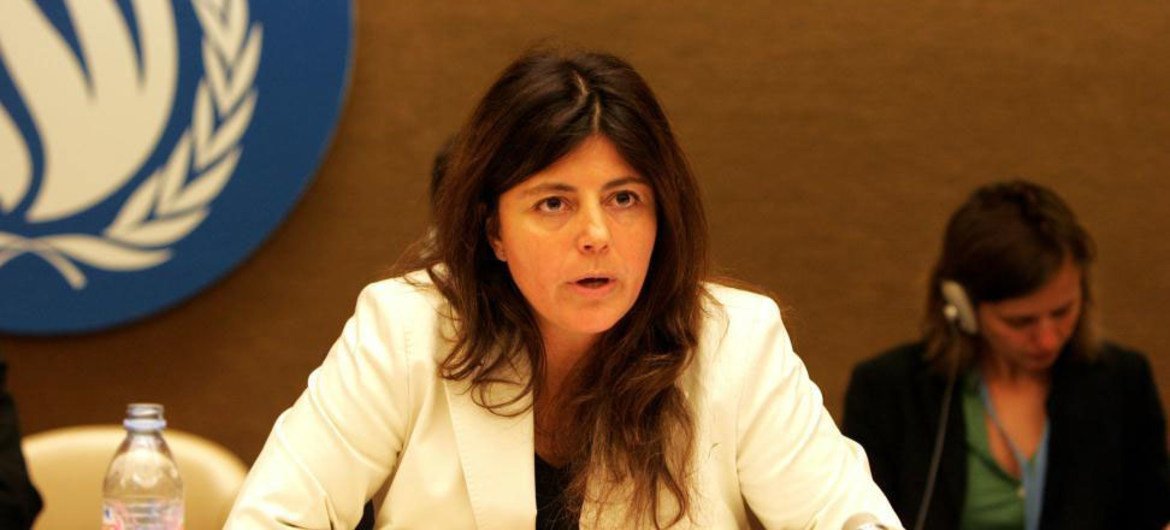
– Magdalena Sepúlveda is a human rights lawyer and international expert on economic and social policy. She is a member of the Independent Commission for the Reform of International Corporate Taxation and previously served as the United Nations special rapporteur on extreme poverty and human rights.
In an age of information overload, Sunrise is The Namibian’s morning briefing, delivered at 6h00 from Monday to Friday. It offers a curated rundown of the most important stories from the past 24 hours – occasionally with a light, witty touch. It’s an essential way to stay informed. Subscribe and join our newsletter community.

The Namibian uses AI tools to assist with improved quality, accuracy and efficiency, while maintaining editorial oversight and journalistic integrity.
Stay informed with The Namibian – your source for credible journalism. Get in-depth reporting and opinions for
only N$85 a month. Invest in journalism, invest in democracy –
Subscribe Now!