



• PUNDY PILLAY and DAVID EVERATTWhile much froth and babble has accompanied the debate over ‘Radical Economic Transformation’ in South Africa, the bottom line remains: The country urgently needs real economic transformation.
Calling it ‘radical’ is to invite politicking and point-scoring and take our eyes off the ball – the need for real economic transformation.
How far South Africa has moved in altering the economic landscape is open to debate. It certainly has moved, but how far, and at what point will monopolistic tendencies be challenged?
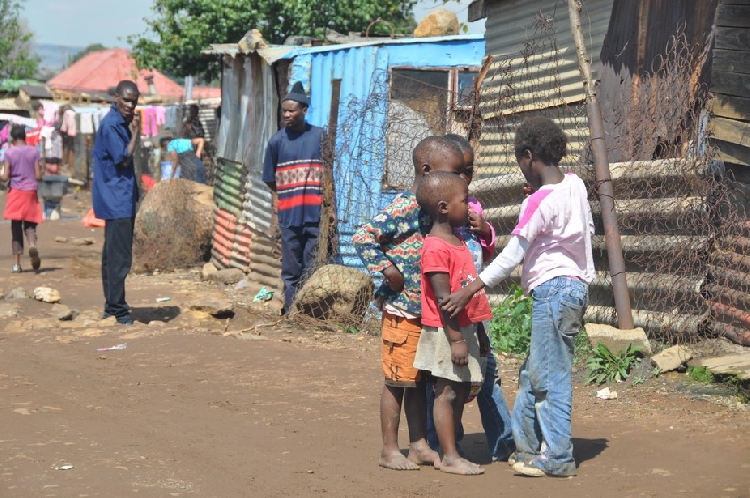
While much has been achieved in many areas – meeting basic needs for example – there’s still an enormous distance to travel, and impatience is growing.
Driving Economic Policy
For the democratic period, economic growth has been singularly anaemic. Unemployment has been rising consistently, and income inequality has worsened. This despite a plethora of policy documents, the most recent being the National Development Plan.
However, the real causes of the economic crisis are obscured by the current political crisis. It has allowed mainstream economists to reinforce the call for “fiscal discipline” as if that were the only factor stifling growth and development.
In business and government, economic policy is reduced to the maintenance of macroeconomic stability. Fiscal discipline is an important precondition for economic growth, but not a sufficient condition.
We must ask: Who is in charge of economic policy?
Radical economic transformation suggests, at the bare minimum, that government must take charge of economic policy, including macroeconomic policy, so that the country’s real development needs can be addressed.
It’s correctly noted in the National Development Plan that the country’s economy needs to grow at a much faster rate, 6% at least, to begin to address its socioeconomic challenges, high unemployment, inequality and poverty.
The current growth trajectory, measuring 2-3% over the past 20 years is just not enough. It will not deliver inclusive growth to address the challenges. Rather, it will merely accentuate inequalities in the country.
And, if sustained, the prevailing recession spells disaster. Serious transformation is required.
If radical economic transformation is to serve the needs of the bottom 60% of the population, it needs to move beyond the catchy political slogans of nationalising land, banks and mines, and ‘kicking out’ whites. It requires a rigorous analysis of why economic and social policy have not delivered growth and development.
There seems to be consensus that the country needs industrial development. It is largely considered the solution to overcoming commodity dependence. However, there is no consensus on who must drive it – the private sector or a strong “developmental state”?
South Africa has to find the right balance between the power of market forces and private initiative on the one hand, and the obligation of governments to provide an enabling framework and to intervene in favour of the public interest on the other.
In spite of being a late starter on industrial policy, considerable progress has been made; but much more can be done with increased funding for growth in and greater diversification of manufacturing.
Combating Monopolies
Almost everyone agrees that small business has to be a critical component of any development strategy. But the sector has been characterised by a singular lack of success. The country needs to ask why.
One reason is the domination of markets and exploitation of the small business sector by big business. The history of large supermarkets and their ruthless exploitation of small suppliers tells the story of the highly unequal and exploitative relationship that exists in virtually all sectors of the economy. What is government doing to ensure that small business can survive in the monopolistic environment which characterises contemporary South African capitalism?
‘Black economic empowerment’ needs to progress beyond an elite few who are closely linked to the ruling party. Sectors such as tourism – overwhelmingly white-owned – offer opportunities for creative thinking about new, broadly beneficial forms of ownership.
And real black economic empowerment is clearly linked to the question of land reform. The country needs to break up monopolistic ownership, but also to ensure that land is used productively.
Developmental State
Given the current political climate, there’s a great deal of scepticism about the potential of the developmental state. This comes on the back of the pervasive governance crises afflicting parastatals such as, among others, the power utility Eskom and South African Airways.
However, there is no alternative to the developmental state. The country cannot leave economic development to the private sector, whose immense wealth has been built on its version of the free market and exploitation of cheap labour.
But for the developmental state to be effective, it has to be competent. There are numerous global examples of success in this area that can be followed. But is South Africa learning from them?
Driving Fundamental Change
Clearly, fundamental economic change is required, and soon. But saying so, and achieving it, are very different. South Africans must separate the current political noise around radical economic transformation from the basic fact that business as usual is not an option. A lot has to change, and fast.
Going back to the tenets of quasi-socialism of the 1950s – nationalisation of mines and banks, land seizures and so on – are not ‘radical’ in the 21st century economy.
In an age of information overload, Sunrise is The Namibian’s morning briefing, delivered at 6h00 from Monday to Friday. It offers a curated rundown of the most important stories from the past 24 hours – occasionally with a light, witty touch. It’s an essential way to stay informed. Subscribe and join our newsletter community.

The Namibian uses AI tools to assist with improved quality, accuracy and efficiency, while maintaining editorial oversight and journalistic integrity.
Stay informed with The Namibian – your source for credible journalism. Get in-depth reporting and opinions for
only N$85 a month. Invest in journalism, invest in democracy –
Subscribe Now!