



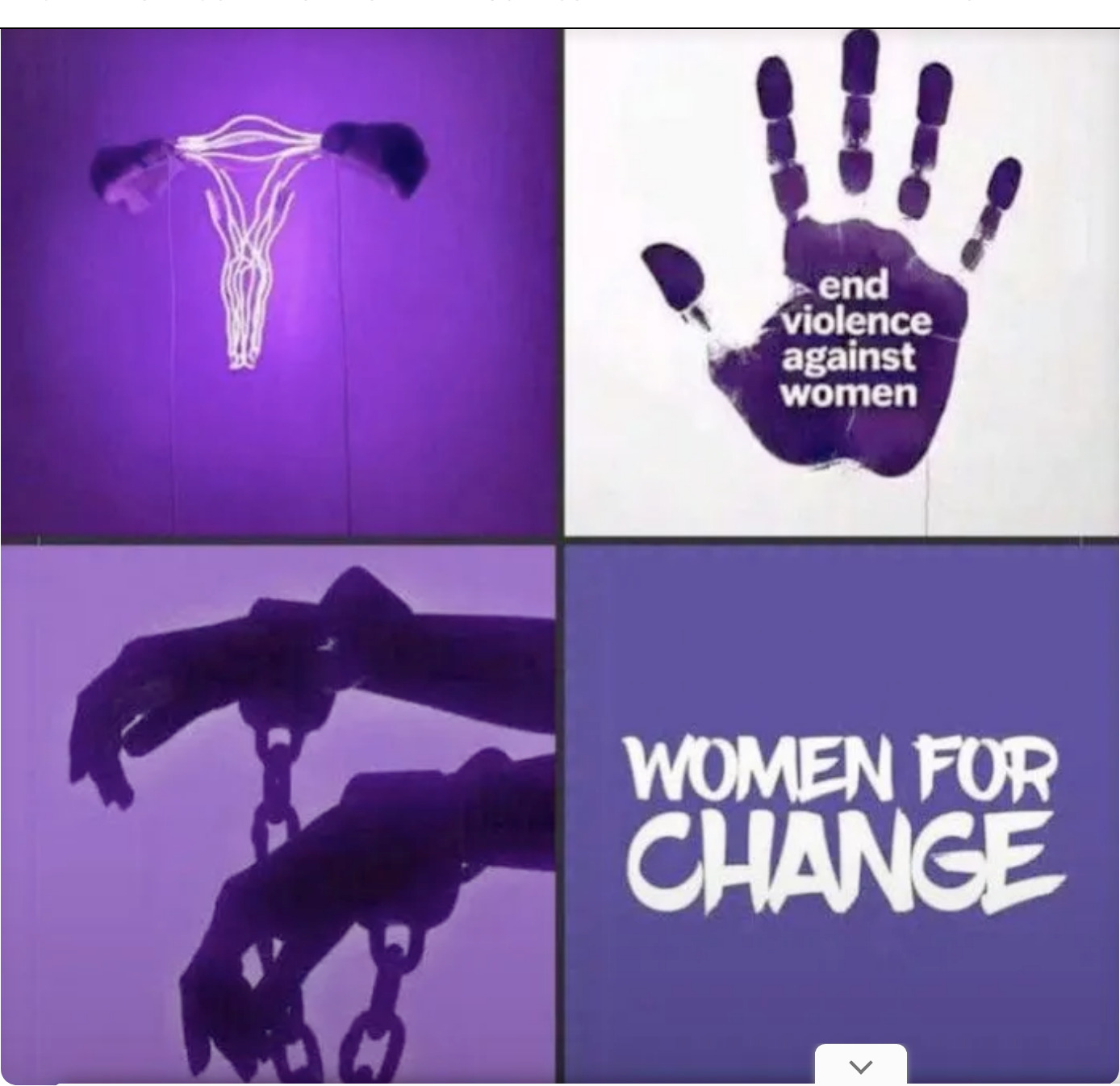
Unless you have been living under a rock, you must have seen people change their profile pictures to purple on social media, even the random acquaintance on WhatsApp you haven’t seen in ages.
But what is up with all the profile picture changes?
Women’s rights advocacy group Women For Change is urgently calling for gender-based violence (GBV) to be declared a national disaster. They also urged social media users to put up purple profile pictures in solidarity.
On 21 November, South African women and members of the the lesbian, gay, bisexual, transgender, queer (LGBTQI+) community are being urged to stage a nationwide shutdown in protest against GBV and femicide.
But what if you changed the picture and want to do more? Or what if you haven’t but want to participate in other ways? We list several ways you can stand in solidarity.
A great way to effect change is by signing and adding your name to Women For Change’s ‘Declare GBVF a National Disaster’ petition.
In the petition, the group called on the government to immediately declare gender-based violence and femicide (GBVF) a national disaster.
“This crisis demands the immediate mobilisation of national resources and unwavering political commitment on an unprecedented scale to strengthen and transform the national response to the epidemic of violence against women and children. The South African government needs to show its commitment towards this epidemic by funding the implementation,” it states.
South Africans are also encouraged not to work or do paid or unpaid labour. In addition to that, in true shutdown fashion, people are urged not to spend money and withdraw from the economy for one day.
One can also join the 15-minute standstill by lying down for 15 minutes at 12h00 to honour the women murdered every day. People are also encouraged to wear black to stand in mourning and resistance.
Statistics
According to a study done in November 2024, 33.1% of all women aged 18 years and older had experienced physical violence in their lifetime. This translates to a staggering 7 310 389 women when generalised to the South African population.
The study also indicates that lifetime physical violence was significantly higher among black African women compared to women of other race groups, and higher among those cohabiting but not married, compared to married women and women who were not currently in a relationship.
Regardless of their partnered status, 9.9% of women had experienced sexual violence in their lifetime, which is around 2 150 342 women.
Furthermore, physical and or sexual violence was higher among women aged 35 to 49 years than those aged 50 years and older.
Regarding the prevalence of recent forms of physical intimate partner violence, there were no significant differences observed between ever-partnered women with a disability (4.3%) and women without a disability (5.3%).
In an age of information overload, Sunrise is The Namibian’s morning briefing, delivered at 6h00 from Monday to Friday. It offers a curated rundown of the most important stories from the past 24 hours – occasionally with a light, witty touch. It’s an essential way to stay informed. Subscribe and join our newsletter community.

The Namibian uses AI tools to assist with improved quality, accuracy and efficiency, while maintaining editorial oversight and journalistic integrity.
Stay informed with The Namibian – your source for credible journalism. Get in-depth reporting and opinions for
only N$85 a month. Invest in journalism, invest in democracy –
Subscribe Now!