



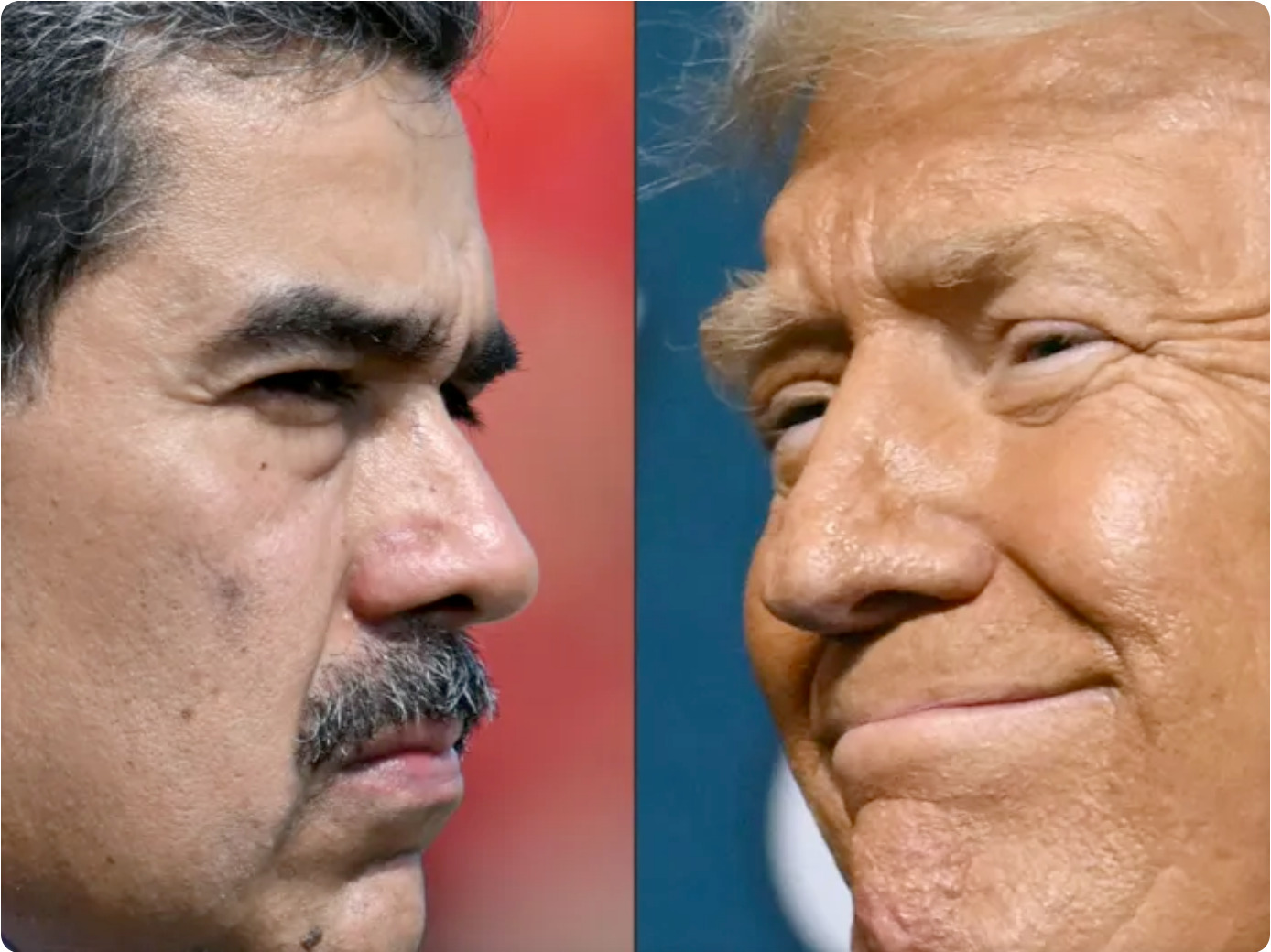
The world entered 2026 with not a whimper but a political bang after the United States (US) military invaded Venezuela, capturing and extrajudicially renditioning Venezuelan president Nicolás Maduro and his wife, Cilia Flores.
The capture and invasion came months after several strikes, an announcement in late November 2025 to close off Venezuela’s airspace, and the US state department urging American citizens to immediately leave Venezuela and avoid all travel to the country in December 2025.
According to media reports, more than 150 US Armed Forces aeroplanes bombed infrastructure across northern Venezuela in support of an apprehension force that landed in the capital city of Caracas.
Venezuelan vice president Delcy Rodríguez denounced the capture of Maduro and Flores as a kidnapping.
THE WORLD REACTS
Initial reactions from some governments were cautious and diplomatic. Paraguay says it is monitoring the situation, while Canada has called on all parties to respect international law and says it stood with the Venezuelan people in their desire to live in a peaceful and democratic society, adding that Ottawa was engaging international partners and closely tracking developments.
British prime minister Keir Starmer says the United Kingdom was not involved and stresses the need to uphold international law, adding that he wishes to speak to allies, including president Donald Trump.
European leaders struck a more critical but measured tone. French President Emmanuel Macron has called for a “peaceful and democratic” transition in Venezuela, while German chancellor Friedrich Merz says Berlin would evaluate the US actions, emphasising that principles of international law must apply.
Stronger concern was expressed by multilateral bodies and regional groupings. The United Nations (UN) secretary general, through his spokesperson, says the developments constituted a dangerous precedent and warns that the rules of international law, including the UN Charter, appeared not to have been respected.
South Africa’s department of international relations has called on the UN Security Council to urgently convene to address the situation.
In a joint statement, Brazil, Chile, Colombia, Mexico, Spain and Uruguay have rejected the US military action, saying it contravened fundamental principles of international law and set an extremely dangerous precedent for regional peace, security and the rules-based international order, while endangering civilians.
The group reiterates that Venezuela’s crisis must be resolved through peaceful means, dialogue and respect for the will of its people, without external interference.
Individual leaders went further. Brazilian president Lula da Silva says the bombings on Venezuelan territory and the capture of its president crossed an unacceptable line and amounted to a grave affront to Venezuela’s sovereignty. Mexico says it strongly condemns and rejects the US’ actions as a clear violation of Article 2 of the UN Charter.
Russia’s foreign ministry has fully condemned the move, describing it as an act of armed aggression against Venezuela, while China’s foreign ministry says it was shocked and strongly condemns the use of force against a sovereign state and its president.
In stark contrast, Israeli’s Benjamin Netanyahu has congratulated Trump on what he describes as “bold and historic leadership,” praising the decisive action and the US troops involved.
WHY IS THE US ATTACKING VENEZUELA?
The US has previously launched a series of strikes against what it calls “drug boats in international waters” since early September last year. The administration claims the operations are part of a push to combat drug trafficking, which Trump claims is responsible for American deaths.
These maritime strikes have resulted in scores of casualties. At least 83 people have been killed in nearly two dozen attacks on suspected vessels. The most recent reported strike on a suspected drug boat took place on 2 September 2025.
While the Trump administration officially links its policy to tackling illegal drugs and human trafficking, policy analysts in the US point to deeper strategic motives.
Analysts argue that the US’ aggressive stance is rooted in Venezuela’s possession of the world’s largest proven oil reserves and Trump’s seeking to establish
In an age of information overload, Sunrise is The Namibian’s morning briefing, delivered at 6h00 from Monday to Friday. It offers a curated rundown of the most important stories from the past 24 hours – occasionally with a light, witty touch. It’s an essential way to stay informed. Subscribe and join our newsletter community.

The Namibian uses AI tools to assist with improved quality, accuracy and efficiency, while maintaining editorial oversight and journalistic integrity.
Stay informed with The Namibian – your source for credible journalism. Get in-depth reporting and opinions for
only N$85 a month. Invest in journalism, invest in democracy –
Subscribe Now!