




When independence came 36 years ago, I was soaked by the rains that made their providential entry, as if attempting to obliterate a past that distorted all of us and ushering in hope for a more humane future.
As I recall the memorable events as they unfolded before my very eyes in the presence of notables from all corners of the world, at Independence Stadium in Windhoek, my emotions cracked when the South African flag was lowered and the new Namibian flag hoisted.
Was this the moment where liberation met emancipation? The promise of a new beginning that could over time, reverse and transcend the corrosive poverty and inequality bequeathed by two colonial rulers?
Would the empathic imagination propel the full human capacity towards self-reliance? Would democracy become the politics of the ordinary through human agency and social citizenship?
ACHIEVEMENTS
These questions still haunt me 36 years later.
This does not mean that nothing meaningful has been achieved.
Among these: maintaining the integrity of the Constitution, the foundation of our social and political arrangements, safeguarding key components of the rule of law, sustained state provision for a limited form of social protection, high levels of budgetary allocation to the social sector, notably to public health and education, the maintenance of formal peace (even if social peace has as yet not been fully achieved), the presence of a small, active civil society, inclusive of free, pluralistic media, the promotion and advancement of gender equality, a sound framework for environmental management, significant investment in key public infrastructure and some diplomatic success on the African continent, in the world and in multilateral institutions, such as the United Nations (UN).
Many of Namibia’s achievements have to be seen in the context of the immediate aftermath of the end of the bipolar world, the symbolic capital of a protracted liberation struggle, the agency of a particular coterie of leaders with a cosmopolitan bent, the political culture of the founding president and his successors that privileged benign hegemony over predatory hegemony (Swapo did not privatise liberation, opting instead to corporatise it) and the depth of international goodwill and support by many governments and the UN.
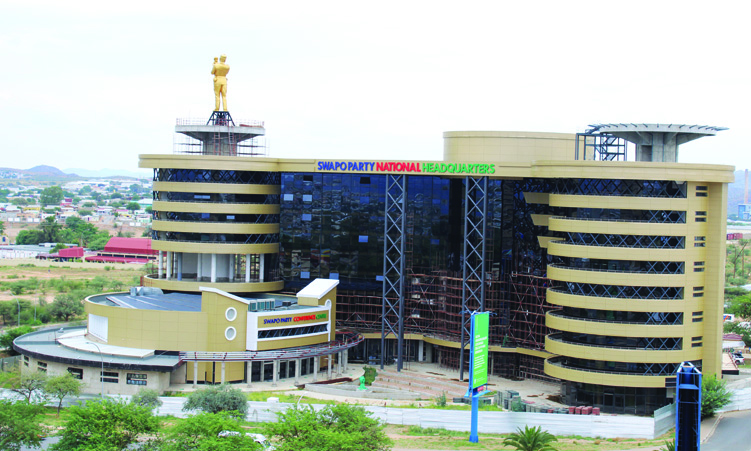
Moreover, while the dominant party, Swapo, has experienced significant electoral erosion, it provides the stability that foreign investors, the government and regions require. Compared to other former national liberation movements (NLMs) in the region, Swapo has not imploded, at least not yet, into a heap of failing capacities.
SOME FAILURES
Arguably, the core failure of the state and the government as its agent, has been the dogged and persisting reality of inequality and poverty after apartheid. Under apartheid, Namibia like South Africa, had racial capital.
After independence, the government practices a form of class capitalism informed by a variant of neoliberalism. While there are elements of social democracy, policies both mitigate and reproduce poverty, reflecting the contradictory nature of social democracy in the post-colonial south.
A close reading of the political economy of the country will show that putting the blame solely on the ideology of neoliberal economics, may be a partial reading of a more nuanced reality.
Under Swapo, the policy mantra of the governing party has been both pro- and anti-neoliberalism.
In some cases, policy was pro-poor; in others, non-poor social groups such as the politically-connected benefited through a shameless collusion with capital. Inherent in the pro-poor agenda has been a setting that disadvantaged organised labour and the unemployed and undervalued the spatial dimensions of development, resulting in ever-deeper regional disparities.
A social democratic distributional regime would require more meaningful representative and decentralised democracy at the regional and local state levels, electoral reform, as well as participatory budgeting.
Social democracy would have to impose on the affluent. Not only would the rich need to contribute fairly through taxation, but they would also need to compromise in terms of earnings.
The poverty gap is simply too large. Multidimensional poverty is inherently linked to inequality.
Linked to the above nexus between poverty and inequality, is the festering disease of corruption, a particular risk as the country may be on the verge of a carbon economy. In Namibia, I would argue, that corruption is more than when public assets are treated by mostly powerful individuals as their private property.
The public-private duality in the Western understanding of corruption, ignores a more fundamental reality – the existence of two moral universes: the primordial public and the civic public. The first, the primordial public, hinges on the construct of ‘the economics of affection’ and is based on kinship, clan, region, ethnic and linguistic affiliation.
The civic public is associated with the former colonial state and its institutions in the independent state such as the military, police, civil service and the system of taxation. From the perspective of the first, the ‘primordial public’, it is morally acceptable to cut corners in the civic space, as long as it benefits those in the primordial public.
Since independence we have witnessed corrosive examples of ‘the economics of affection’ made possible through the rottenness of elites. So much for those socialist ideals of egalitarianism and non-hierarchical leadership!
The challenges of poverty, youth unemployment and crippling public debt fueled by an addiction to borrowing, are the result of policy incoherence.
Notwithstanding the National Development Plans and Vision 2030, the country does not have a coherent, integrated policy framing of how to respond to the Food, Energy, Water and Job Nexus. Yes, there are components of such a framework in place, but at the level of formulation and implementation, silo thinking and action continue to dominate.
FUTURE
Casting one’s eye toward the next three decades or more and mindful of past and present trends and demographics, one has to be reminded that the post-apartheid sate was built on the foundations of the apartheid state and pre-apartheid antecedents.
Namibia did become for the first time a constitutional state.
The apartheid institutions of indirect rule were mostly dismantled, although new traditional leaders emerged and retained some functions and powers subject to the constitution.
The post-apartheid state, like its predecessors, was the vehicle for governments representing a wide range of interests to intervene in a capitalist economy.
The state expanded at the expense of the economy to become a dominant player in it and built a superstructure that weighs heavily on the fiscus. For thousands, the state became an opportunity to join the growing middle class linked to it. The state was, for the most part, a modern state, with some meaningful fiscal and regulatory capacity. It was more uneven as a developmental state with limited capacity in key domains of social policy and education for the present and coming century.
At the time of writing, new threats to environmental and social sustainability have emerged. Climate change and mega projects such as in the nascent oil and gas sector and poorly controlled mining activities may well spawn a new elite that feeds the insatiable appetite of the global capitalist economy.
Honest, hard working Namibians might find themselves at the mercy of a new form of class compromise that might deepen inequality and poverty in the country.
The mantra ‘One Namibia, One Nation’ could become a nostalgic artefact as the country enters a period of social decline and turbulence.
André du Pisani is emeritus professor of politics at the University of Namibia. A born Namibian, he has an active interest in critical conversation, art, literature, philosophy and the environment.
In an age of information overload, Sunrise is The Namibian’s morning briefing, delivered at 6h00 from Monday to Friday. It offers a curated rundown of the most important stories from the past 24 hours – occasionally with a light, witty touch. It’s an essential way to stay informed. Subscribe and join our newsletter community.

The Namibian uses AI tools to assist with improved quality, accuracy and efficiency, while maintaining editorial oversight and journalistic integrity.
Stay informed with The Namibian – your source for credible journalism. Get in-depth reporting and opinions for
only N$85 a month. Invest in journalism, invest in democracy –
Subscribe Now!