



CENSORING what children watch is no new thing in many households. The majority of parents allow their children to only watch cartoons with the belief that these supposedly wholesome animation shows on are ‘safe’.
Have you ever sat down with your children to watch what they watch, though? You may be surprised that many of the shows you thought were harmless are actually a lot more sinister than you think.
While channels like Nickelodeon cater more for the tween and teenage market, channels like Cartoon Network and Disney are seen as the perfect choice for younger children.
Parents Celeste and Peter Jacobs say that because they have two young children in the house aged between four and nine, they are very strict in what they let their children watch.
“We have a nanny who stays with the girls after school and I always tell her that she must not watch soapies while the girls are with her,” Celeste said.
She added that she does not watch a lot of television and apart from knowing the names of the more popular shows like ‘Dora The Explorer’ and the film ‘Frozen’, she is not too concerned about what her daughters are watching as long it is children’s animation.
Other parents go as far as blocking certain channels on their television bouquets and only leaving some children’s channels accessible.
In the past few years, multi-media platforms have shown with increasing alarm the types of shows children are exposed to. Various websites and even YouTube videos have shown a number of examples of animated programmes and movies that do not even require parental guidance but which contain disturbing images and subliminal messages.
It is a fact that when it comes to matters of perception, interpretations vary. Legendary animation films ‘Aladdin’, ‘The Lion King’ and ‘The Little Mermaid’ have all been accused of having at least one subliminal sexual message. While some of the creators of these movies can explain away these messages, others are just too blatant.
In 1999, Disney announced that the home video releases of the movie ‘The Rescuers’ be recalled. The movie was attacked by many for allegedly objectifying women with the picture of a topless woman being visible in one of the scenes. Disney’s explanation for this was that the scene was a re-edition and was accidentally included during post production nearly 20 years after the original.
Another disturbing cartoon is that of ‘Who Framed Roger Rabbit’. Although some parents would not let their children watch the film as it was seen as leaning more towards the adult animation, a lot of children still watch the movie without the supervision of their parents.
In one of the scenes, the character Jessica is involved in a car crash and after being thrown out of her dress, is lifted revealing her under parts with no underwear.
In ‘The Little Mermaid’, part of the castle has been highlighted to show that it resembles a penis. Looking at the picture closely one can see it, but again media reports said that it is just another matter of perception and interpretation.
Social worker Samantha Vries says that although it seems like children will not see these messages, they prove to have photographic minds and the more they see of something, the more they start concentrating on it.
“A child can see a topless woman in a cartoon the first time and not mind it, but when they see it the second time, they will start paying attention to such images. So the next time they see a topless woman in a magazine, they will link it to their cartoon. It is very important to make sure you know what your children are watching,” Samantha said.
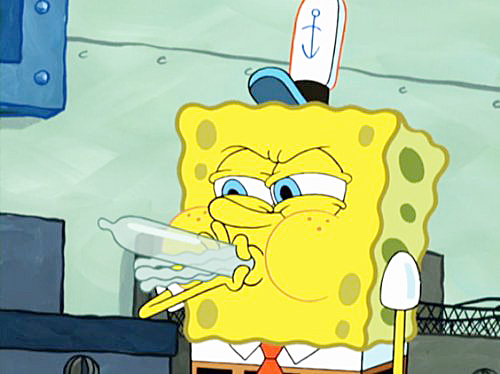
‘SpongeBob SquarePants’, ‘Dora The Explorer’ and ‘Ben 10’ are amongst the most popular children’s programmes on television today. There has recently been a number of YouTube videos and online articles detailing allegations of sexual content being slipped into ‘SpongeBob SquarePants’ scenes.
Some of those alleged sexual innuendo include the title character blowing up a balloon that looks exactly like a condom and in another scene, a character is advised not to “drop the soap”.
While the grown-ups may get these jokes and a toddler may not, according to psychologist Leandre Kurtz, the more children watch these shows, especially the older children, the more these images and jokes are engraved in their minds.
She added that these are all dots and with outside exposure from other images, shows and even songs, an image is created in their mind.
She also said that it is important for parents to be absolutely aware of what their children are watching. Just because it is animated or plays on a children’s channel does not make it child-friendly.
It is also advisable that parents check with their children’s daycare, pre-school and nannies with regards to what their children watch. The internet is full of information regarding different children shows and talking to a child educator can also help in identifying what exactly your children may watch, what seems good for them and what is not.
It is a fact that television is a whole other world of education and children learn a lot from it. While some parents take drastic measures such as no television for their children at all, there are some very good children’s programmes out there that can teach your children what they may not learn at school or anywhere else.
In an age of information overload, Sunrise is The Namibian’s morning briefing, delivered at 6h00 from Monday to Friday. It offers a curated rundown of the most important stories from the past 24 hours – occasionally with a light, witty touch. It’s an essential way to stay informed. Subscribe and join our newsletter community.

The Namibian uses AI tools to assist with improved quality, accuracy and efficiency, while maintaining editorial oversight and journalistic integrity.
Stay informed with The Namibian – your source for credible journalism. Get in-depth reporting and opinions for
only N$85 a month. Invest in journalism, invest in democracy –
Subscribe Now!