



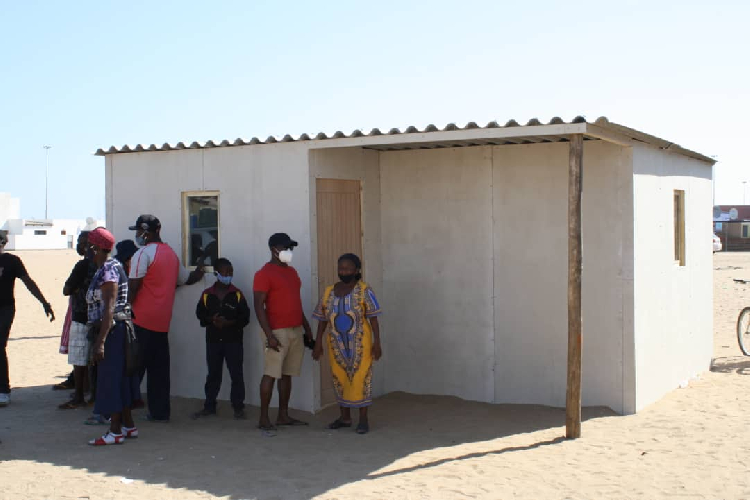
PRESSED for time, the Municipality of Walvis Bay has decided to have 400 ultra low-cost affordable housing units constructed with alternative building material.
The municipality says the plan to construct low-cost houses is accelerated by the Covid-19 pandemic, which is a challenge for people living in backyard shacks, as well as the relocation of residents of the Otweya informal settlement where scores of shacks were destroyed in a fire near the end of July. There are more than 1 200 people living in Otweya informal settlement.
The Walvis Bay municipality last week put out a tender for the construction of about 200 ultra low-cost houses at Farm 37 and 200 in the town’s Kuisebmond area. The municipality wants the houses completed by end of October 2020 with no toilets.
The houses to be built at Farm 37 are part of the establishment of a new township.
The proposed houses, according to the tender document, are structures measuring 7,4 metres by four metres, without ablution facilities, and should be
built with alternative material readily available. However, the document did not specify what sort of material should be used. The municipality says it only plans to set-up communal portable toilets later.
Jack Manale, manager for housing and property at the town’s municipality, confirmed the tender has been issued and that construction material will be determined by proposals from builders.
“The tender is out, and once we receive the documents we will see what sort of materials are available on the market. It is a requirement in the tender document for whoever is tendering to explain what sort of materials are available on the market,” said Manale.
This is despite alternative building materials not being approved in terms of building regulations. According to the council’s standard building regulations, the use of alternative materials other than bricks is currently only permitted at Tutaleni, which is regarded as a designated resettlement area.
“Once we have received the document, then the council will see if it is SABS approved and banks can finance. There are some that banks approve, such as the foam bricks. It is not something that needs extra approval from the council,” said Manale.
Some of the players in the local construction industry refused to participate in the tendering process, describing it as an insult to the people.
“Why should they waste money on alternatives? We want to make money, but this money [from this tender] I don’t want. They can get something better that banks can approve and suitable for the Walvis Bay weather. What is important is that we restore the dignity of the people,” said a business person who declined to be named.
A concerned member of the public, Charl Baard, is of the opinion that the municipality should have invited local entrepreneurs to have a round-table discussion to look at the issue of affordable housing and what the industry can offer.
“We want to be part of the housing delivery but we cannot do so if we have no idea what the project entails. We don’t want to be part of politics, we just want to build decent houses for the people,” said Baard.
In an age of information overload, Sunrise is The Namibian’s morning briefing, delivered at 6h00 from Monday to Friday. It offers a curated rundown of the most important stories from the past 24 hours – occasionally with a light, witty touch. It’s an essential way to stay informed. Subscribe and join our newsletter community.

The Namibian uses AI tools to assist with improved quality, accuracy and efficiency, while maintaining editorial oversight and journalistic integrity.
Stay informed with The Namibian – your source for credible journalism. Get in-depth reporting and opinions for
only N$85 a month. Invest in journalism, invest in democracy –
Subscribe Now!