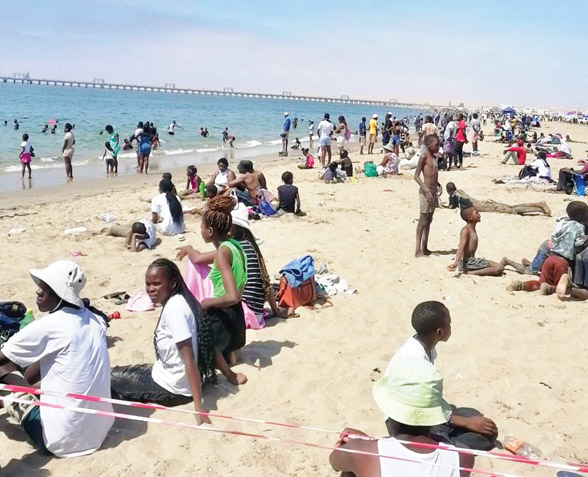




Veteran paramedic Brian Low died on Thursday after entering the ocean at Henties Bay to rescue two children caught in a rip current.
Low (60) was well-known in the coastal emergency services community.
John Makina, head of traffic law enforcement and emergency services at the Municipality of Henties Bay, describes Low as more than a founding member of Lifelink Emergency Services.
“He was a calling answered daily, a steady presence in moments of fear and a man whose life was devoted to the safety of others,” Makina says.
According to him, Low’s service began in Zimbabwe, where he started as a police officer in Harare before becoming a firefighter and later a paramedic.
“Each chapter of his life was shaped by a single purpose, to serve humanity,” he says.
Recalling the impact of Low’s death, Makina adds: “In moments of crisis, my first call was always Brian. Now I find myself asking, ‘who will be my first call now?’
Tributes have poured in from across Henties Bay and the emergency services community.
Juanita Gouws wrote on Facebook that Low had been “very helpful and kind”, adding that she would never forget the lessons he taught her during her time at the Henties Bay fire brigade.”
Friend Dion Thomas describes Low as a lifelong companion.
“Fly with the angels, Brian, my best friend for so many years. I’m truly heartbroken at your passing. Thank you for the precious years of friendship we shared,” says Thomas.
Water safety experts and emergency services are urging the public to exercise extreme caution at beaches following the death of Low.
Monarch Lifeguard owner Marthin Muyenga warns that coastal waters pose a higher risk than many people realise, particularly in areas not designated for swimming.
He says strong and unpredictable currents, including rip currents, can overpower swimmers within minutes.
“One cannot just find open water or a beach and think they can swim there. Some areas have currents that can sweep you away very quickly,” Muyenga says.
He urges the public to swim only at beaches where lifeguards are on duty and conditions are clearly marked as safe.
Muyenga adds that many people lack basic ocean survival skills.
He further cautions against alcohol consumption near water.
“Parents are coming to the beach while they are under the influence of alcohol with their kids. They don’t want to take precautionary measures until things happen,” he says, calling for stronger public education during peak holiday periods.
According to Erongo police spokesperson inspector Serafine Kandjimi, a 21-year-old man was the first to attempt to rescue the two boys after they began struggling in the ocean.
He was overpowered by strong currents.
Emergency services, including Lifelink paramedics and the Henties Bay municipality traffic section, responded and managed to bring the boys to safety.
Low entered the water during the rescue effort but did not make it out.
He was declared dead at the scene.
The police have opened an inquest.
In an age of information overload, Sunrise is The Namibian’s morning briefing, delivered at 6h00 from Monday to Friday. It offers a curated rundown of the most important stories from the past 24 hours – occasionally with a light, witty touch. It’s an essential way to stay informed. Subscribe and join our newsletter community.

The Namibian uses AI tools to assist with improved quality, accuracy and efficiency, while maintaining editorial oversight and journalistic integrity.
Stay informed with The Namibian – your source for credible journalism. Get in-depth reporting and opinions for
only N$85 a month. Invest in journalism, invest in democracy –
Subscribe Now!