



Jose ‘Pepe’ Mujica, a former leftist rebel who became Uruguay’s president from 2010 to 2015, has died at the age of 89.
Uruguayan president Yamandu Orsi announced his death in a social media post on Tuesday.
Mujica had been diagnosed with throat cancer in 2024.
“It is with deep sorrow that we announce the death of our comrade Pepe Mujica,” Orsi wrote. “Thank you for everything you gave us and for your deep love for your people.”
Mujica became an icon even beyond Uruguay’s borders, as he led his country to pursue environmental reforms, legalise same-sex marriage and loosen restrictions on marijuana.
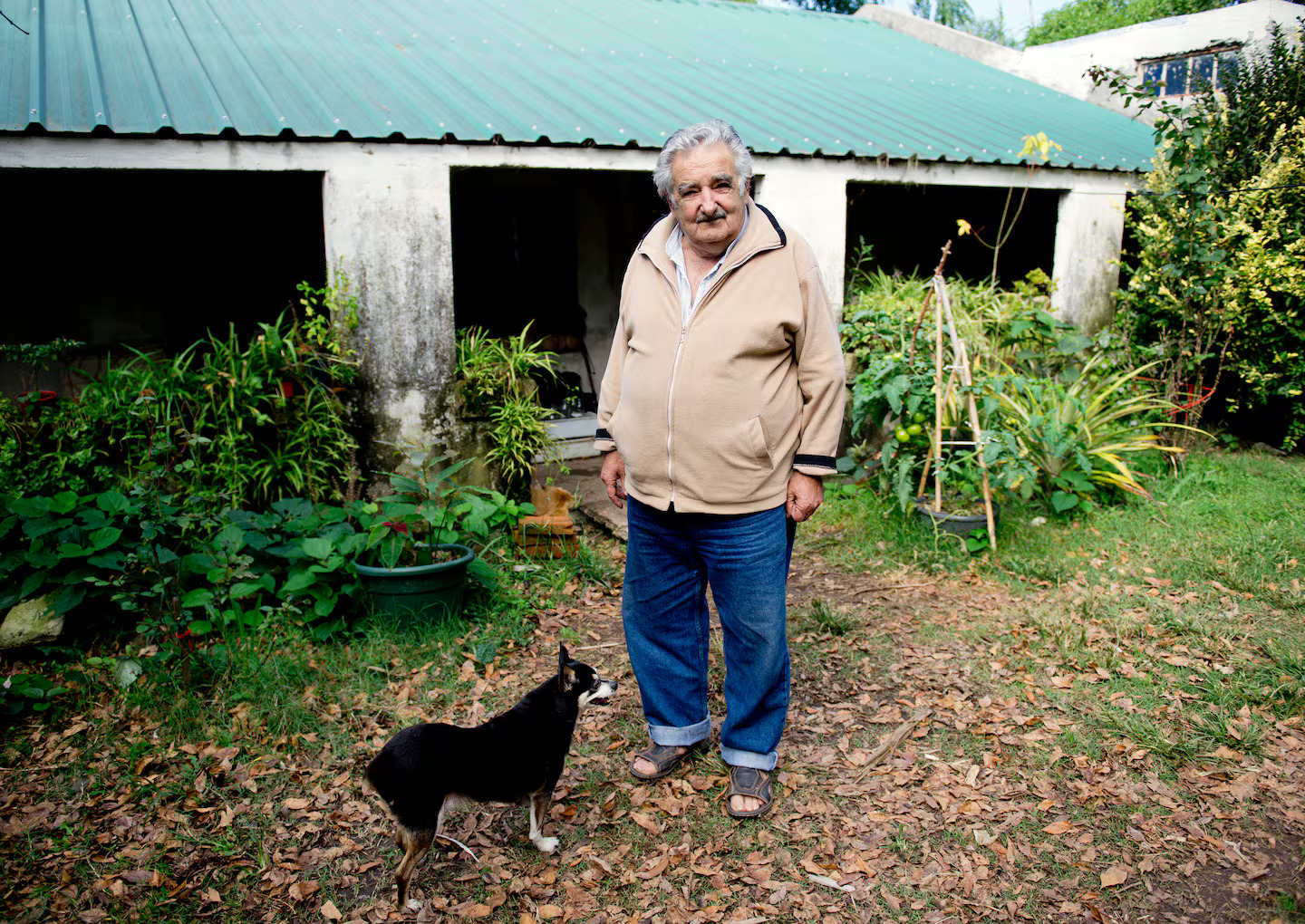
He also was celebrated for maintaining his simple lifestyle even during his presidency, when he eschewed the presidential palace in favour of the farmhouse where he grew flowers.
He told Al Jazeera in 2022 that such opulence can “divorce” presidents from their people.
“I believe politicians should live like the majority of their people, not like the privileged minority lives,” Mujica explained.
News of Mujica’s death has been met with tributes from around the world, particularly from figures on the Latin American left.
“We deeply regret the passing of our beloved Pepe Mujica, an example to Latin America and the entire world for his wisdom, foresight, and simplicity,” Mexico’s president Claudia Sheinbaum wrote on social media.
Chile’s president Gabriel Boric, meanwhile, remembered Mujica’s optimism in a post of his own.
“If you left us anything, it was the unquenchable hope that things can be done better,” he wrote.
For his part, Colombian president Gustavo Petro offered a tribute to Mujica that doubled as a call for greater collaboration and integration across Latin America.
“Goodbye, friend,” Petro wrote in the wake of Mujica’s death, as he envisioned a more unified region. “I hope Latin America will one day have an anthem.”
Mujica became a symbol to a generation of political leaders helping to steer their countries out of military dictatorships during the latter half of the 20th century. Like Petro, Mujica was a former rebel fighter.
As a young man in the 1960s he led armed fighters as part of the far-left Tupamaros movement, which was known for robbing banks, taking over towns and even exchanging gunfire with local police.
Mujica was arrested multiple times and spent nearly a decade in solitary confinement in a prison where he endured torture.
A government crackdown on the left-wing fighters helped pave the way for a coup in 1973, followed by a brutal military dictatorship that perpetrated human rights abuses like forced disappearances. But in 1985, Uruguay began its transition to democracy, and Mujica and other rebel fighters were released under an amnesty law.
In an age of information overload, Sunrise is The Namibian’s morning briefing, delivered at 6h00 from Monday to Friday. It offers a curated rundown of the most important stories from the past 24 hours – occasionally with a light, witty touch. It’s an essential way to stay informed. Subscribe and join our newsletter community.

The Namibian uses AI tools to assist with improved quality, accuracy and efficiency, while maintaining editorial oversight and journalistic integrity.
Stay informed with The Namibian – your source for credible journalism. Get in-depth reporting and opinions for
only N$85 a month. Invest in journalism, invest in democracy –
Subscribe Now!