



Environmental commissioner faces development vs water dilemma
Does economic development and 500 jobs for a relatively small community outweigh the risk of widespread contamination of the only drinking water source for the commercial and communal farming communities that live on a huge transboundary aquifer system underlying three countries?
This is the question that the Namibian environmental commissioner in the Ministry of Environment and Tourism will have to grapple with.
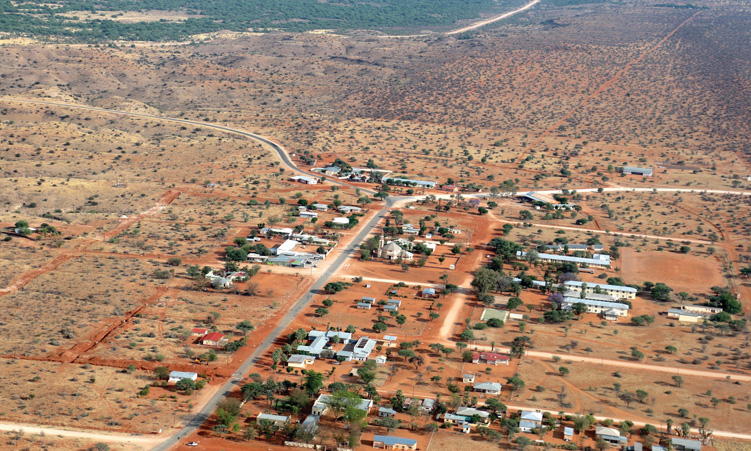
In 2021, the Uranium One mining company, through its local subsidiary, Headspring Investments, announced its intentions to extract uranium in the Stampriet Transboundary Aquifer System at farm Tripoli, near the small town of Leonardville, through in-situ leaching methods.
This has divided both parliament and public opinion ever since, culminating in a public participation process.
URANIUM MINING IN NAMIBIA’S AQUIFER
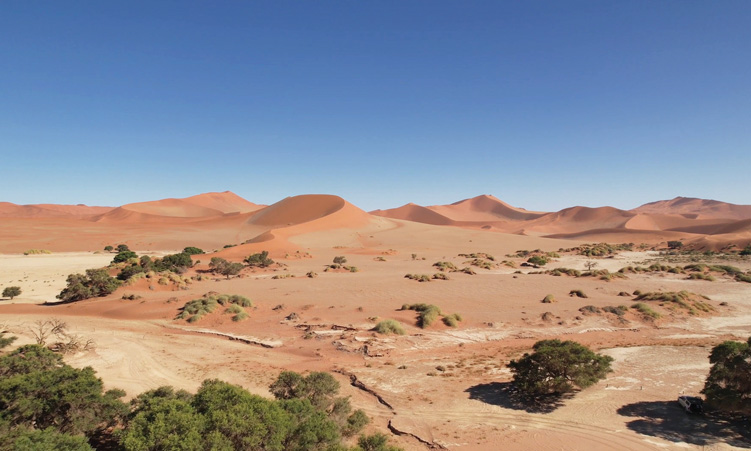
When thinking about Namibia, one may think of the incredible landscapes of Sossusvlei or the Namib Desert and their distinct orange colour palette. ‘Uranium’ would probably not be the first association that would come to mind.
Nevertheless, with a production of 5 613 tonnes of uranium in 2022, it accounted for 11% of the world’s total productionfor that year alone.
This ranked Namibia the third biggest producer, right behind Canada (15%) and Kazakhstan (43%).
Considering the current scale of Namibian uranium production is already among the highest, one may wonder why a new mining site near a town with only 432 inhabitants is suddenly catching so much attention.
To fully grasp the importance of the decision that is on the table, it is important to first look into the type of deposit, the proposed mining method and the potential risks involved for this particular case.
The deposit near Leonardville is referred to as sandstone-hosted uranium.
Such deposits form underground in porous sandstone aquifer layers that form part of thick accumulations of sediments in marine or lacustrine basins.
Conventional mining is not possible due to the ore’s relatively low grade and the associated costs of conventional mining, which would make the deposit uneconomic to mine.
IN-SITU LEACHING: CHEMICALS IN, URANIUM OUT
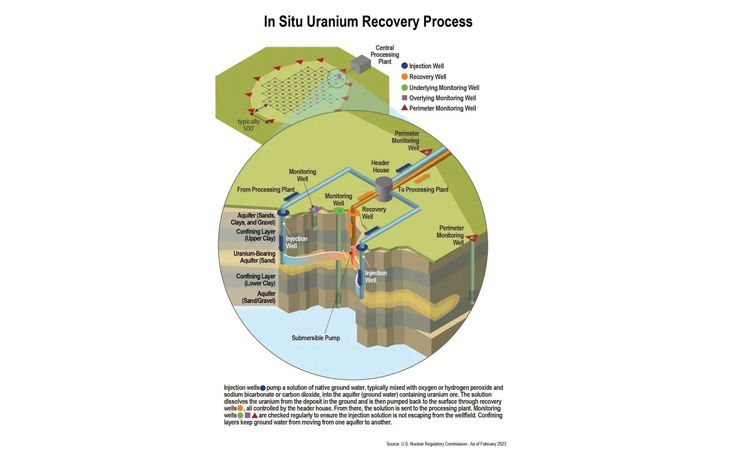
During in-situ leaching, chemicals like sulfuric acid or ammonium carbonate and oxidants are injected into the aquifer through dedicated injection wells (e.g. boreholes).
These chemicals, so-called ‘lixiviants’, dissolve the uranium.
The resulting mine solution is pumped to the surface through ‘production wells’. Nowadays, in-situ leaching, also known as solution mining or in-situ recovery, is employed extensively worldwide.
Certain segments of the mining industry label it the most cost effective and environmentally acceptable method of mining.
The method is used in Kazakhstan, the United States (US), Australia, China, Uzbekistan and Russia, so the plans for Namibia are not new.
“In Kazakhstan, the US and Australia, in-situ leaching methods are indeed being used to extract uranium, but in none of those countries does it concern potable water,” says one of the driving forces behind the Namibian Stampriet Aquifer Uranium Mining Association (Sauma), who preferred to remain anonymous.
Sauma has, with assistance from geological, hydrogeological, environmental and legal experts, united farmers, game ranchers and lodge owners, opposed the mining project at Leonardville.
“In Australia, no mining is allowed at all in sources of drinking water,” the Sauma representative says.
COMPLETE DEPENDENCE ON STAMPRIET AQUIFER
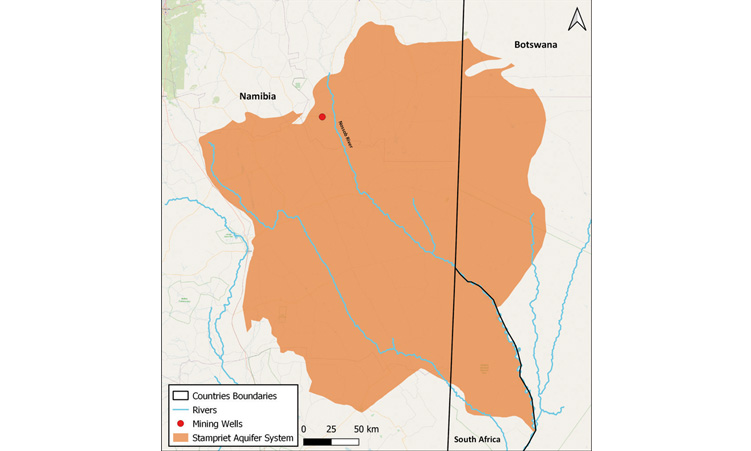
The resource that is being alluded to is the groundwater stored in the Stampriet aquifer, also known as the Stampriet Artesian Basin. And the importance of this aquifer cannot be understated.
In the entire area, the two main rivers, the Auob and Nossob, flow only about once every 10 years during exceptionally good rains, and then only briefly.
There is no permanent surface water.
It is the drinking water in the underground sandstone aquifers that is the lifeblood of the whole region, for the people, their animals, the economy and the ecology.
Between 92 and 95% of this underground water is used for town supply and irrigation.
Farm boreholes and some guest lodges account for the balance.
Irrigation produces fruit and vegetables for the Namibian people and fodder for animals.
Total annual abstraction from all aquifers was 20 million m3 in 2015 and has been increasing steadily since then.
RISKS EXTEND BEYOND NAMIBIA’S COUNTRY BORDERS
Although almost three quarters of the in total area of 86 647m2 that is covered by the Stampriet aquifer is in Namibia, this can by no means be considered a national matter.
This is primarily due to the topography of this area. With the Namibian side having a higher elevation than its two neighbouring countries, the groundwater flow is in the direction of Botswana and South Africa.
There are about 7 000 boreholes in the Namibian sector.
The 2016 Groundwater Resources Governance in Transboundary Aquifers report on the Stampriet aquifer, with International Groundwater Resources Assessment (Igrac) involvement, pointed to a very gradual fall in the water table level over time but an almost complete recovery approximately every 10 years after the summers with exceptional rains.
This suggests there is tremendous interconnectivity right across the basin.
Some irrigation schemes pump up to 100m3 per hour out of the aquifer.
This induces a groundwater flow rate many times higher than the in-situ leaching flow rate between injection and production wells over an area several kilometres in diameter.
Irrigation, consequently, has the potential to draw polluting mine solution out of the mine area and into the rest of the aquifer.
This mine solution has uranium concentrations thousands of times above the World Health Organisation standard for safe drinking water.
POTENTIAL RISKS FOR SOUTH AFRICAN WILDLIFE
Beyond the impacts that this would have on household water supply and livelihoods throughout the whole region, a deterioration of the groundwater quality could have severe consequences for wildlife as well.
Significant portions of the aquifer underly the Botswana’s wildlife management areas and the nature and wildlife preservation park of the Kgalagadi Transfrontier Park that covers both Botswana and South Africa.
These pristine environments, with only few developments, are at the end point of the Nossob River, as well as the groundwater flow of the Stampriet aquifer.
Considering these risks of the planned activity for South Africa, the department for water and sanitation says:
“The general groundwater flow direction is from north-west in Namibia to south-east into the Northern Cape Province of South Africa, making it a downstream country.
Even though South Africa mainly uses the unconfined Kalahari aquifer, groundwater is presumed to seep upwards from the confined Auob and Nossob aquifers and discharges into the Kalahari formations, according to the study of 2016.
“This study did not cover potential impacts due to mining activities in the area since these activities did not exist; however, it did identify groundwater pollution and salinisation as problems in this transboundary aquifer, with groundwater quality generally decreasing towards Botswana and South Africa.
The Stampriet aquifer-wide Strategic Action Plan, which was endorsed by the Orange-Senqu River Commission, for implementation identified four strategic objectives, one of which is to ‘Maintain current groundwater quality by limiting anthropogenic and geogenic concentrations’.
Two of the actions under this objective are:
n ‘to safeguard groundwater from mining activities’, and
n ‘to develop groundwater protection zoning measures’.
For South Africa, this groundwater resource is not only crucial for tourism domestic purposes but also valuable for sustenance of groundwater-dependent ecosystems within the Kgalagadi park and some agricultural economic activities in the vicinity.
Hence, its protection and pollution prevention are of paramount importance.”
FINANCIAL FOREIGN INVESTMENTS
With all this in mind, it makes one wonder why Namibia even considers this project.
It can’t be driven by an increasing need for sources of energy, because despite 11% of the world’s uranium production originating from Namibia, it does not produce any nuclear energy itself.
In fact, all extracted uranium ends up abroad.
The main incentives for these mining operations are, therefore, economically driven.
Besides any profits from the export of uranium itself, this proposed mining project offers job opportunities to the local community, about 500 jobs according to Headspring Investments.
And this is where the dilemma becomes more complicated.
How does one balance the short-term benefits of employment options with the long-term threats to groundwater looming over this project.
The local community living in close proximity to the mining site has already seen some of those short-term benefits.
“Headspring Investments has already spent over N$3.8 million on social projects,” Headsprings managing director Kirill Egorov-Kirillov says in an interview with Namibia Daily News.
CAN URANIUM BE MINED SAFELY?
When asked about the criticism towards Headspring’s plans, Egorov-Kirillov believes it’s mainly a matter of ignorance.
“I am deeply convinced that all criticism comes from ignorance of people who are not familiar with this method and are afraid of it, and this creates conditions for spreading unconfirmed or unreliable information, thus creating conditions for the substitution of concepts and various kinds of speculations.”
But is it indeed just a matter of the critics being unaware and unknowing of the environmental friendliness of this procedure?
An experted associated with Sauma says: “It is actually the other way around, it is because we understand the consequences of in-situ leaching that we can look beyond the short-term economic benefits.”
To increase goodwill within Namibia, Headspring organised field visits for Namibian public and media representatives (including Sauma representatives) to the operating enterprises in Russia and Kazakhstan.
“Here they can see for themselves how environmentally friendly the production is, how all the residents and employees drink the water of their region with pleasure, how many jobs the enterprise gives to local residents, and what good harvests their neighbours farmers gather in the nearby fields,” Egorov-Kirillov says.
However, these trips did not produce the (for Headspring) desired effect on everyone.
In his report for NBC Digital News, journalist Emil Seibeb reported on the restrictions posed on invited media during a trip to Kazakhstan.
Three Sauma representatives attended a different field visit, this time in Russia, but this could not take away their concerns either.
“They actually had more questions when they had returned to Namibia, than they had before that time,” says another Sauma member.
While the company claims that the water from the aquifer involved in the uranium mining was also used for drinking supply and irrigation, questions about these were not clearly answered.
“It wasn’t a dry area, so there wasn’t really a need for irrigation, and they also didn’t see any irrigation projects there,” the Sauma representative says. Also, the questions about protocols in case of calamities were not satisfactorily answered.
LAYERS OF DECISION-MAKING
With the mining company intending to mine uranium and Sauma trying to preserve the groundwater resources in the Stampriet aquifer area, it is interesting to look into the decision mechanisms and legal structures when it comes to mining activities in Namibia.
And these are interesting, to say the least, with multiple ministries involved.
A strong opponent of the planned mining activities is former minister Calle Schlettwein.
In 2022, the then Ministry of Agriculture, Water and Land Reform suspended two multi-hole drilling permits that had been issued to Headspring and refused another for more boreholes, primarily because the strict conditions of the drilling permits had not been adhered to but additionally over groundwater quality concerns.
“The permits that we’d given had conditions to make sure that we can monitor the activities and that we can ensure ourselves continuously that no risk to the aquifer is happening,” Schlettwein said back then.
Initially, Headspring filed an appeal against the ministry at the High Court of Namibia.
This appeal, however, was withdrawn towards the end of 2023 after the Water Resources Management Act came into force.
This act does not permit anything to be discharged or pumped into water that is not of the same quality of the receiving water resource.
Notwithstanding the above developments, the company submitted at the end of December 2023 an application at a different ministry, namely to environmental commissioner in the then Ministry of Environment, Forestry and Tourism.
This application is for an environmental clearance certificate to start in-situ leach test mining on the farm Tripoli.
An environmental impact assessment, an environmental management plan and a radiation management plan by Kazakhstan and Zimbabwe authors supported this application.
The deadline for submission of public objections to the application and comments on these three documents was last Friday.
Besides Sauma, Igrac has also submitted an official letter of objection.
The application is currently under review by the environmental commissioner, who will take a decision within the forthcoming seven working days.
ENVIRONMENTAL COMMISSIONER HOLDING THE CARDS
If the environmental commissioner agrees with the expressed concerns and, like Schlettwein did previously, declines the request, this would be a big blow for the mining company.
However, the consequences of an approval of the request would be vastly more complex.
With the previously mentioned Water Resources Management Act and the Namibian Constitution on their side, Sauma could appeal the decision in court, with a fairly good chance of winning the case.
Nonetheless, the mining company has no obligation to postpone its operations until after this court ruling.
The in-situ leaching can, therefore, start as soon as the commissioner gives his approval and it can continue until a judge brings a halt to it.
This could mean weeks, months or even years during which potential contamination could take place and this is only considering a scenario in which it will even come to a court case.
Legal costs involved in a case like this can easily amount to ten millions of dollars or more, a fee a non-governmental organisation like Sauma will not be able to afford.
Thus, it is safe to say that the commissioner is tasked with a decision that can shape the future of an entire region. ‘White smoke’ may be expected.
- Stefan Siepman is a senior at Igrac.
In an age of information overload, Sunrise is The Namibian’s morning briefing, delivered at 6h00 from Monday to Friday. It offers a curated rundown of the most important stories from the past 24 hours – occasionally with a light, witty touch. It’s an essential way to stay informed. Subscribe and join our newsletter community.

The Namibian uses AI tools to assist with improved quality, accuracy and efficiency, while maintaining editorial oversight and journalistic integrity.
Stay informed with The Namibian – your source for credible journalism. Get in-depth reporting and opinions for
only N$85 a month. Invest in journalism, invest in democracy –
Subscribe Now!