




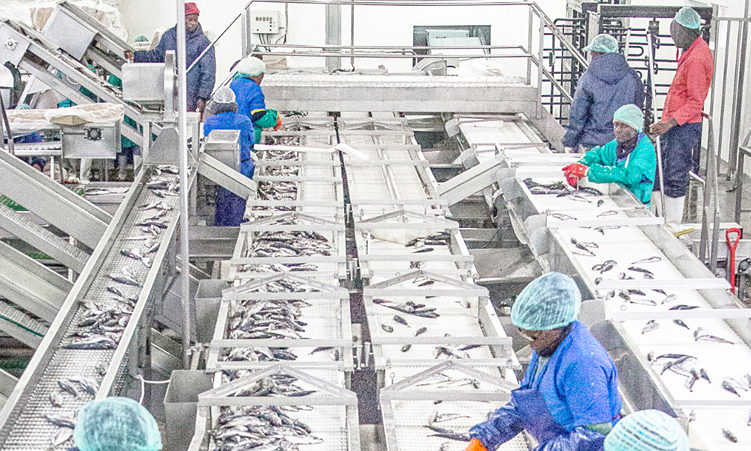
The Namibian Seamen and Allied Workers’ Union (NASAWU) has rejected Gendev Fishing’s planned retrenchment of 489 employees, citing breaches of labour law and inadequate consultation.
Nasawu president Paulus Hango says the union was not properly consulted before workers were issued retrenchment notices.
“You cannot just receive a letter saying there is a possible retrenchment . . . We do not accept any form of retrenchment, because it does not meet the requirements of the law,” he says.
Hango’s comment comes after Gendev informed its employees of possible retrenchments.
In a notice dated 22 January, Gendev says it is contemplating retrenchment for economic and operational reasons, including sustained financial losses, reduced revenue, increased costs, and the need to restructure and improve efficiency.
In the same notice the company says no final decision has been taken and that the process is subject to consultation.
Hango further claims the union was informed that Gendev is seeking additional fishing quotas under conditions linked to the 200m isobath-restricted zone.
“They are trying to push and intimidate the government. The government last year gave them the right to fish within the 200m zone,” he says.
Hango questions the company’s operational model, saying it is unrealistic for a fishing company to rely on a single species, in this case horse mackerel, under restrictive conditions.
“It is unrealistic,” he says.
The possible retrenchments come amid broader job losses in the small pelagic fishing sector.
Johnny Doeseb, representing the Wet-Landed Small Pelagic Association, says the development is deeply concerning and signals wider structural problems in the industry.
“These developments are extremely worrying and represent a serious setback for the small pelagic industry and for Namibia’s employment landscape,” Doeseb says.
He says retrenchments reflect sustained challenges facing land-based processing companies, including limited access to raw material, operational uncertainty and policy-related pressures that undermine job sustainability.
Doeseb says the association recently held a two-day consultation meeting with the Ministry of Agriculture, Fisheries, Water and Land Reform, which he described as a positive step toward finding solutions.
Chairperson of the Confederation of Namibia Fishing Associations (CFNA) Matti Amukwa says job losses would be unfortunate, but warns against panic in the sector.
“It is not good for anyone to lose jobs,” he says.
He says many companies in the fishing industry operate under difficult conditions without resorting to retrenchment.
Amukwa says fishing quotas remain the backbone of operations and cautions that pressure on fish stocks limits what companies can do.
“Quota allocated to companies is the lifeblood of operations, and if the resource is under pressure, the only option is to allow it to recover,” he says.
When approached for comment this week, Gendev board chairperson Paulina Haindongo said she was entering a meeting.
Questions sent to her via WhatsApp on Monday were not responded to by the time of publication.
In an age of information overload, Sunrise is The Namibian’s morning briefing, delivered at 6h00 from Monday to Friday. It offers a curated rundown of the most important stories from the past 24 hours – occasionally with a light, witty touch. It’s an essential way to stay informed. Subscribe and join our newsletter community.

The Namibian uses AI tools to assist with improved quality, accuracy and efficiency, while maintaining editorial oversight and journalistic integrity.
Stay informed with The Namibian – your source for credible journalism. Get in-depth reporting and opinions for
only N$85 a month. Invest in journalism, invest in democracy –
Subscribe Now!