




• HAMBELELENI MATSITODAY’S advanced technology allows testing on a wide variety of samples collected from the human body. The samples come from your blood, urine, faeces, or other items. The collection can be easy, for example a urine sample or might cause a great deal of discomfort like taking your blood.
Regardless, the sample is taken to help your medical practitioner understand the different variables within your body that will in turn allow them to develop a course of action for treatment, monitor your body’s response to therapy or to obtain a diagnosis that will be used to create a treatment plan to ensure you become healthy again.
Likewise you need to understand in order to help in your own treatment and /or prevention of the spread of an infection you might have.
The laboratory analysis will involve tests which are used for various reasons including the diagnosis of conditions, screening for various potential possibilities and as a guide in disease treatment and prognosis. The vital laboratory tests assess your health status and monitor your body’s response to treatment. Hence look forward to the tests as a way of putting you back to a healthy state.
Let’s us see when you might have the tests done and where the process will start.
If you are not feeling well you will visit a doctor/healthcare provider. They want to help you and they do this by trying to diagnose your condition.
As part of this assessment you will have a sample – blood, urine, faeces, semen, sputum or other body tissue and fluids – taken from you and sent to a medical laboratory for analysis.
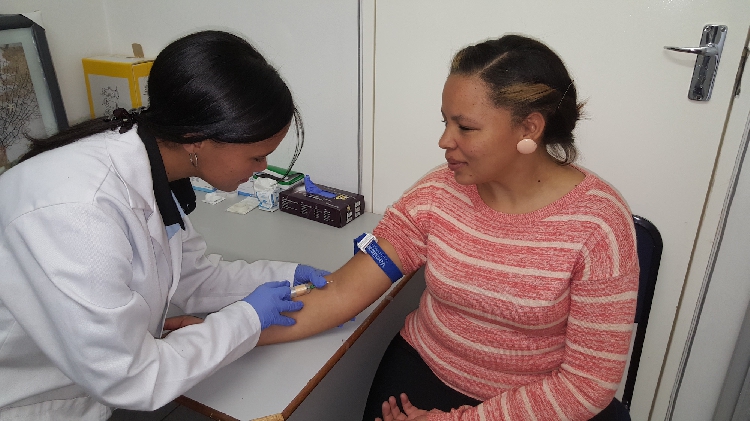
You might ask how these samples are collected. For each sample there is a different way. A blood sample, collected by a phlebotomist, who could be a nurse or medical technologist or even your doctor, goes into tubes with assorted coloured lids. Collection of blood samples from children or patients with special conditions require special assistance of which the phlebotomist are trained in. Other samples including urine, faeces, semen, sputum or other body tissue and fluids can be collected by you. How might wonder how that can be possible.
Well let us look at urine samples.You will be asked to urinate into a specimen container. There are two types of urine samples. The first is the random urine sample which can be collected anytime of the day. The second is the 24-hour sample that is collected in a larger container.
It is important to note that before collection of the urine sample that the genitals should be cleaned.
For the faeces, also called stools specimen, you collect this from your toilet after you have had a bowel movement. Be sure to follow the instructions of your medical provider for the frequency of collection and the storage of the collection. Sometimes due to bad procedures in either collection or storage of the sample we are unable to test the stool sample. Please carefully follow all instructions.
For men there are semen specimens. A semen analysis is often recommended when couples are having problems getting pregnant.
The test will help your medical provider determine if a man is fertile or not. The analysis will also help determine if low sperm count or sperm dysfunction is the reason behind infertility.
Men who have had a vasectomy undergo semen analysis to make sure no sperm are in their semen. In a vasectomy, the tubes that send sperm from the testicles to the penis are cut and sealed as a permanent form of birth control. After a vasectomy, doctors often recommend that men take a sperm analysis once a month for three months to ensure that sperm is no longer present in their semen.
Please check with your medical provider for the correct collection procedures.
While most of these tests do not require special preparations or require you to follow the instructions. There will be tests that do require special preparation. This means certain foods or fluids should not be eaten or drunk within a period of time. Be sure you are clear on this.
Some of the medical laboratory tests require special preparations. They include but are not limited to serum lipids; glucose tolerance; and cortisol. Please make sure you have a clear understanding of what you have to do and double check with your medical provider for clarification.
This for you, using a controlled medical laboratory, that has passed Namibian Standards, can provide a greater sense of comfort and assurance. Laboratories do perform routine quality control tests, usually every day, and in many cases, several times a day. This is done to ensure that the equipment, the technologist, and the reagents used in the test are performing to established standards.
Your health and well–being provide you with a sense of satisfaction. Together with your medical provider, a medical laboratory provides necessary analysis to allow a proper diagnosis and corresponding treatment.
A quality medical laboratory that meets Namibian and International standards will deliver high quality analysis and provide you with peace of mind to allow you to get the best possible medical treatment.
In an age of information overload, Sunrise is The Namibian’s morning briefing, delivered at 6h00 from Monday to Friday. It offers a curated rundown of the most important stories from the past 24 hours – occasionally with a light, witty touch. It’s an essential way to stay informed. Subscribe and join our newsletter community.

The Namibian uses AI tools to assist with improved quality, accuracy and efficiency, while maintaining editorial oversight and journalistic integrity.
Stay informed with The Namibian – your source for credible journalism. Get in-depth reporting and opinions for
only N$85 a month. Invest in journalism, invest in democracy –
Subscribe Now!