



Swapo deputy secretary general Uahekua Herunga has rejected allegations that the ruling party requested Russian intelligence operatives for a N$3-million donation for its 2024 election campaign.
The same operatives were also reportedly involved in fabricating a letter that claimed that the United Kingdom (UK) was financing the Independent Patriots for Change (IPC) in exchange for Namibia’s oil.
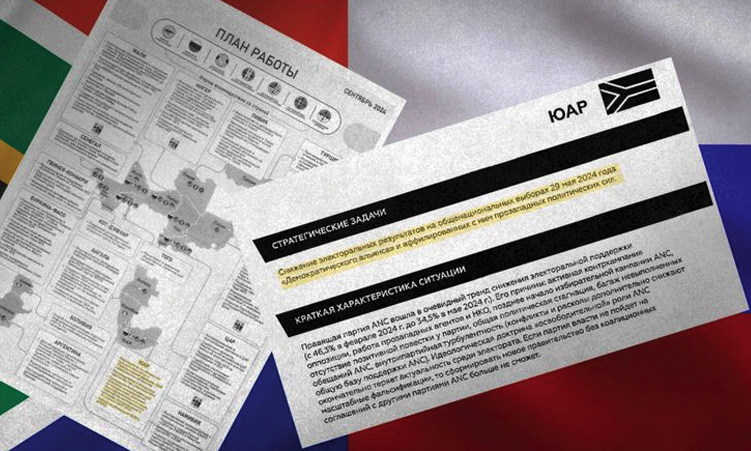
The allegations were reported in a new article in Forbidden Stories, which reportedly relied on 76 leaked internal documents attributed to an entity described as “The Company,” reportedly linked to Russia’s intelligence.
The documents directly implicate Herunga, who was ousted as Swapo chief whip in parliament last month.
They also claim that president Netumbo Nandi-Ndaiwah had talks with Russian officials about their support.
“On 26 October 2024, a document states that Namibian presidential candidate Netumbo Nandi-Ndaitwah contacted us. She wishes to express her gratitude to her ‘Russian friends’. She also asked for help with the Swapo campaign, but this must be done ‘cleanly,” Forbidden Stories reported this week.
The article is titled: ‘Maintaining friendly powers at all costs: the maneuvers of Russian influence agents in South Africa, Namibia, and Madagascar.’
Forbidden Stories is a Paris-based non-profit network of journalists founded in 2017 to protect and continue the work of reporters who are threatened, jailed, or killed. The leaked documents came from private military operatives who worked at a company known as the Wagner Group, which was run by founder Yevgeny Prigozhin. The news story alleges that Russian influence agents carried out disinformation operations, smear campaigns and election interference across Africa and Latin America, including Namibia and South Africa.
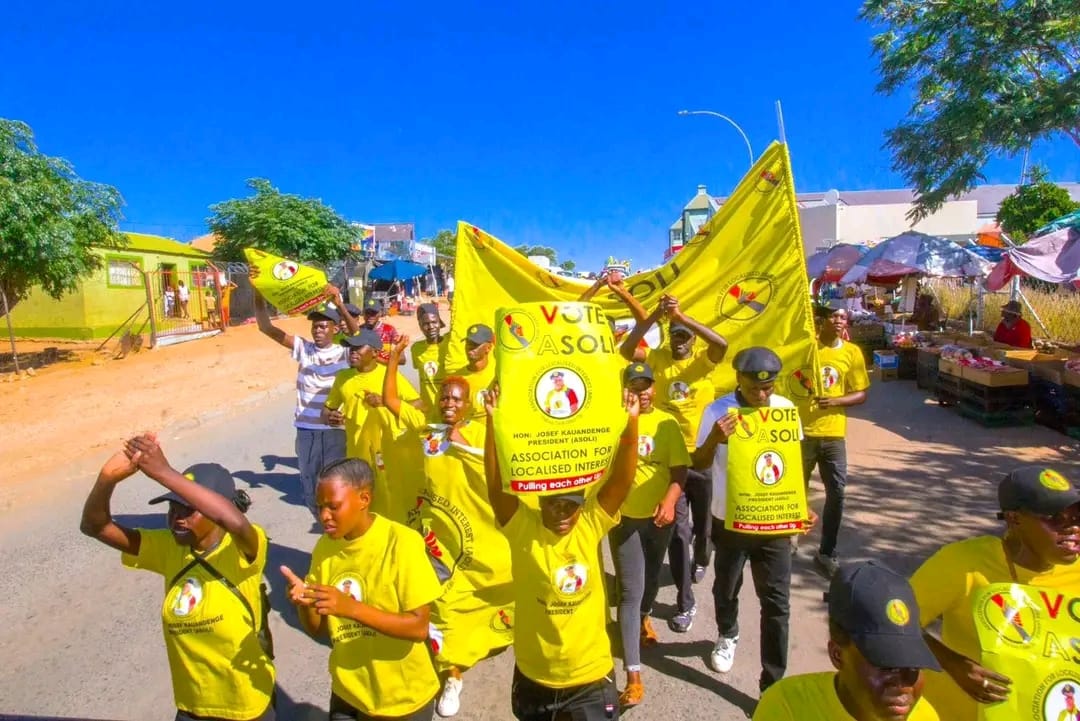
“On 27 October, Russian agents reported a request for financial assistance from the party’s deputy secretary general, Uahekua Herunga: US$118 000 (N$1.9 million) to pay 10 000 party activists on election day, US$17 700 (N$295 000) for the production of T-shirts and US$23 600 (N$394 400) for the transportation of voters and activists. Whether or not The Company had agreed to this is left unspecified,” the news report, republished by South Africa’s Daily Maverick says.
Speaking to The Namibian yesterday, Herunga rejected claims published by Forbidden Stories.
“No. There is nothing like that. Absolutely nothing like that, that I am aware of. I have also not asked anyone to provide money to the party,” Herunga said.
Further calls and messages to him went unanswered.
The Namibian reached out to Presidency spokesperson Jonas Mbambo, who stated that “Thank you for reaching out. Unfortunately the president will not be commenting on the story.”
Forbidden Stories also says it sent text messages to the presidential spokesperson, who did not respond to requests for comment.
The Forbidden Stories story also details alleged disinformation operations targeting the opposition IPC during 2024, ahead of the November elections.
According to the documents cited, Russian agents reportedly intensified a fake news campaign against the IPC while simultaneously conducting operations to promote Swapo.
One alleged operation involved a fabricated letter claiming that the UK was financing the IPC in exchange for benefits related to Namibia’s oil.
The forgery reportedly prompted the British ambassador to Namibia to publicly deny the allegations in an interview with Namibian Sun on 28 July 2024.
The ambassador was quoted as saying that under no circumstances would the UK provide £750 000 (about N$16.4 million) to a political party in Namibia or elsewhere.
The internal documents allegedly describe the diplomatic denial as evidence of the campaign’s impact, stating that the news spread widely enough to trigger an official response from the British Embassy.
Other alleged operations targeting the IPC included the production of videos focusing on child begging in Windhoek and the circulation of a fake press release attributed to Zimbabwean police.
The false statement reportedly claimed that authorities had uncovered a military training camp for 50 Namibian nationals near the border, with the apparent aim of suggesting that the IPC was preparing for unrest.
Additional files referenced in the investigation reportedly contain correspondence between Swapo leaders and Russian agents shortly before the elections.
IPC president Panduleni Itula refused to comment when he was approached for comment yesterday.
CONTINENTAL
The Continent, another African prominent digital newspaper, also published this story in February about Russia’s influence in Africa, titled: The St Petersburg infowar on 22 African countries.
“In Namibia, Russian operatives worked to weaken opposition parties and boost support for Nandi-Ndaitwah’s 2024 campaign.
At the time she was the South West African People’s Organisation’s presidential candidate,’ the publication says.
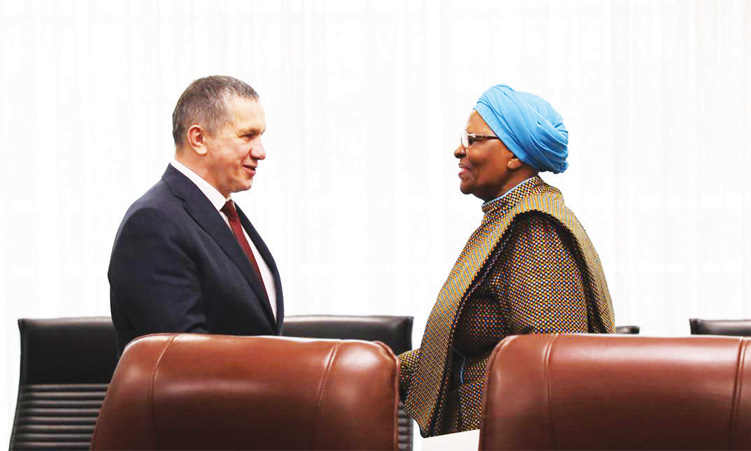
Details about Russia’s ties to Namibia come at a time when Russia’s deputy prime minister, Yury Trutnev, is in Namibia.
Russia’s main operations in Namibia are through Rosatom, a state-owned uranium company that has been pushing to explore for uranium in eastern Namibia.
A Rosatom subsidiary, known as Headspring Investments, in 2011 proposed to use a controversial drilling method to extract the uranium, known as “in situ” mining. It involves injecting a solution that includes sulphuric acid down into the aquifer.
The drilling method has reportedly never been attempted in Africa and is not usually done around aquifers.
Headspring’s plans were met with resistance from activists and former political leaders who have spoken out against potential environmental damage to the southern African aquifer.
See part of the original Forbidden Stories story on page 6.
In an age of information overload, Sunrise is The Namibian’s morning briefing, delivered at 6h00 from Monday to Friday. It offers a curated rundown of the most important stories from the past 24 hours – occasionally with a light, witty touch. It’s an essential way to stay informed. Subscribe and join our newsletter community.

The Namibian uses AI tools to assist with improved quality, accuracy and efficiency, while maintaining editorial oversight and journalistic integrity.
Stay informed with The Namibian – your source for credible journalism. Get in-depth reporting and opinions for
only N$85 a month. Invest in journalism, invest in democracy –
Subscribe Now!