



Namibia’s diamond industry may be pushed into deeper crisis if United States (US) president Donald Trump pushes ahead with implementing an export tariff of 21% on Namibia.
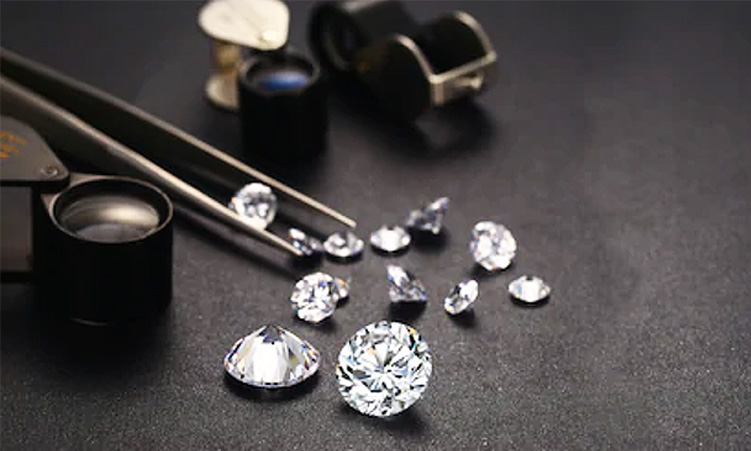
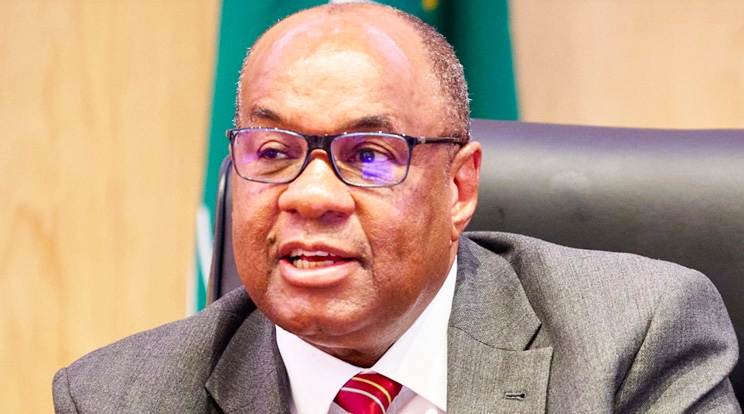
Bank of Namibia (BoN) governor Johannes !Gawaxab says the country’s diamond sector is already struggling with declining global demand and mounting competition from lab-grown alternatives.
The Trump administration has temporarily placed a 90-day pause on so-called ‘reciprocal’ tariffs on Namibia and several other countries, excluding China.
“We can tell you that the direct exposure appears very minimal on the Namibian economy. However, the direct and indirect impact may manifest largely through diamond exports. The diamond market is heavily, heavily affected,” !Gawaxab said at the monetary policy announcement yesterday.
According to the central bank, 12.4% of Namibia’s polished diamonds and 0.2% of rough diamonds were exported to the US in 2024.
Currently, and largely due to the African Growth and Opportunity Act, Namibia enjoys duty-free exports to the US on most products, including diamonds.
However, !Gawaxab said if a 21% tariff is implemented, Namibia will have to pay a tariff of 8.7% on polished diamonds and 0.4% on rough diamonds.
“The diamond is already going through a difficult time because of low demand, and competition from lab-grown diamonds, and now you have all these tariffs. Maybe there’s a case to be made for diamonds to be exempted, like uranium and gold has been exempted from the tariffs,” !Gawaxab said.
According to February figures by De Beers, Namibia produced 2 234 million carats of rough diamonds in 2024.
This was a 4% decrease from the 2 327 million carats of diamonds produced the previous year.
Namdeb recorded a 44% increase in production in 2024, producing 609 000 carats from 468 000 carats in 2023, while Debmarine Namibia’s production for 2024 decreased by 13% to 1 625 million carats from 1.859 million carats in 2023.
Meanwhile, marble exports currently make up most of the exports to the US, with 88.7% destined for the American market.
Marble exports currently come with a 0.4% tariff.
“The overall impact on gross domestic product is difficult to quantify, however, sectors such diamonds, marble and manufacturing will be negatively impacted. Further, prevailing uncertainties will impact investments and consumption decisions,” !Gawaxab said.
He said the uncertain global landscape complicates inflation projections.
“When we started, we said inflation will average around 4% for 2025, but we have revised it upwards now to 4.2%, and also for 2026, we’ve revised that upwards.
“High inflation through weakening of the exchange rate in imported inflation will have an impact because of the trade tariffs,” the governor said.
!Gawaxab said the uncertainty is just as damaging as the actual tariffs.
“The world is far from anything remotely predictable and the economic models are presently defunct,” he said.
In an age of information overload, Sunrise is The Namibian’s morning briefing, delivered at 6h00 from Monday to Friday. It offers a curated rundown of the most important stories from the past 24 hours – occasionally with a light, witty touch. It’s an essential way to stay informed. Subscribe and join our newsletter community.

The Namibian uses AI tools to assist with improved quality, accuracy and efficiency, while maintaining editorial oversight and journalistic integrity.
Stay informed with The Namibian – your source for credible journalism. Get in-depth reporting and opinions for
only N$85 a month. Invest in journalism, invest in democracy –
Subscribe Now!