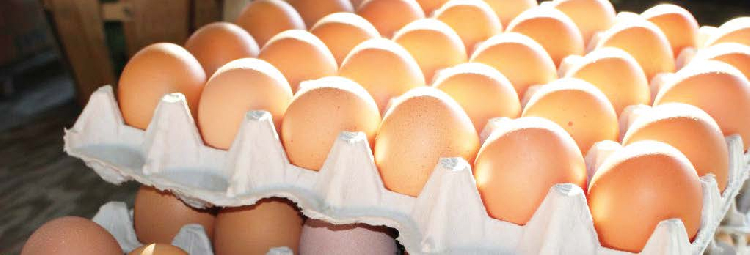
VICTOR MAKAHAMADZEThere are two common chicken breeds used for commercial egg production, the Hyline chicken and Lohmann brown chickens. In Namibia, the Lohmann brown is the more common.
Hyline chickens are hybrids known for their good temperament, outstanding feather cover to end of lay, unsurpassed feed efficiency, tolerance and a proven ability to lay more top quality eggs per hen than any other breed.
Hylines can produce more than 320 deep brown high quality eggs for up to 74 weeks.
The Lohmanns are brown hybrids with white tail feathers. They are heat tolerant, thus making them ideal for Namibian conditions. The Lohmann browns are available on the market either as day-old chickens or point of lay hens (six months). They can lay up to 300 eggs during their productive lives of about two years.
Lohmann browns can lay eggs without the help of the cock (male) to produce table eggs (that are not fertile and will not hatch). These are what people buy from supermarkets and grocery stores.
The Lohmann brown chicks are raised from day-olds up to laying stage in six months. During this period, farmers must ensure the brooding houses are comfortable for the chicks, that the food given is nutritious and wholesome and that disease mitigation strategies such as bio-security and vaccination programmes are carefully followed.
However, some farmers prefer buying chickens at point-of-lay. By now, all the vaccinations must have been done and the general hygiene and health of the chickens monitored.
When chickens are bought at point-of-lay, the farmer must put them on laying feed such as layers’ mash to prepare them for production, and laying nests should be ready. Farmers must also ensure that the chickens fit into their fowl run (10 birds per square metre).
The layers must be comfortable and have access to feed and fresh water at all times.
Supplements such as cabbage and spinach leaves may also be given to enable the birds to improve their health and also to keep them busy as boredom may lead to vent pecking and cannibalism (eating of eggs).
Unlike broilers which need some hours of light to feed at night, farmers are encouraged to let their layer chickens rest at night by allowing hours of darkness and also provide poles to perch on.
Farmers must ensure that their poultry houses can handle the number of chickens they wish to keep. If the space is too small, the layers become irritable and start pecking each other. Overcrowding can lead to easy spread of diseases.
Farmers can also keep their point of lay chickens in the “A”-framed battery cages which hold a maximum of 96 hens each. Battery cages help utilise space and make it easy to tell which chickens are not laying eggs.
Cleaning and Packaging
Farmers must inspect and clean their eggs before packing them. Cleaning can be done by wiping eggs with a moist cloth and not immersing them in water. Farmers are advised to pack the eggs according to market requirements – in 6, 18 and 30-egg trays.
Eggs must be graded according to sizes – jumbo, extra-large, large, medium and small. Grading allows farmers to cater for different customers ranging from high to low income earners. It also allows the farmer to get good value for quality eggs as opposed to mixing sizes of eggs for the same price.
After packaging, farmers must store eggs in a cool place. Eggs can be kept fresh unrefrigerated for 7-10 days and between 30 and 45 days in a refrigerator. As a rule of thumb, the less time eggs are kept on the farm the better.
The profitable productive life of the Lohmann brown is two years, after which the farmer may decide to slaughter the flock, package it and sell it to the meat market. Thus in the end the farmer benefits from both the sale of eggs and the sale of the chickens.
* Victor Makahamadze is the agri-business principal consultant for Farmervic Enterprises CC.
In an age of information overload, Sunrise is The Namibian’s morning briefing, delivered at 6h00 from Monday to Friday. It offers a curated rundown of the most important stories from the past 24 hours – occasionally with a light, witty touch. It’s an essential way to stay informed. Subscribe and join our newsletter community.

The Namibian uses AI tools to assist with improved quality, accuracy and efficiency, while maintaining editorial oversight and journalistic integrity.
Stay informed with The Namibian – your source for credible journalism. Get in-depth reporting and opinions for
only N$85 a month. Invest in journalism, invest in democracy –
Subscribe Now!