



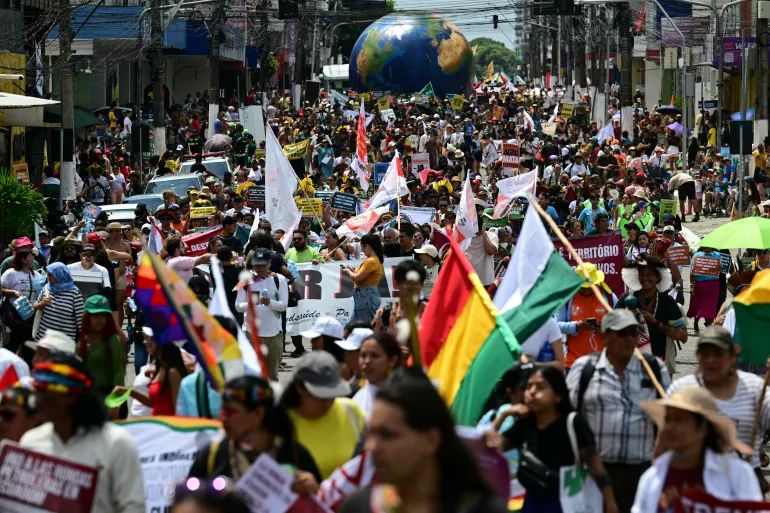
Tens of thousands of people have thronged the streets of an Amazonian city hosting 30th Conference of the Parties (COP30) talks, dancing to pounding speakers in the first large-scale protest at a United Nations climate summit in years.
As the first week of climate negotiations limped to a close with nations deadlocked, Indigenous people and activists sang, chanted, and rolled a giant beach ball of the earth through Belém under a searing sun.
Others held a mock funeral procession for fossil fuels, dressed in black and posing as grieving widows as they carried three coffins marked with the words “coal”, “oil” and “gas”.
It was the first major protest outside the annual climate talks since COP26 four years ago in Glasgow, Ireland, as the last three gatherings had been held in locations with little tolerance for demonstrations – Egypt, the United Arab Emirates, and Azerbaijan.
Called the ‘Great People’s March’ by the organisers, the Belém rally came at the halfway point of difficult negotiations and followed two indigenous-led protests that disrupted proceedings earlier in the week.
“Today we are witnessing a massacre as our forest is being destroyed,” says Benedito Kuin (50), a member of the Huni Kuin indigenous group from western Brazil.
“We want to make our voices heard from the Amazon and demand results,” he says. “We need more indigenous representatives at COP to defend our rights.”
Their demands include “reparations” for damages caused by corporations and governments, particularly to marginalised communities.
After a 4.5km march through the city, the demonstration halted a few blocks from the COP30 venue, where the authorities deployed soldiers to protect the site.
Inside the venue, COP30 president Andre Correa do Lago admitted that the first exhaustive week of negotiations had failed to yield a breakthrough and urged diplomats not to run down the clock with time-wasting manoeuvres.
Countries remained at odds over trade measures and weak climate targets, while a showdown looms over demands that wealthy nations triple the finance they provide to poorer states to adapt to a warming world. – Al Jazeera
In an age of information overload, Sunrise is The Namibian’s morning briefing, delivered at 6h00 from Monday to Friday. It offers a curated rundown of the most important stories from the past 24 hours – occasionally with a light, witty touch. It’s an essential way to stay informed. Subscribe and join our newsletter community.

The Namibian uses AI tools to assist with improved quality, accuracy and efficiency, while maintaining editorial oversight and journalistic integrity.
Stay informed with The Namibian – your source for credible journalism. Get in-depth reporting and opinions for
only N$85 a month. Invest in journalism, invest in democracy –
Subscribe Now!