Formally this will be a presidential election. In the end, Fifa’s member associations will choose a name: that of a man or a woman entrusted with leading the organisation.
But behind that name lies far more than a presidency to hand out. It’s an idea of football itself – how it should grow, be represented, be governed in the years ahead.
That question faces all 211 Fifa member associations. In Africa, it may deserve a particular kind of thought.
As Fifa’s big decisions approach, people talk a lot about “the African vote.” The phrase is convenient. It lets you count: 54 associations, 54 votes. It also lets you imagine blocs, alliances, balances of power. But say “the African vote” often enough, and you start to forget there is no single African football.
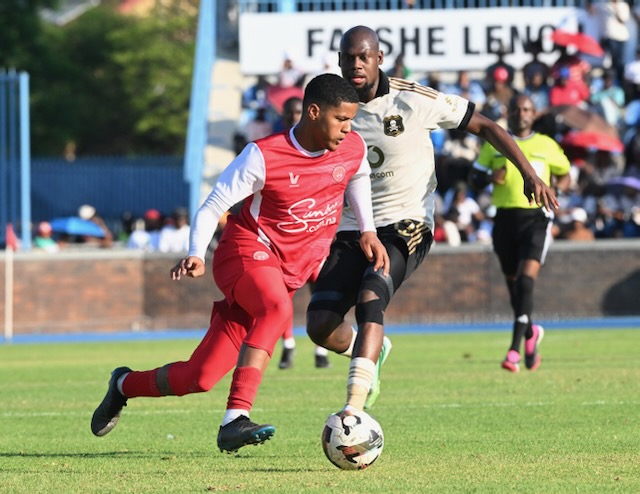
Just watch the matches. Africa’s 54 football associations each have their own history and their own resources – and so different football realities, visible in their leagues, their development systems, and even their playing styles.
Morocco, for instance, has built a highly structured national development strategy, notably around the Mohammed VI Academy. In Ghana, Right to Dream grew out of an independent initiative that paired football training with education from the start. Two countries, two histories and two models that have produced players at the highest level. And those are just two examples among 54.
That’s part of the richness of African football, a reflection of the continent’s own multiplicity. Why should that diversity, so obvious the moment a ball starts rolling, disappear the moment it’s time to decide the future of world football? There will be no African vote. There will be 54 votes. Those 54 votes can converge. They can just as easily diverge. What matters is what they represent. Before choosing a candidate, every association should be able to ask itself: what football do we represent, and where do we want to take it?
In the end, this should be about football. International football today is shaped by politics, financial interests and power struggles – that’s no secret to anyone, and it’s not unique to Africa. Federation leaders have to listen, negotiate, defend their football’s interests, find the resources it needs to grow. That is part of their responsibility. But so is deciding. And when it comes to deciding, the question turns simple again: what’s good for the football we represent, and for the football we want to build?
ENORMOUS NEEDS
Across the continent, the needs are enormous: growing domestic leagues, upgrading infrastructure, strengthening development systems, advancing women’s football, giving young talents more chances. All of that takes investment, partnerships, resources. International programmes matter. Relationships with Fifa and the Confederation of African Football (CAF) matter. It would be absurd to ask African leaders to ignore that. But taking it into account doesn’t mean giving up on a bigger question: what kind of organisation do we want to govern world football tomorrow?
You can be grateful for what’s been achieved and still ask for more. You can recognise a president’s contribution and still want the institution he leads to evolve. That’s exactly why this election should be bigger than a straight choice between “for” or “against” Gianni Infantino. This isn’t about telling African associations who to vote for – that would contradict the whole point of this piece – but about fully recognising that the responsibility for this vote is theirs.
I lived in Bangui for two years, and for more than a decade my work took me regularly across the continent. That certainly doesn’t give me the right to speak for Africa – if anything, the opposite. What it taught me was to be wary of any sentence that starts with “Africa thinks,” “Africa wants,” “Africa supports.” Which Africa? The continent is diverse. So are its societies. So is its football – and that diversity should be seen as a strength when the moment comes to decide.
There’s also something more fundamental that institutional debates sometimes let us forget: African football doesn’t begin in a Fifa or CAF meeting room. It begins on the pitches of clubs and academies, but also in schools, in neighbourhoods, in villages, in the street – on excellent turf and on improvised ground, with the best equipment or with whatever children have managed to turn into a ball. That’s not a romantic image of Africa. It’s a fact about football. And it’s a reminder of why these institutions exist in the first place: for the game, and for the people who play it.
AFRICA’S CONTRIBUTION TO WORLD FOOTBALL
Africa is not simply a continent to which world football brings programmes and funding. Africa itself contributes enormously to world football. It is one of the great sources of talent in world football. Its players sustain clubs and leagues on every continent and stand as role models for millions of young people. And among the children playing today in the streets of Dakar, Kinshasa, Abidjan, Lagos, Johannesburg, Cairo, or in some far less well-known village, some will one day wear the colours of a major club or a national team. Their football, too, is part of what this is about.
When a national association casts its vote at a Fifa election, it performs an institutional act that takes only a moment. But behind that vote stand players, clubs, coaches, referees, fans, children – an entire football culture. It is for them that this choice should be made first.
The ballot will carry the name of one person. The choice, though, can carry much more: what football do we want in 10 or 20 years? What role should national associations have in the game’s big decisions? What mechanisms should hold those who run football accountable for how they exercise that responsibility? Every association will have its own answer. And that’s exactly as it should be.
But it would be a shame if this election came down to choosing a name, because every association will also have the chance to say something far more important: what football it wants for tomorrow. Not first: who do we want leading Fifa? But: what football do we want, and what kind of Fifa does that football need? Only then: who is best placed to lead it?
Africa’s 54 football associations aren’t just 54 votes in a presidential election. They represent 54 footballs – with their own realities, their own needs, their own ambitions, their own futures. And maybe it’s for those footballs, before anything else, that the vote should be cast.
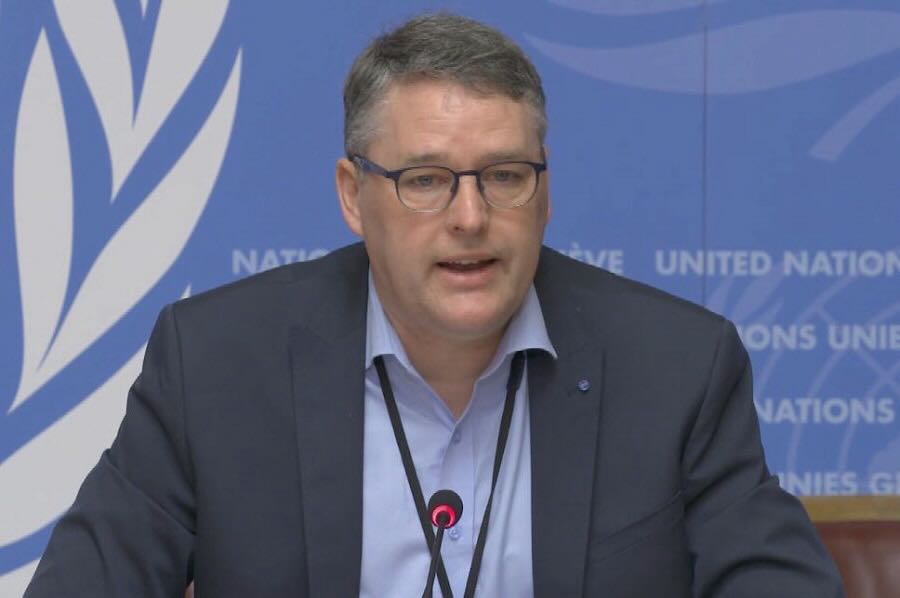
– Hervé Verhoosel is a former senior United Nations official specialising in communications, media and international public affairs. During a career spanning more than 20 years, he worked in Geneva, New York and Africa. He lived in Bangui for two years, and for more than a decade his work took him regularly across the African continent. Since leaving the United Nations in April, he has contributed regularly to the public debate on the governance of international football.