





Namibia’s retirement funds now hold assets worth more than the country’s annual economic output. Roughly half of that money is invested beyond our borders, and the reason is not disloyalty.
There is one part of the economy where the money already is. At the end of March, Namibia’s retirement funds held N$301.9 billion on behalf of 429 433 members. Set that against an economy that produced N$269.8 billion in the whole of last year, and the scale becomes clear: our retirement savings are now worth more than everything the country makes in a year, and close to three times the national budget.
It is the largest pool of capital Namibia has ever assembled, fully funded, professionally managed, and built by ordinary people one payslip at a time. For a nation of three million, that is a genuine achievement.
It is unfortunate that roughly half of it is invested somewhere else. At the end of March, 49.3% of those assets were domestic.
The rest sat in international markets at 31.2%, in the Common Monetary Area at 17.6%, and elsewhere in Africa at 1.9%. Money earned in Namibian workplaces, saved by Namibian workers, is being invested in companies and assets in other countries.
It is tempting to reach for outrage here.
A trustee’s duty is to the member, not to the flag: to secure the best risk-adjusted return for the teacher or the miner whose retirement depends on it.
Our rules already require a minimum of 45% to be held at home under Regulation 13, and the industry complies in full. Nobody is smuggling anything out. The money is behaving exactly as it was designed to.
Which brings this to the number that should hold our attention: 49.3%.
The minimum is 45%. After decades of accumulation, the largest savings pool in the country sits barely four points above the legal minimum, and it drifted down a full point in the last quarter alone.
A minimum has quietly become a maximum. Not because anyone chose it, but because there is not enough here to buy.
The local main board of our stock exchange carries roughly 10 listed shares, about where it stood 20 years ago. The pipeline of investable, institutional-scale Namibian assets is thin, and capital does not wait politely. It goes where the assets are.
Regulation 13 was a remarkable foresighted policy. By requiring funds to allocate a portion share of their assets into unlisted Namibian investments through special purpose vehicles, it introduced a framework that was well ahead of its time in the region.
The Government Institutions Pension Fund has championed vehicles built precisely for this purpose. However, an allocation requirement can only deploy into deals that exist.
You cannot mandate capital into a pipeline that has not been built. The constraint was never willingness. It is supply.
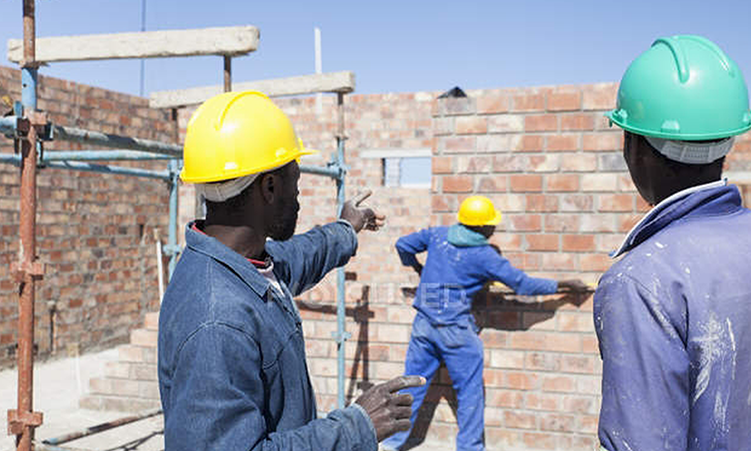
So, the task is to build the assets, not merely to tighten the mandates. Four actions would shift it. Firstly, originate and prepare a real pipeline of infrastructure, housing, energy and agro-processing, structured and governed to institutional standard, in sizes a large fund can actually write.
Secondly, de-risk deliberately, with blended finance, first-loss capital and partial guarantees, so that a trustee can say yes at a risk they can defend to their members.
Thirdly, deepen the market by getting companies listed and by making the unlisted route quicker to use than it is today.
Lastly, aggregate, because our deals are often too small for our own funds. What we should not do is simply raise the minimum. Forcing more money into a scarce set of assets builds nothing; it bids up the price of what already exists. That is a bubble, not development.
Namibia has spent years asking where the money for its development will come from.
It has been in the room the entire time. Our task is not to find the capital. It is to build the things worth buying.
– Jason Kasuto is the managing director of Monasa Advisory & Associates, a Namibian transaction advisory firm working across capital markets, research and development finance.