


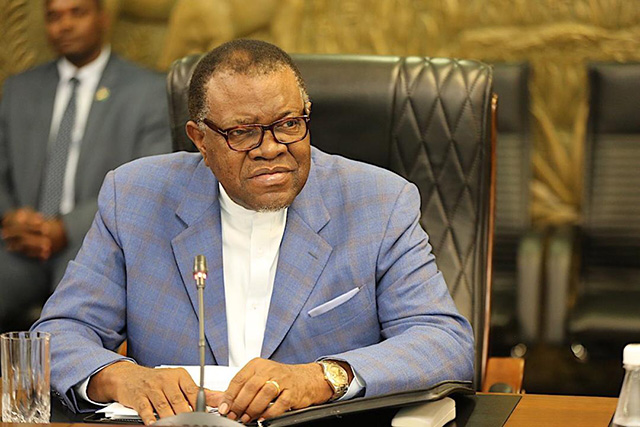
PRESIDENT Hage Geingob says white Namibians should share the wealth they have accumulated over the years otherwise the less privileged might take it.
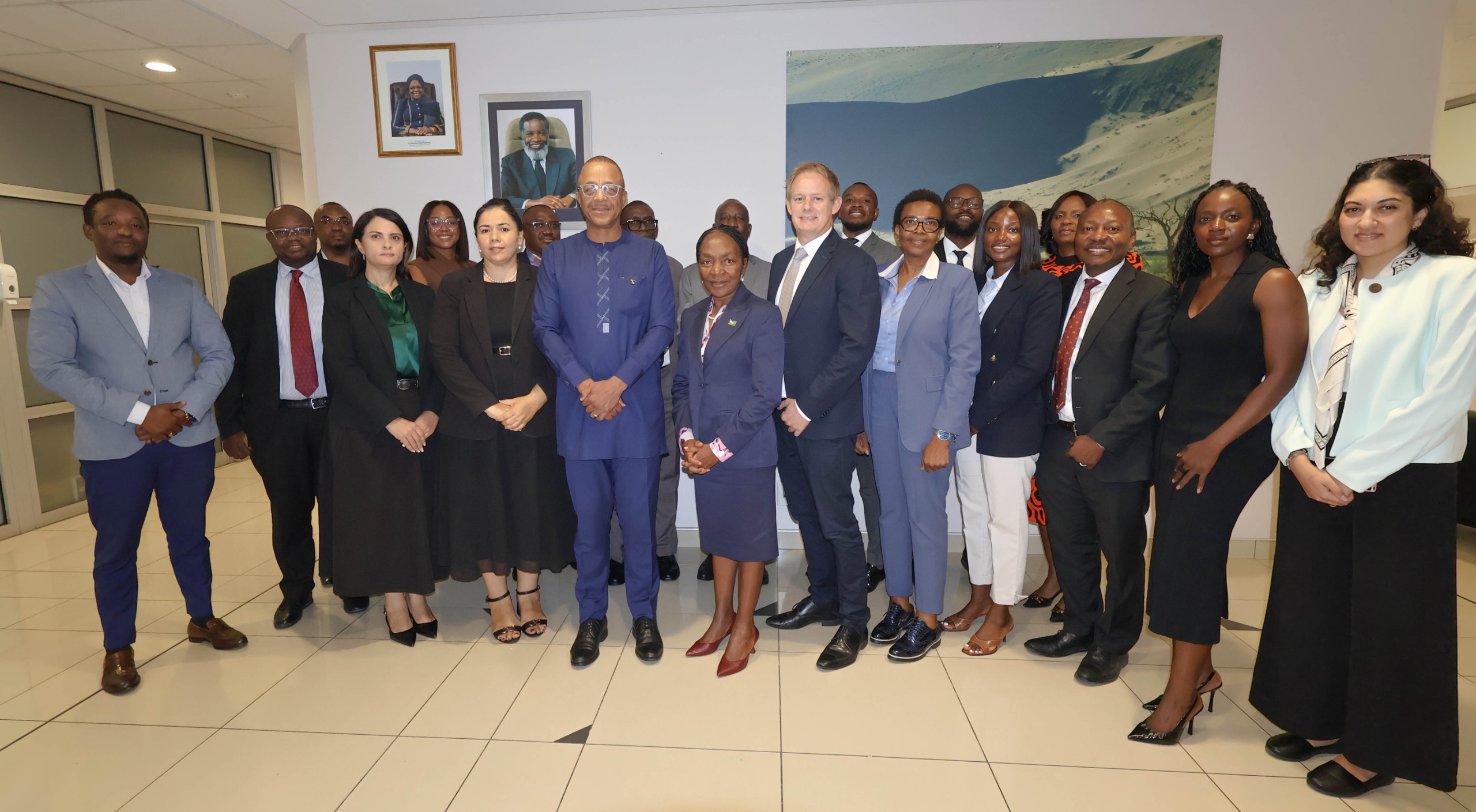
Geingob made these remarks during a courtesy call with the newly established Namibia Investment Promotion and Development Board (NIPDB) headed by Nangula Uaandja at State House yesterday.
“We are not saying white people must give everything up but we must share. We must share and if we don’t, they [the have-nots] will take it from us by force and destroy everything,” Geingob said.
The president was explaining to the NIPDB executive team and board that peace and development will come second if inequality is rife and the unemployment rate continues to increase.
“When inequality is so rampant you cannot speak of peace and development. You can have good ideas but they will be destroyed by those who are in the streets,” Geingob said explaining the harsh realities on the ground.
Geingob did, however, say that black people who have been accumulating wealth over the last 30 years should distribute it for all to be uplifted.
“People who are benefiting now are the haves including the black ones, so we are not just talking about the white people,” he said.
He said currently Namibia is a place where all can come to the table and talk peacefully.
“So while we have this good time to communicate and talk, let us hold hands and see all of us develop this country and maintain peace,” he added.
The president further said the board should find ways to harmonise the social issues the country faces and get investments into the country because the history of the racial divide which left whites prospering while oppressing black people is still so visible in today’s life.
“Therefore, we need someone to talk to the business people and explain to them that we are open to doing business, however, we have big problems in our country coming from a background of apartheid,” he added.
Geingob has previously said Namibia’s status as an upper middle income country belied the fact that about 80% of its population, mostly black, lives in poverty, while whites who make less than 5% of Namibia’s 2,4 million people were wealthy.
“We are proud to be an upper middle income country … But that is forgetting that we are coming from an apartheid background where blacks were left out,” he said at a virtual session at an event organised by international organisation Horasis.
“Distribution is an issue, but how do we do it? We have a racial issue here, a historical racial divide. Now you say we must grab from the whites and give it to the blacks, it’s not going to work. That is not our purpose here,” he said.
Political commentator Ndumba Kamwanyah suggested that Geingob addresses social and economic inequality as well as wealth redistribution brought by the country’s apartheid history by introducing tax reforms and the introduction of the basic income grant (BIG).
“We have policies that put wealth in fewer hands than the rest of us. We should look at tax reforms, and one of the issues the president does not seem keen on which could be a game changer for redistribution of wealth in the country, is the basic income grant,” he said.
Geingob also tasked the board to tackle the negative publicity around foreign business people who buy land or invest in the country as well as how Namibians speak to them.
“First how we talk. People listen to what we are saying. When we are so negative and not patriotic, then others [investors] are saying ‘can I go to that country? We had a billionaire who was buying from, a private person not a government-owned farm but the way we were talking, that man was shivering,”
Geingob was referring to the media reports after he met Mexican billionaire Alberto Baillères, who wants to buy Erindi private game reserve for nearly N$2 billion.
The meeting was meant to brief the president about the status of the N$2 billion deal, and to discuss the Mexican’s intentions on Erindi, among other things.
“The billionaire was not used to being attacked and he was shivering and he said ‘do you think I must come here? I had to calm him down and say ‘yes, it is a democracy and people are talking and that is their freedom but there are laws and if you got that [the farm] legally the laws will protect you. He is coming now. He wrote me a letter, happy, and he is going to create jobs and add value,” he explained.
Geingob said Namibians are too negative towards potential investors which could further prevent them adding value to the country.
“Are they going to take the farms to Russia or Mexico or so on? It is on our soil. They are developing it, creating jobs. If they break the laws we will deal with them. But the negativism to potential investors. We are too negative,” he said.
Senior lecturer in economics at the University of Namibia Omu Kakujaha-Matundu believes wealth redistribution is a prerequisite for economic growth.
“Huge inequality that excludes the majority affects economic productivity through unequal educational opportunities, which excludes the emergence of a well-trained and skilled workforce,” he says.
“Unfortunately, in the mind of a neoliberal capitalist, when one talks about wealth redistribution it is construed as an expropriation of assets, including land. Wealth redistribution is a win-win situation, it is good for everyone. But wealth redistribution cannot happen in the absence of a transparent and credible government policy, which is easy to apply, monitor and evaluate,” he says.
In an age of information overload, Sunrise is The Namibian’s morning briefing, delivered at 6h00 from Monday to Friday. It offers a curated rundown of the most important stories from the past 24 hours – occasionally with a light, witty touch. It’s an essential way to stay informed. Subscribe and join our newsletter community.

The Namibian uses AI tools to assist with improved quality, accuracy and efficiency, while maintaining editorial oversight and journalistic integrity.
Stay informed with The Namibian – your source for credible journalism. Get in-depth reporting and opinions for
only N$85 a month. Invest in journalism, invest in democracy –
Subscribe Now!