


There was a time when pupils who excelled in sports received scholarships and honed their skills even more in various schools around the country and even the world. Often, these talents would be identified at school events such as athletics – and coaches would pick out the best and hone their talents in order to prepare them for major competitions like the Olympics. But has this culture become redundant or is it still advisable to encourage children to engage in sports and excel in it? YouthPaper looked at the importance of sports at school.
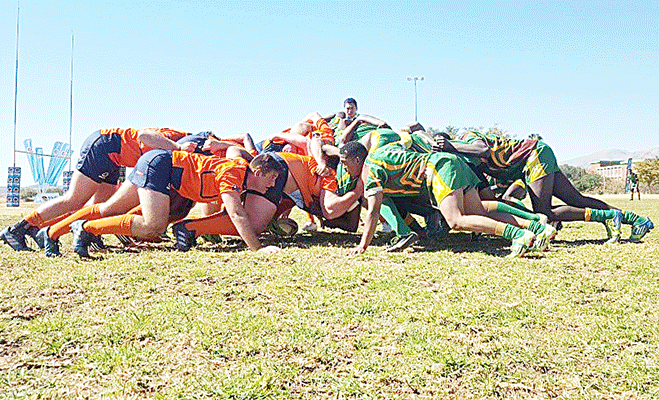
The kind of sports you’d often read about in the media include basketball, cricket, tennis, rugby, soccer, netball and athletics. But interestingly enough, funds are pushed into these sport codes, which is how those doing well travel to competitions abroad and have access to various opportunities that other sport codes would not.
The Basketball Artist School (BAS) Foundation in Katutura is one of the few organisations who are truly pushing basketball, for example, and giving young children a chance to develop in the sport. Last year, the BAS hosted a number of workshops and events to assist basketball lovers, and with the help of the German Olympic Sports Confederation (DOSB) and the Deutsche Gesellschaft für Internationale Zusammenarbeit (GIZ), they have secured funding to give more young people opportunities.
Kristin Eichholz, the principal of the Deutsche Höhere Privatschule, and interestingly enough a former basketball player in Germany, was reported saying: “Basketball is a modern and international sport that unites players all over the world and encourages interaction between different cultures”.
Debating is also taken seriously in the country, with competitions such as The Namibian’s Critical Thinking Competition as well as Energy 100’s high school debate taking place annually. These sports may be overlooked, but they are necessary.
For Namibian striker Panduleni Nekundi, who is currently competing at the African Nations Championship, his past in education involved a lot of sport. “I went to high school in Cape Town and over there, sports is a big thing. Most of the schools have infrastructure and coaches (courts, pools, fields, etc). Not all schools here have that luxury and the ones that do don’t seem to maintain or even use them as much as they should.”
Sadly, there are not enough sport facilities around the country, and those that exist are often neglected. “I see netball courts with grass growing between the cement, fields with small shrubs and trees growing in the playing area, or half the field is grass and the other half is sand,” Nekundi said. But at his school, it was more of an extramural activity. “It was compulsory to do one summer sport and one winter sport.”
He further divulged that his school in South Africa had weekly fixtures. “Schools were always competing with each other every single weekend. There needs to be fixtures that students can look forward to. School spirit and general pride in your school lacks heavy here in Namibia. Yes, you have your FNB Classic here and there, but it’s not a weekly thing so the vibe dies down when there are no activities.”
According to Nekundi, the pupils were required to support the school’s first team in its primary sports. “The whole school had to attend the rugby, water polo and hockey fixtures in uniform, for example. We actually had to attend the fixture and we cheered for them. That in itself is huge motivation to play at the highest team you could play for. From under 14 to under 19, the rugby teams had an A team up to an E team.”
And being someone who is quite involved in soccer, he stated that most teams in Namibia only have an A and B team. “The guys who don’t make those teams are chased away. Why? No coaches, not enough fields to accommodate more teams and no opponents to play against at the weekend or weekdays. Do schools here even have actual sports instructors? People who are hired only to improve the sports going on in the schools? I doubt it.”
Speaking on junior national teams, Nekundi felt that more of them should be picked from top performers in the school leagues. “Instead, the national team for the under-20 is made up of school dropouts or overaged players who practiced age cheating. The national teams are also very inactive, a competition every second year maybe? Not good enough. Where are the under 16 national teams for netball, hockey, soccer, cricket, swimming? Do we have junior athletic events? How often? Are there sports coaches to identify and enhance talent, or do children do their own thing and wait to compete at the one-time school athletics day?”
Hopefully, we can see more progress in sports development in the future.
In an age of information overload, Sunrise is The Namibian’s morning briefing, delivered at 6h00 from Monday to Friday. It offers a curated rundown of the most important stories from the past 24 hours – occasionally with a light, witty touch. It’s an essential way to stay informed. Subscribe and join our newsletter community.

The Namibian uses AI tools to assist with improved quality, accuracy and efficiency, while maintaining editorial oversight and journalistic integrity.
Stay informed with The Namibian – your source for credible journalism. Get in-depth reporting and opinions for
only N$85 a month. Invest in journalism, invest in democracy –
Subscribe Now!