



Tanzania remains gripped by the aftermath of its worst post-election violence in decades, a crisis that has shaken its long-standing reputation as a beacon of peace and stability in Africa.
It has also earned the country rare rebukes from regional and continental organisations.
The death toll is not clear but families continue to search for or bury relatives killed following the recent disputed poll that president Samia Hassan won with 98% of the vote.
Hassan, the soft-spoken leader’s calm and gentle demeanour initially inspired optimism when she assumed power in 2021 after the sudden death of her authoritarian predecessor, John Magufuli.
But that has now changed.
“Samia has pushed Tanzania to its thick winter of protests, instability and uncertainty,” Peter Kagwanja, a Kenyan policy analyst, tells BBC.
The protests, organised by young people, drew clear parallels with global Gen Z-led mobilisations against entrenched leadership and unresponsive governments.
Analysts say while the unrest was unprecedented for Tanzania, it was preceded by a tense political climate – marked by stalled reforms, years of simmering youth anger, power tussles within the ruling party and the sustained persecution of opposition leaders.
“The protests were just a culmination of years of anger and grievances that have been bottled in by Tanzanians,” Godfrey Mwampembwa, a Tanzanian-born political cartoonist, popularly known as Gado, says.
Gado’s satirical cartoons depicting Samia as authoritarian and intolerant of political competition, have been circulated widely on social media.
Veteran Tanzanian journalist Jenerali Ulimwengu has described in a column how the recent election was “the boiling point reached by societal soups that have been cooking for decades in a slow cooker without being noticed by an absent-minded rulership, totally submerged in the middle of its gravy train”.
Similar sentiments were shared by Gado, who accuses the ruling Chama Cha Mapinduzi (CCM) party of “burying its head in the sand” and being “tone-deaf” to Tanzanians’ growing calls for change.
“CCM has over the years disenfranchised the people and disregarded the very state institutions that keep it in power, ” says the satirist, who is based in neighbouring Kenya but has been closely following events in his home country.
Charles Onyango-Obbo, a political commentator on East African matters, agrees that CCM “had long mistaken calm for maturity, but it was only age and arrogance hiding behind a glorious history”.
“It confused the people’s silence with peace, not realising it was the quiet of exhaustion,” he writes.
Unlike others in the region, the CCM, which emerged from the Tanganyika African National Union, is a post-colonial liberation party that has maintained a firm grip not only on the levers of power but also on the nation’s psyche.
But it is the nature of this latest election that has exposed a shocking new side of Tanzania, a country long seen as protest-shy, especially when compared with neighbouring Kenya.
In the months preceding election day, CCM’s government worked to systematically eliminate any credible competition, according to analysts.
The two main opposition leaders were blocked from contesting the poll – Tundu Lissu is in detention on treason charges, which he denies, while Luhaga Mpina’s candidacy was rejected on technical grounds.
According to Kagwanja, that act alone negated what Tanzania and its founding president, Julius Nyerere, stood for.
“You don’t jail your opponents, you seek to get support from people against the opposition,” says Kagwanja.
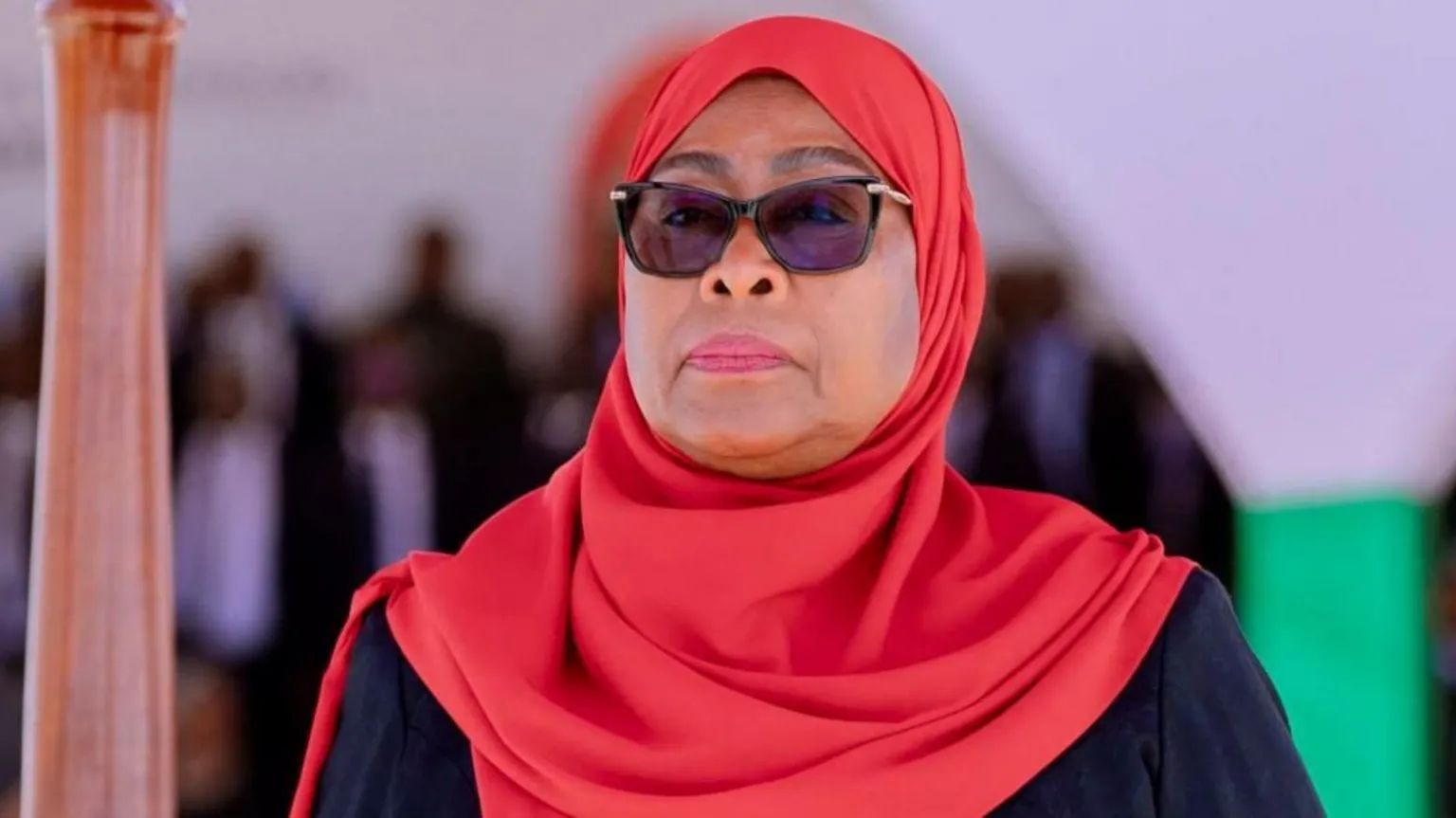
Fondly known as Mama Samia, the 65-year-old president is now facing mounting accusations of heading a repressive government responsible for violently crushing historic protests.
Her approach to leadership was initially admired both at home and abroad as she allowed opposition parties to organise rallies and criticise the government without the fear of grave repercussions.
She had pledged to re-open Tanzania to the world through her “4R” doctrine – reconciliation, resilience, rebuilding and reform.
Having been born and raised in Zanzibar, a semi-autonomous archipelago known for humility and hospitality, it was unsurprising that Hassan inspired a sense of relief when she assumed power in 2021.
But analysts say that as Hassan set her eyes on a second term, she started seeing internal party pressure within the CCM and the resurgence of the opposition as threats to her ambition.
For the last three years, she had reshuffled the cabinet multiple times and replaced military and intelligence chiefs, in moves seen as weeding out loyalists of her predecessor.
“Within the CCM, she resorted to a Magufuli script of manipulating the party, centralising power and creating a cabal of trusted loyalists as the new fulcrum of power,” Kagwanja says.
Hassan’s calculated political manoeuvres – which earned her the nickname “Simba jike” (Swahili for lioness) among her supporters – paid off as CCM nominated her as its presidential candidate in January.
Months to the election, a wave of abductions, arrests and the brutal killings of opposition members gripped the country, shattering hopes for reforms and reconciliation.
The political space had drastically shrunk in the run-up to the recent election, that was overshadowed by an internet blackout and a curfew.
Hundreds may have died in post-election unrest according to the opposition. The authorities are yet to release an official death toll.
The violence was shocking for a nation that had cultivated an image of calm, consensus, and order for nearly six decades.
“The myth of Tanzanian exceptionalism lies in ruins,” states Onyango-Obbo.
In a defiant inauguration speech, Hassan said the election was fair and transparent but acknowledged people had died during the protests. She blamed foreign actors for the deadly protests.
In a rare critique, the African Union and the regional Southern African Development Community said Hassan’s electoral victory did not meet accepted democratic standards, citing ballot-stuffing, repression and systemic flaws.
The main opposition, the Party for Democracy and Development, dismissed the results as “completely fabricated”.
“Samia’s challenge was not winning the election. Instead, it was to win the hearts and minds of Tanzanians and East Africans that she was elected in a fair contest. Lamentably, Samia chose coronation. She closed all avenues to a fair contest,” says Kagwanja.
As she begins to serve her second term in office, analysts say Hassan is facing mounting international scrutiny which could undermine her legitimacy to lead the East African country.
– BBC
In an age of information overload, Sunrise is The Namibian’s morning briefing, delivered at 6h00 from Monday to Friday. It offers a curated rundown of the most important stories from the past 24 hours – occasionally with a light, witty touch. It’s an essential way to stay informed. Subscribe and join our newsletter community.

The Namibian uses AI tools to assist with improved quality, accuracy and efficiency, while maintaining editorial oversight and journalistic integrity.
Stay informed with The Namibian – your source for credible journalism. Get in-depth reporting and opinions for
only N$85 a month. Invest in journalism, invest in democracy –
Subscribe Now!