




Sometime during the early 1990s, I picked up a copy of Jean-Francois Bayart’s book ‘The State in Africa: Politics of the Belly’. The original text was published in 1989 as ‘L’État en Afrique: La Politique du Ventre’.
Bayart describes African political power in the post-colonial era and draws specific attention to the relationship between patrimonialism, clientelism, corruption and power.
According to Lynn Thomas of the University of Washington, “the politics of the belly points to the propensity of politicians to hoard and greedily consume resources in things and people. In addition to highlighting the significance of idioms of eating and the belly to African conceptions of power, Bayart’s analysis insists on the importance of vertical relationships – those between social unequals such as patrons or clients – to understand African political history.”A few years later, Bayart teamed up with two scholars to expand the scope of his original book. The result was even more compelling. It brought forth linkages between government and institutionalised fraud: Smuggling, the plundering of natural resources, the growth of private armies, the privatisation of state institutions and the development of “economies of plunder”.
This week, I could not help but recall the work of Bayart and others. Back then, it was difficult to see how his framework could be applied to the study of our beloved Namibia. Sadly, now it seems rather obvious. We have become like so many before us, and we have failed to learn anything from others’ mistakes.
What makes the most recent Fishrot exposé a particularly bitter pill to swallow is that it comes at a time when most ordinary Namibians struggle to keep their heads above water. That a small number of well-connected individuals could walk away with a cool N$150 million must be tremendously upsetting to folks who have lost jobs, watched their incomes shrink and are fighting against a devastating drought. And then to be told by one of the implicated perpetrators that it was achieved by working hard and using one’s brain amounts to a final kick in the proverbial nuts. It spews forth a particularly vile concoction of greed and arrogance.
It is also ironic that the exposé comes at a time when ordinary Namibians are asked to vote for their political leaders. This is a hefty ask, seeing that both former ministers still appear on the ruling party’s list of candidates and both remain with full benefits as members of the National Assembly. Sadly, they are not the only ones who remain with benefits after having been exposed and even found guilty in a court of law. Somehow there is a bizarre condition of being ‘too corrupt’ to be a minister, but ‘not corrupt enough’ to cease being a member of the legislature. Just what lesson are our leaders trying to teach us?
It is not surprising that citizens have lost trust in the government. Much more regrettable is the fact that ordinary Namibians no longer trust one another. The depletion of social trust has a numbing effect on communal survival techniques and strategies. Elvis Presley reminds us: “We can’t go on together with suspicious minds, and we can’t build our dreams on suspicious minds”.
Most employed Namibians live payday to payday, and many are unable to make their income last to the next cheque. They rely on debt or inter-personal transfers to make ends meet. Unemployment is high and will continue to grow the longer we remain in dire economic straits.
With more and more farmers staring into the abyss, local production of food will decline, which means more expensive imported food. Is it not ironic that we donate fishing quotas to a neighbouring country rather than our own poor and struggling citizens? That our generosity as a nation – to which no ordinary citizen agreed – is then used to enrich a few well-connected individuals, rather than the nation as a whole whose resources make up the gift?
But our real troubles are still ahead.
Currently, close to one million Namibians live in shacks in urban areas. This is close to 40% of the total national population. On average, these households earn around N$1 500 per month.
By the end of last year, the unemployment rate for Namibians aged 19 to 34 was 44%. Just over 70% of these had completed education levels of junior secondary level or lower, while 35% had no formal education. Some 43% of unemployed people spent more than a year without employment.
The agricultural sector – which is the country’s biggest employer – is under severe strain and is likely to shed more jobs if the drought continues into next year.
Where will we find food to feed everyone? How will we create jobs that will enable Namibians to buy food? We need to find answers to these questions soon, very soon.
More hardship will create more challenging conditions for political leaders. Governance without trust, they will discover, is notoriously difficult and expensive.
Parties will find it hard to call on loyalty to carry them through difficult moments and may find themselves abandoned to varying degrees this month. Loyalty is already at an all-time low.
Yet political leaders continue to shift the blame onto others: Journalists, the media, analysists, local businesses, whites and so forth. This may be done to deflect attention from the real problems and may even score a few short-term points among the shrinking cadre of loyal supporters.
But even victory at the polls will not make the real problems go away, and the headaches will remain fierce.
If the recent exposé teaches us one thing, it is this: The politics of the belly is highly unequal; while most of the bellies remain near empty, a few runneth over.
I fear we have arrived at interesting times.
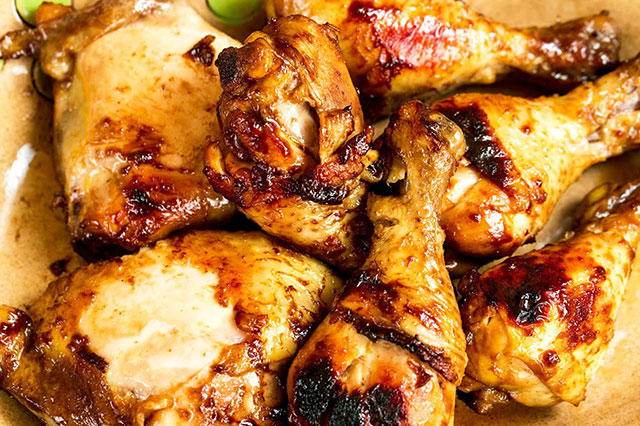
Chicken BBQ Sauce
• 1 cup ketchup
• 1⁄4 cup white vinegar
• 1⁄4 cup brown sugar
• 2 tablespoons paprika
• 1 tablespoon olive oil
• 2 teaspoons garlic powder
• 1⁄2 teaspoon cayenne pepper
(use less or omit if desired)