



Former NFA boss reflects on Nedbank Namibian Newspaper Cup
Former Namibia Football Association (NFA) administrator Barry Rukoro says the Nedbank Namibian Newspaper Cup has birthed a golden generation of national football talent.
Rukoro, who was the incumbent administrator of the NFA when the tournament launched in 2001, says the competition came at a time when the (NFA) wanted to address “the serious lack of structured youth”, while expanding its activity calendar.
“The thinking was simple: The more football that is played, the greater our chances of discovering new talent and accelerating its development in a sustainable way to national team level.
“Many will recall that the first edition, although regional in nature, did not have age restrictions,” he says.
The organisers quickly realised that if the competition was to serve as a genuine launching pad for emerging talent, “we could not allow already established players to dominate the platform”.
Rukoro says this led to the introduction of the under-20 format, ensuring the focus remained firmly on youth development.
He says the sponsorship relationship between the NFA and The Namibian developed during a particularly turbulent period.
“Not due to any fault of the newspaper, but because the football association itself was undergoing a difficult transition. We were a very young organisation, arguably the youngest football association in Africa at the time, and we were trying to transform into a modern institution amid significant leadership challenges,” he says.
“Naturally, this has created a cloud of negativity around football. That environment made us frequent subjects of criticism in the media, particularly from The Namibian. At times, we felt the coverage was unfair, and there was a sense that we were constantly in each other’s crosshairs. However, to their credit, The Namibianre cognised its corporate social responsibility.”
Rukoro says having served the community for many years and having benefited from that same community, the newspaper saw value in investing in it through football.
The former secretary general says he vividly remembers the early meetings at The Namibian’s offices, “involving our team, Richard, the then NFA president Petrus Damaseb, and myself”.
Those engagements laid the foundation for what became a transformative partnership, he says.
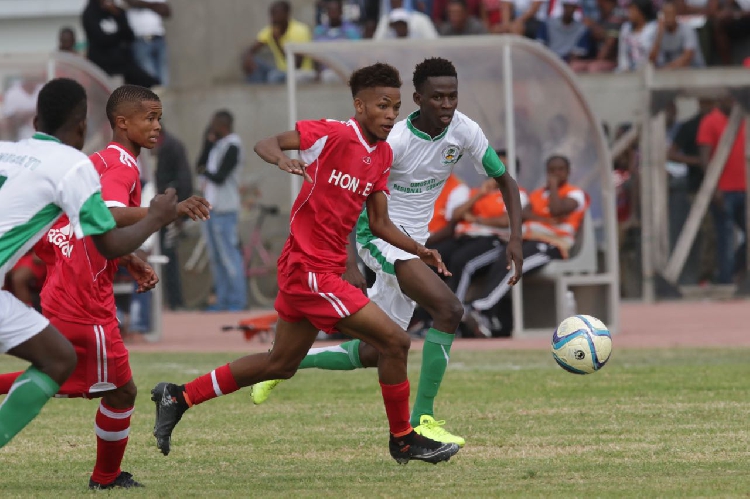
The NFA set goals that they wanted to reach through the competition.
“The most obvious goal,” he says, “was to identify and nurture new football talent. Selected players would enter a talent acceleration programme, where they were exposed to higher-quality training under national coaches at Football House. They were also taken on tours to West Africa and South Africa to compete against some of the best and most physically demanding opposition in their age groups, and sometimes even older.”
Rukoro says this process became the “oven” in which the NFA developed the core of what would later become a golden generation of Namibian football.
“It contributed significantly to achievements such as winning the 2015 Cosafa Cup, qualifying to Chan in Morocco, and qualifying for Afcon in Egypt. Without the newspaper cup, players like Petrus Shitembi, Larry Horaeb, Lovers Kamuhanga, Approcius Petrus, and many others may not have emerged,” he says.
BREAKING BARRIERS
“The less obvious, but equally important objective was strategic. We deliberately entered into a commercial partnership with one of our strongest critics. This decision broke down barriers and sent a powerful signal to the corporate world. It demonstrated that football was open, accountable, and worth investing in.”
As a result, Rukoro says other major sponsors gained confidence and the NFA subsequently formed the Football Consortium, bringing in reputable partners such as MTC and FNB Namibia, while the association’s relationship with Namibia Breweries evolved from ad hoc donations into a structured sponsorship agreement. “The NFA moved from receiving as little as N$60 000 in total donations to N$36 000 000, becoming the sixth-ranked football association in Africa in terms of commercial sponsorship revenue. It is difficult to imagine rapid progress without this partnership,” he says.
He says the NFA also benefited significantly in terms of infrastructure.
“The benefits of the tournament extended beyond football itself. In terms of accommodation, the requirement that school facilities hosting teams meet higher standards encouraged government investment in upgrading hostels, kitchens, and related infrastructure. These improvements benefited the schools long after the tournament had concluded.”He says similarly, football facilities across the country were upgraded to meet the demands of hosting the competition.
“These enhancements continue to benefit leagues and football development at all levels. The Nedbank Namibian Newspaper Cup has, in its own unique way, contributed meaningfully to the broader development of the game in Namibia,” Rukoro says.
“The organisers can still improve the competition by prioritising the use of regional coaches and excluding premier league coaches. There should also be a limit to the number of premier league players allowed to participate.”
He says these measures would open up opportunities for emerging coaches and players, ensuring the tournament remains true to its original purpose: being a platform for development and discovery.
In an age of information overload, Sunrise is The Namibian’s morning briefing, delivered at 6h00 from Monday to Friday. It offers a curated rundown of the most important stories from the past 24 hours – occasionally with a light, witty touch. It’s an essential way to stay informed. Subscribe and join our newsletter community.

The Namibian uses AI tools to assist with improved quality, accuracy and efficiency, while maintaining editorial oversight and journalistic integrity.
Stay informed with The Namibian – your source for credible journalism. Get in-depth reporting and opinions for
only N$85 a month. Invest in journalism, invest in democracy –
Subscribe Now!