



With the Global order under strain, the scramble for control of energy and minerals is increasingly framed as a matter of national security.
From Venezuela and Greenland to the Democratic Republic of Congo (DRC) and Ukraine, the competition for strategic resources is shaping global power dynamics, alliances, and conflicts.
We have lived through such eras before.
Across the Global South, the pursuit of oil, diamonds, timber, minerals, and other resources has distorted domestic governance and perpetuated asymmetric power relationships, too often leaving producer countries poorer, more divided, and more indebted than before.
Today, as the world races to secure the minerals needed for clean energy, digital technologies, artificial intelligence (AI), and defence industries, we are entering another such era – one that implies both great promise and grave peril.
But the speed and scale of change are different this time. No longer a distant goal, the transition away from fossil fuels is well underway and gaining speed.
In 2025, global investment in clean energy was double that in oil, gas, and coal.
Although oil and gas are still part of the energy mix and support public revenues in many economies, the energy transition is accelerating.
That transition depends on critical minerals, and demand is surging.
By 2040, on current projections and patterns of annual usage, lithium demand could increase five-fold, graphite and nickel demand may double, cobalt and rare-earth demand could climb by more than 50%, and copper demand could grow by nearly one third.
These projections are shaping current investment decisions, trade policies, and diplomatic strategies.
Still, more attention needs to be devoted to improving energy efficiency and supporting innovation in energy generation, recycling, and conservation.
The global mineral supply chain remains highly concentrated. The DRC produces about 70% of the world’s cobalt, and Indonesia produces nearly 60% of global nickel.
Processing is even more concentrated.
China has an average market share of 70% for 19 of the 20 minerals considered by the International Energy Agency to be strategic, and its role continues to grow.
In recent years, China accounted for much of the growth in refined cobalt, graphite, and rare earths, among other minerals.
HEIGHTENED COMPETITION
This concentration has heightened geopolitical competition and concerns about supply chain vulnerability, which, in turn, are reshaping how governments think about energy security and industrial policy.
In response, countries are seeking to lock in access through bilateral deals and strategic partnerships – often negotiated hastily and in secret.
When contracts are signed behind closed doors, citizens cannot see the terms under which their resources are pledged, and environmental and social costs often are treated as secondary concerns.
We know from experience what can follow: corruption, conflict, environmental damage, and the accumulation of unaccountable wealth.
Weak governance of natural resources has long undermined development.
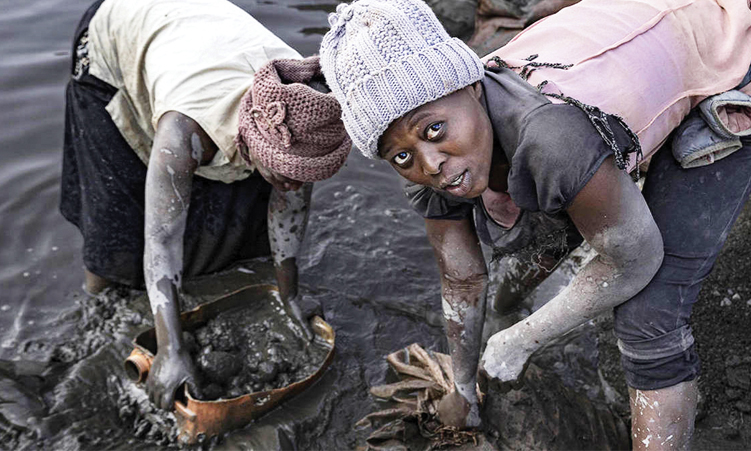
Too often, extraction has enriched a few individuals while leaving entire communities displaced, ecosystems degraded, and governments saddled with debt.
FAMILIAR RISKS
The rhetoric may have changed with the shift from oil to lithium, and from pipelines to batteries, but the risks are depressingly familiar.
The current race for critical minerals could easily reproduce the same injustices under a green banner. But that outcome is not inevitable.
If managed well, mineral wealth can be transformative, generating public revenues, supporting economic diversification, and funding investments in infrastructure, education, and health.
But this requires a decisive break from past practices, and that starts with ensuring transparency.
Transparency is not an optional add-on or bureaucratic excess.
It is the cornerstone of good governance. Citizens have a right to know how their resources are developed, who profits, what taxes are paid, and how revenues are managed.
Public scrutiny of contracts, company ownership, and fiscal terms is one of the most effective safeguards against abuses and mismanagement.
Participation matters, too.
Women, young people, indigenous peoples, and affected communities must have a meaningful voice in decisions that shape their land, livelihoods, and futures.
Protections must be maintained for the journalists, activists, and civil-society organisations who can hold governments and companies to account, thereby ensuring that resource wealth translates into shared prosperity.
There are proven models for doing this well.
OPENNESS IS POSSIBLE
For more than two decades, the Extractive Industries Transparency Initiative has shown that openness and accountability are possible, even in politically complex environments.
Today, 55 countries adhere to the global standards it has created for the extractive sector, working alongside companies and civil-society groups.
This approach now needs to be scaled up and adapted specifically for critical minerals.
These resources are not just inputs for the energy transition.
They are strategic assets shaping geopolitics, investment flows, and the future of development.
Global cooperation in this domain is urgently needed.
Government leaders must demand and apply the highest standards of ethical governance and transparency to ensure that this new era of resource competition delivers fairness, accountability, and lasting public benefit.
We have a choice.
We can repeat the mistakes of the past, or we can ensure that economies where mining contributes to growth also support peace, prosperity, and justice.
– www.project-syndicate.org
Helen Clark, a former prime minister of New Zealand and former administrator of the United Nations Development Programme, is the chairperson of the Extractive Industries Transparency Initiative Board and a member of The Elders.
– Ellen Johnson Sirleaf, a Nobel Peace Prize laureate and former president of Liberia, is the founder of the EJS Presidential Centre for Women and Development, co-chair of the Independent Panel on Pandemic Preparedness and Response, and a member of The Elders.
In an age of information overload, Sunrise is The Namibian’s morning briefing, delivered at 6h00 from Monday to Friday. It offers a curated rundown of the most important stories from the past 24 hours – occasionally with a light, witty touch. It’s an essential way to stay informed. Subscribe and join our newsletter community.

The Namibian uses AI tools to assist with improved quality, accuracy and efficiency, while maintaining editorial oversight and journalistic integrity.
Stay informed with The Namibian – your source for credible journalism. Get in-depth reporting and opinions for
only N$85 a month. Invest in journalism, invest in democracy –
Subscribe Now!