



Reflecting on The Namibian‘s 40 years of existence, Namibia Football Association (NFA) spokesperson Isack Hamata says the widely read newspaper was a unifying factor during the struggle for independence.
The paper hit the shelves on 30 August 1985.
“Since then the newspaper started to unite people in terms of how we needed to look at things, how we needed to appreciate where the country was at that stage, and the efforts that were made by those who were trying to liberate the country,” Hamata told Desert FM this week.
“There was no opportunity before The Namibian we were able to know about. Us from Lüderitz, for instance, what is happening in the north, what is happening in the west? Now you start to know.
“Liberation was not just about political liberation, but from a sport point of view as well,” he said.
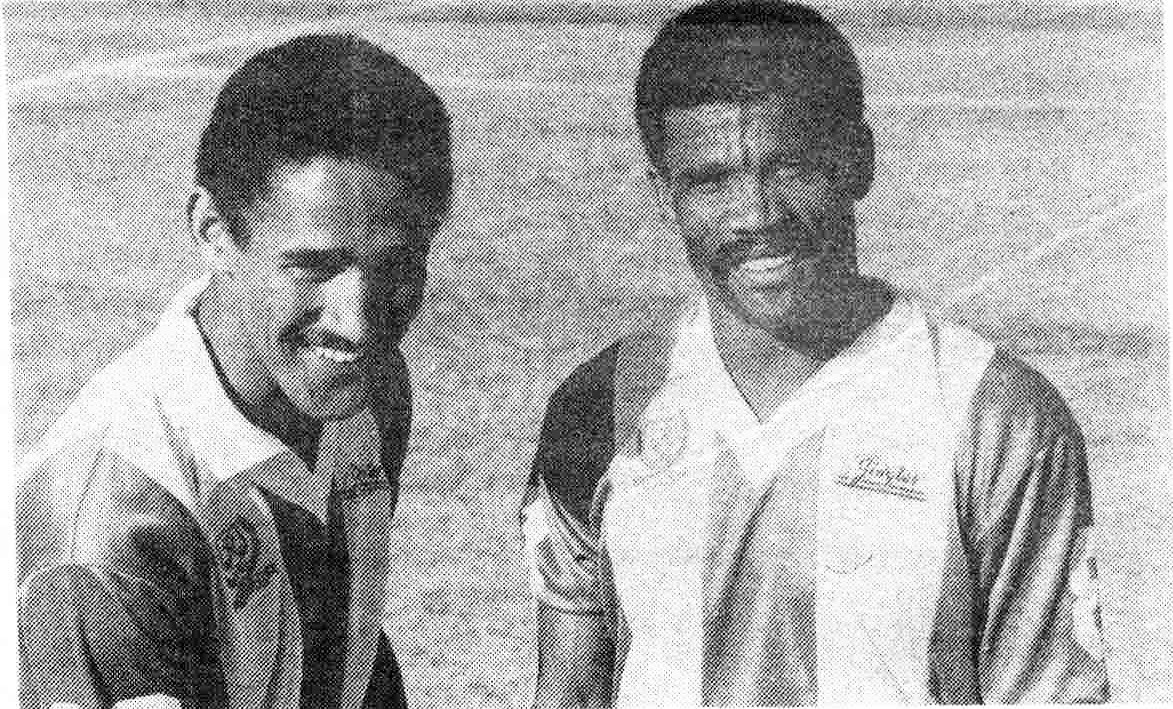
Recalling the back page of The Namibian of 30 August 1985, Hamata said: “The story of the back page on that particular day was the exclusion of certain teams from the Mainstay Cup, which was then the biggest football competition and the most attractive competition at the time.
“And the price of the Mainstay Cup was R7 000 at the time. There was a body called the Namibia Amateur Soccer League, headed by the late Tate Elliot Hiskia.
“They then decided that for some misdemeanors or whatever no National Soccer League team, which included the ‘Big Four’ and others, would participate because of one or two problems.
“That caused the postponement of the tournament from August to November.”
Hamata said there was no proper national league at the time.
“We had sub-unions, such as the West Union and the Central Football Association, which was mainly for the coloured and white clubs, and so it went.”
The former sport journalist recalled that the east and south were excluded from that arrangement and that only those clubs selected teams to invite.
“Because every other time it was either Blue Waters or African Stars that were winning the Mainstay Cup. As it were, those big teams did not play the Mainstay Cup and it was won by Ramblers.
“The back page of The Namibian on that day had a photo of Bertus Damon and Joseph Martin – both players from Ramblers.”
“Prior to The Namibian hitting the shelves and the streets connecting with our eyeballs we were very ill-informed about what was happening in the sport space,” he said.
Hamata congratulated The Namibian and its first editor-in-chief Gwen Lister and others “who had the guts and courage to put together something like this”.
“It was not without struggles, and for it to reach this point . . . may it last longer.”
He said The Namibian has shaped the country’s history.
“This paper has created the opportunity for us to really understand where we are as a country – particularly those of us who were on the side of the oppressed,” he said.
Hamata said The Namibian has become a source of news, knowledge and information.
In an age of information overload, Sunrise is The Namibian’s morning briefing, delivered at 6h00 from Monday to Friday. It offers a curated rundown of the most important stories from the past 24 hours – occasionally with a light, witty touch. It’s an essential way to stay informed. Subscribe and join our newsletter community.

The Namibian uses AI tools to assist with improved quality, accuracy and efficiency, while maintaining editorial oversight and journalistic integrity.
Stay informed with The Namibian – your source for credible journalism. Get in-depth reporting and opinions for
only N$85 a month. Invest in journalism, invest in democracy –
Subscribe Now!