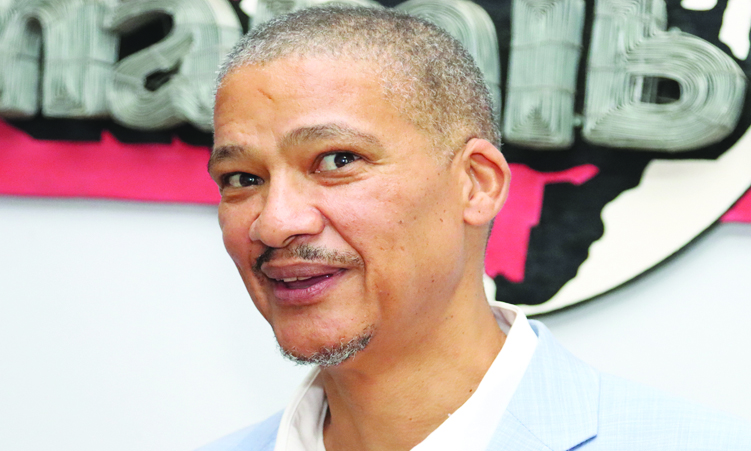




Graham Hopwood had been reading The Namibian newspaper from its inception in 1985 while involved in the campaign for Namibian independence in the United Kingdom (UK).
He says news reached them in the UK almost a week late as it had to be sent via post first.
Even so, Hopwood says it was a vital source of information, revealing both the brutality of the apartheid regime and the courage of Namibians who resisted it.
He joined The Namibian in 1992 as a reporter after a short time in the communications department at the Council of Churches in Namibia.
“I was excited to be part of a dynamic newsroom in the newly emerging nation. It was a privilege to work with and learn from the likes of Gwen Lister, Jean Sutherland, Tyappa Namutewa, Eric Boois, Conrad Angula and Mbatjiua Ngavirue,” he says.
Having played a role during the liberation struggle, Hopwood felt it was important for the paper to establish its political independence post-independence which he says put the paper on a collision course with the government sometimes.
“I remember controversies over the purchase of the Falcon jet and the so called ‘borehole saga’. This were both early warning signs of the profligate spending and abuse of state resources that became more visible in later years,” Hopwood says.
In February 1994, he covered the reintegration of Walvis Bay, something he had worked on from abroad. He says this was the most satisfying experience or story he had covered during his journalism time at The Namibian.
“It was particularly resonant for me to be able to provide the front page story and photographs of the celebrations,” he says.
Hopwood had also reported on environmental harm the Rossing mine workers had experienced and the lingering brutality within the police force.
He also covered the Frank Commission, established in the early 1990s by president Sam Nujoma to probe irregularities which he says influenced his interest in anti-corruption statutes and policies. He adds that The Namibian has always stood firmly for human rights, giving a voice to ordinary Namibians seeking dignity and a better life.
According to him, The Namibian has always been a fearless newspaper that reports on crimes and exposes injustices.
He hopes the paper remains with those values in its bedrock for decades to come.
“The Namibian will continue to be at the heart of the country’s democracy, continuing struggle for human rights,” says Hopwood.
Hopwood left The Namibian in 2004 to move into research but continue to be associated with the newspaper and currently serve on its board of directors.
– Compile by Dolly Menas
In an age of information overload, Sunrise is The Namibian’s morning briefing, delivered at 6h00 from Monday to Friday. It offers a curated rundown of the most important stories from the past 24 hours – occasionally with a light, witty touch. It’s an essential way to stay informed. Subscribe and join our newsletter community.

The Namibian uses AI tools to assist with improved quality, accuracy and efficiency, while maintaining editorial oversight and journalistic integrity.
Stay informed with The Namibian – your source for credible journalism. Get in-depth reporting and opinions for
only N$85 a month. Invest in journalism, invest in democracy –
Subscribe Now!