



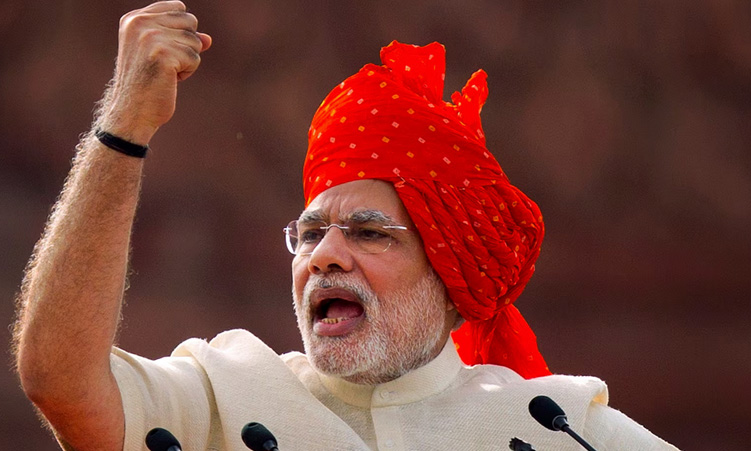
As the distant rumble of a helicopter drew closer, cheers erupted from the gathered crowds in anticipation.
By the time India’s prime minister finally stepped on to the stage, bowing deeply while immaculately dressed in a white kurta and peach waistcoat and with a neatly trimmed beard, the chants had reached a deafening pitch: “Modi, Modi, Modi.”
These scenes, at a campaign rally on the outskirts of the Uttar Pradesh city of Meerut, were replicated across the country as Modi and his Bharatiya Janata party (BJP) sought to win a third term in India’s election last year.
Pundits and polls had resoundingly predicted that Modi will be brought back to power in June last year.
‘MESSIANIC SPELL’
Some called for him to rule India for the next 50 years, others spoke of him as an almost holy figure.
Many wore masks of his face. With over 25 years of experience in governance, the first chief minister and then as prime minister, Modi is one of the few leaders who has won a third term to lead India.
“He casts a certain messianic spell on his voters,” says Dwaipayan Bhattacharyya, a professor of political science at Jawaharlal Nehru University in Delhi.
“It’s this combination of political power and perceived divinity in his persona which enables the BJP to project him as the one beyond scrutiny.”
There is little doubt among Indians that Modi’s 10 years in power has already left an indelible mark on the country.
To some it is the optimistic story of India rising to become the world’s fastest-growing economy, courted by powerful western leaders and multinational corporations, of efficient governance and technological advancements that have benefited the public, and of the country freeing itself from the politics of elites and the ‘chains of colonisers’ while reclaiming its historic Hindu civilisational greatness.
Yet to others it is a story of democratic backsliding and growing authoritarianism, of crony capitalism and a growing chasm between rich and poor, of the erosion of freedom of the media and judicial independence, attacks on secularism, liberal institutions and civil society, of publicly condoned Islamophobia and growing state-sponsored persecution of minorities, primarily India’s 200 million Muslims.
Modi’s status – what many refer to as a ‘cult of personality’ – has continued to rise exponentially while space for criticism of him has continued to be in sharp decline.
Notably, he has not done a single press conference in 10 years.
“Opposition to Modi is painted as opposition to the country itself,” Bhattacharyya says.
Modi’s face and name are attached to almost every government welfare scheme, and are visible on every government poster and even on people’s food rations and Covid vaccination certificates.
The party’s election manifesto was simply named ‘Modi’s guarantee’.
‘FULL OF HIMSELF’
“Modi is very full of himself,” says one BJP figure who requested anonymity due to the repercussions of discussing the prime minister with the media.
They describe him as prone to answering questions with “long, self-important stories”.
“But Modi’s ego is what gives him the ability to have this grand vision for what India will become,” they say.
“He is talking about laying the groundwork for the country for the next 1 000 years.”
ROOTS
Narendra Damodardas Modi was born in 1950 in a small town in northern Gujarat, as the third of six children, to a poor, lower-caste family.
Growing up, their house did not have electricity and his father produced cooking oil and ran a small tea shop next to the local railway station.
His modest upbringing has become a hallowed part of Modi’s populist narrative, helping to project him as incorruptible, as well as giving him appeal among poorer, lower-caste communities that previously never voted BJP.
According to Modi’s biographer, Nilanjan Mukhopadhyay, Modi displayed traits that would later define his political career even as a child.
Recalling a conversation with one of Modi’s school teachers, Mukhopadhyay said: “Modi liked theatre a lot in school, but would only do leading roles. If he did not have the main role, he would not perform in that play.”
It was as an eight-year-old child that Modi first wandered into the offices of the Rashtriya Swayamsevak Sangh (RSS), the right-wing Hindu paramilitary organisation that has worked for almost a century to push India towards becoming a Hindu state.
His interest in the RSS began as a form of extracurricular entertainment in his otherwise quiet village, but he soon began to take a proactive role in promoting Hindu identity.
To this day, over six decades on, RSS ideology remains the foundation of Modi’s political beliefs and his agenda as prime minister.
Under his two terms, militant Hindu nationalism has become the dominant political ideology in India, while core RSS policies have been brought to fruition and RSS figures are present in almost all main institutions.
After finishing school, Modi decided to dedicate himself fully as an RSS foot soldier, known as a pracharak, which meant he had to be subservient to the organisation, including a commitment to remain celibate and not to marry.
Yet he had a secret he would keep for years: aged 13, his parents had arranged his marriage to a local girl.
After Modi left home at 17, he reportedly never moved in with his wife and did not disclose her existence.
One Indian journalist who later tracked her down when Modi became the chief minister of Gujarat found her living in poverty, with no contact or support from him.
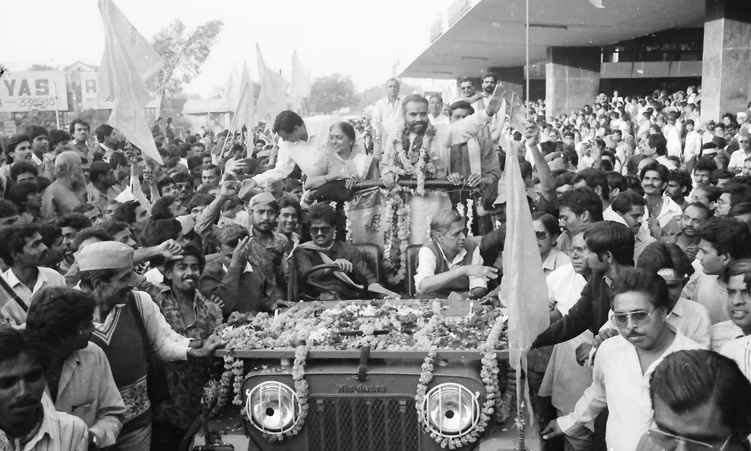
In 1987 the RSS deputed Modi – who had earned a reputation as a dynamic, efficient organiser – to be part of the newly formed BJP, a party born out of the organisation’s desire to forward its agenda through politics.
By 2001, Modi’s stature and ambition had grown to such an extent that when BJP won the Gujarat state elections, he was named chief minister – the first RSS pracharak to hold such high political office.
DAMAGED REPUTATION
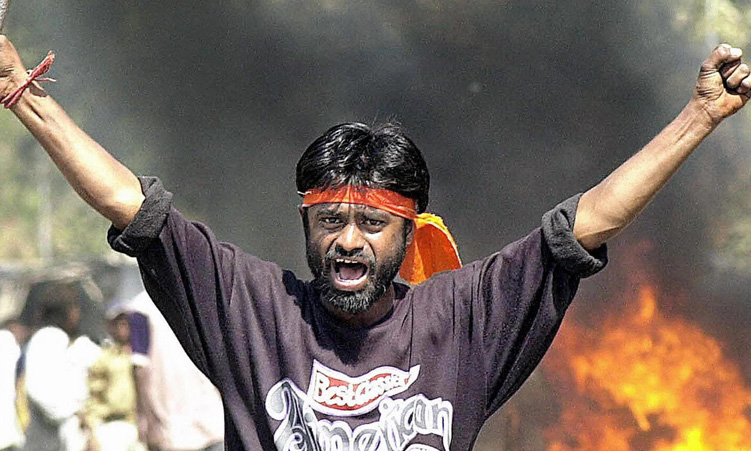
Almost immediately after he became chief minister, events unfolded in Gujarat that would colour his reputation forever.
In February 2002, train coaches carrying Hindu pilgrims were set alight after a dispute, killing 59 people.
Muslims were blamed and the following day a coordinated attack by right-wing Hindu groups began on Muslim neighbourhoods, where hundreds were tortured, killed, burned alive and gang raped, while the police were accused of standing by.
More than 1 000 people were killed, about 800 of them Muslims.
Yet, rather than ending his political career, Modi went on to remain chief minister for the next 12 years.
– The Guardian
In an age of information overload, Sunrise is The Namibian’s morning briefing, delivered at 6h00 from Monday to Friday. It offers a curated rundown of the most important stories from the past 24 hours – occasionally with a light, witty touch. It’s an essential way to stay informed. Subscribe and join our newsletter community.

The Namibian uses AI tools to assist with improved quality, accuracy and efficiency, while maintaining editorial oversight and journalistic integrity.
Stay informed with The Namibian – your source for credible journalism. Get in-depth reporting and opinions for
only N$85 a month. Invest in journalism, invest in democracy –
Subscribe Now!