


ALTHOUGH I have seen all the bills now being paid via cellphone banking, electronic money being introduced and airtime being bought through mobile devices, I am yet to see technology that tries to tackle the gap of access to finance in Namibia among small enterprises, rural poor communities, the urban poor and largely the unbanked enterprises.
Throughout the past months that I have been working mostly with the informal sector for business profiles, I have been impressed by the amount of money some of these people make. But my question has always been: are most of these profits banked? And if banked, how does banking this money make it easier in terms of growing their businesses, apart from the fact that the money is safer in the bank?
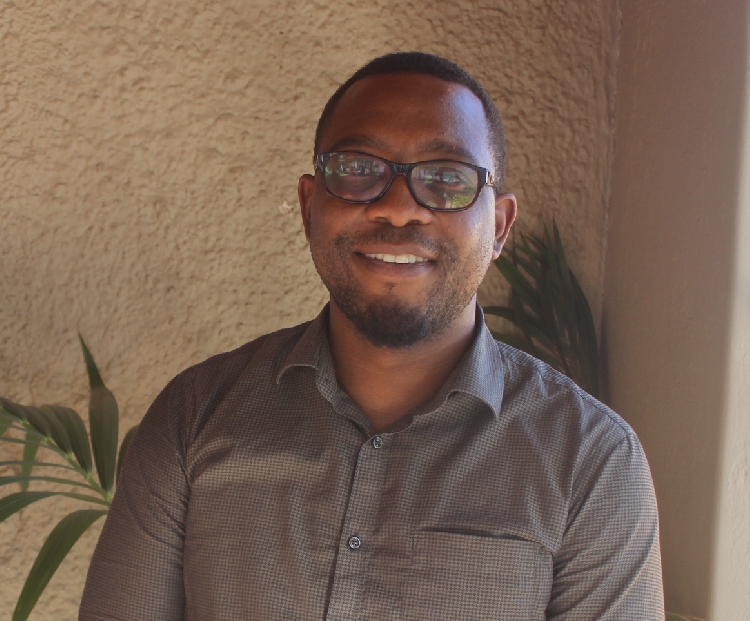
John Shivute (35) has introduced an innovative intervention which will fill this gap, and furthermore make life easier for many.
Prior to our appointment for the interview the previous day, here comes Shivute. Gentle and soft-spoken, he was well-dressed like a bank executive.
“Do you work in a bank?”, I asked out of curiosity. I swear I did not ask just because of the way he looked like a banker, but because of his idea too: the mobile app that he came to explain to me.
He said no. Shivute is employed at a local company, but that has got nothing to do with his business idea.
The mobile application, dubbed the bank mobile app, is Shivute’s own baby, and it seeks to help “maximise profits, increase production and contribute to the idea of project creativity, project implementation, hard work and self- empowerment.”
This mobile app will have a payment function, a deposit function, savings function, withdrawal function, as well as personal loan and overdraft facility request functions.
The app connects to one’s bank account.
“With bank mobile app, street vendors can also participate in opportunities that banking brings about,” he said, adding that banks currently face a challenge of not having sufficient information about street vendors.
Shivute said nowadays if one wants to get a loan, the banks ask for a payslip, and that is what one may not have.
Statistics from the key highlights of the Namibia Labour Force Survey 2016 as released last month by the Namibia Statistics Agency (NSA) show that the number of people employed in 2014 dropped from 708 841 to 676 885 in 2016.
But a joint report by the World Bank and the Namibia Statistics Agency launched in Windhoek on Monday show that Namibia’s fiscal policy lifted 118 000 people out of poverty, and cut the rate of severe poverty by nearly a quarter. According to the report launched this week, Namibia’s system of taxes and social spending tends to benefit its poorest citizens the most, while tax revenues tend to come from the richest 10% of the country’s citizens.
While Namibia has a lot of unemployed who mostly turn into informal entrepreneurship for a living, they are not taxed, while they are mostly carried along by the richest 10%.
But they make lots of money, while some have bank accounts. This makes them not being eligible to enjoy the banking benefits, such as getting an overdraft or a business loan.
Shivute’s mobile banking app wants to help them enjoy all the benefits of banking.
He said the application will help the bank get once-off information about the transactions the business owner has been performing, and in the process assist them in determining whether this person is eligible for a loan or not.
“It’s like now when you apply for a loan from the bank, they have something they check that has been recording whether you have been meeting your debit order instalments on time, and so on. They use that to decide and see your eligibility, among other things. This application will thus store all that data, and make it easier for the bank to evaluate those in the informal sector such as vendors,” he explained.
The Namibian has seen a copyright certificate allocated to JNN Shivute Investment CC called the Bank Mobile Application.
Shivute said the mobile app will also reduce long queues in the banks and at ATMs because it empowers the SME community and a normal person in the street to transact via the app. Thus, there would not be much need to go to a banking institution or ATM to perform transactions. This will likewise minimise transaction costs for communities which are not blessed with banking infrastructure.
Shivute, an honours degree holder in development finance, will get his master’s degree at the Stellenbosch University’s business school in South Africa soon.
The focus of his thesis is financial development and economic growth, and this enabled him to come up with the application.
He added that since financial development contributes positively to economic growth, financial institutions, especially commercial banks, need to focus on inclusion in banking and making sure that access to finance is accorded to all, especially SMEs, the remote rural inhabitants and the urban poor.
“The app will act as a mechanism to put pressure on financial institutions to accord overdrafts and personal loans to SMEs and communities that have once been excluded from banking because they do not have payslips,” he said, adding that with the mobile app, banks will accord overdraft and personal loans based on cashflow activities observed in the app by bank officials, thus promoting access to finance.
Shivute believes that development has to start from the bottom up because once Namibia achieves Vision 2030, the country will still have issues of industrialisation only happening in some parts while others would be left out, thus further exacerbating the challenge of inequality.
In an age of information overload, Sunrise is The Namibian’s morning briefing, delivered at 6h00 from Monday to Friday. It offers a curated rundown of the most important stories from the past 24 hours – occasionally with a light, witty touch. It’s an essential way to stay informed. Subscribe and join our newsletter community.

The Namibian uses AI tools to assist with improved quality, accuracy and efficiency, while maintaining editorial oversight and journalistic integrity.
Stay informed with The Namibian – your source for credible journalism. Get in-depth reporting and opinions for
only N$85 a month. Invest in journalism, invest in democracy –
Subscribe Now!