



Ecobrick Namibia aims to tackle plastic waste at Swakopmund by turning used plastic into bricks, promoting personal responsibility and environmental awareness in the community.
Robyn Röhm, one of the project’s founders, wants to teach Swakopmund residents about the pressing problem of plastic waste.
“The reality is here at Swakop, it’s just getting worse. You can smell plastic burning every day. When you put your nose in the air and you go, what’s that? It’s plastic.”
She says many plastics give off a toxic molecule called dioxin when burned, which residents inhale.
This is not only extremely detrimental to wildlife, but breaks down into microplastics that end up in the food, water and air humans consume.
“It’s in our ovaries, it’s in our testicles, it’s in our lungs. We must learn how to keep using it, but know what we’re dealing with,” Röhm says.
USEFUL TRASH
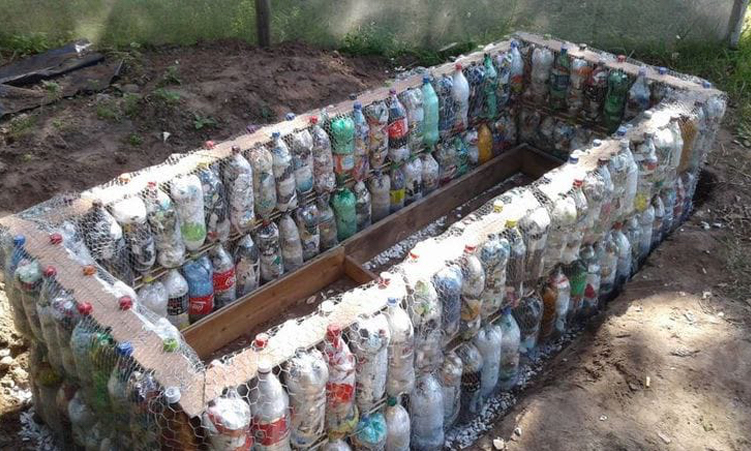
Eco-bricking involves manually packing used plastic into polyethylene terephthalate (PET) bottles, which can then be used as building blocks to create anything from furniture to structures and even whole buildings.
This process removes plastic from the environment over the long term, with one 1.5-litre bottle containing as much as three bin bags of waste.
Ecobrick Namibia is affiliated with the Global Ecobrick Alliance, which sets a specific standard as to weight and packing techniques to create bricks that are a safe and uniform building material.
PERSONAL RESPONSIBILITY
Ecobrick Namibia’s vision is one of personal responsibility. Rather than eliminating plastic at the source, the project aims to make people aware of how they handle plastic within their own homes.
Röhm herself converts all of her household plastic into ecobricks.
“I know this is my responsibility and I haven’t contributed to the landfill. This means I have the right to say it is unnecessary, it’s dangerous, and it has to stop,” she says.
“You change your relationship with plastic, which means you’re not using it in a way that isn’t mindful. And that’s all that’s required of humans: We don’t have to do it perfectly, we just have to do it.”
The project is collaborating with Stone Valley, an environmental management facility being developed at Swakopmund’s river plots.
EDUCATIONAL
To date, more than 300 schoolchildren have been able to learn about the problems associated with single-use plastic bags thrown away in nature.
Stone Valley is also happy to receive collected ecobricks to use in practical ways, like building raised garden beds to enhance food security.
In addition to this, Nelau Hauluu, an environmental researcher focusing on air quality at Swakopmund’s DRC settlement, recently joined Ecobrick Namibia.
The project plans to be present at RoundTable Swakopmund’s Trolley-Dash on 12 April to further educate others on its mission and process.
With more support Röhm believes huge potential exists for everything from waste reduction and job creation to food security and environmental preservation.
“It’s a little brick with a huge plan behind it,” she says.
“My final goal with this would be zero output of plastic into the landfill, where it’s being burnt or blown into the environment. I want individual households to take responsibility for their plastic use and to understand how toxic it is, and to turn it into something really, really useful.
“I want to be able to open my doors and not smell burning plastic.”
In an age of information overload, Sunrise is The Namibian’s morning briefing, delivered at 6h00 from Monday to Friday. It offers a curated rundown of the most important stories from the past 24 hours – occasionally with a light, witty touch. It’s an essential way to stay informed. Subscribe and join our newsletter community.

The Namibian uses AI tools to assist with improved quality, accuracy and efficiency, while maintaining editorial oversight and journalistic integrity.
Stay informed with The Namibian – your source for credible journalism. Get in-depth reporting and opinions for
only N$85 a month. Invest in journalism, invest in democracy –
Subscribe Now!