



Rural-urbun migration refers to the movement of people from rural to urban areas, or simply from villages to towns or cities.
This migration is triggered by several socio-economic factors, such as employment, business, education, and health.
In Namibia, the phenomenon is particularly conspicuous as evidenced by the influx of people from rural to urban areas in recent years in search of better employment and education opportunities.
Some people also travel beyond Namibia’s borders and emigrate to developed countries across the globe in search of better economic opportunities to sustain their livelihoods.
Urban areas are perceived to provide better livelihood opportunities, because of their myriad larger-scale developmental and economic activities.
However, urban areas in Namibia are characterised by an increasing cost of living attributed to domestic and international economic eventualities, increasing commodity prices, and climate change that continue to threaten sustainable livelihoods in the country.
Moreover, the current economic conditions, global tensions, and the Covid-19 pandemic have exacerbated society’s vulnerability to poverty, thus prompting further rural-to-urban migration.
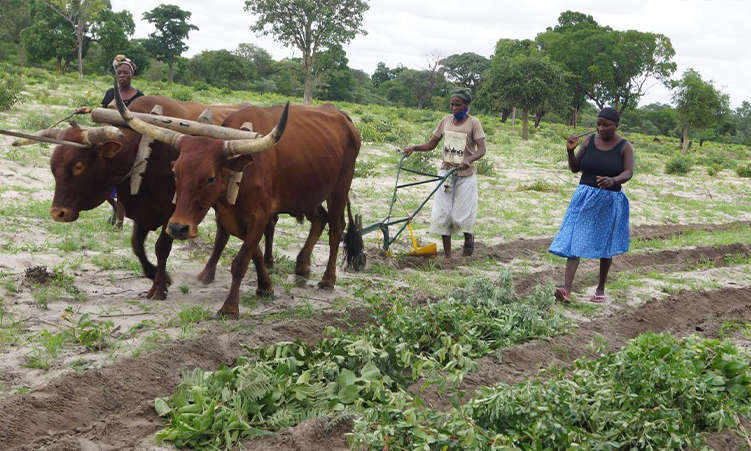
This migration has a negative impact on agricultural production as it results in a decrease in the rural population.
Therefore critical agricultural skills and the labour force is moved out of production areas.
Ultimately this reduces potential and sustainable agricultural productivity, especially at household level.
In addition, the scarcity or poor supply of water and electricity, including their high maintenance costs, have become a burden in rural areas, and this has led to the abandonment of some agricultural activities.
Agriculture in Namibia is an economic pillar supporting all livelihoods in the form of food, employment, and income, and constitutes the main economic activity in rural areas, either for subsistence or on a commercial basis.
A reduction in agricultural productivity negatively affects food systems in the country, threatening food self-sufficiency and food security in the country.
Moreover, local food demand increases, and affordability becomes impossible for the vulnerable.
This, in turn, exerts tremendous pressure on the provision of food and other services such as land, water, and sanitation in urban areas.
At large, the reduction in agricultural productivity in the country results in increased spending on importation by the country to meet local food demand.
Moreover, government feeding initiatives such as school feeding programmes and the food bank may not be sustainable if local food production is not enhanced to fill the gap.
Thus, to ensure food self-sufficiency and food security in Namibia, local food production is key.
This can be achieved through programmes aimed at promoting and assisting local food production in rural areas and by providing appropriate support to individual and community projects.
To this end, all stakeholders, including local authorities in urban areas, have critical roles to play in reducing rural-urban migration through coordinated efforts aimed at promoting agricultural projects in rural areas.
To ensure the sustainability of these projects, local markets, which could include government institutions such as schools, hospitals and prisons, may have to be developed to absorb the produce.
In addition, critical support services such as water and electricity should be well developed to aid in the reduction of the cost of production.
Lastly, agriculture is key to ensuring economic development and sustainable livelihoods in the country, and should be cultivated deep in the education system as one of the compulsory subjects from the primary level onwards.
The rural development agenda needs to stimulate economic activities aimed at sustainable food production and market linkages, and to retain skills and the labour force in rural areas.
- Erastus Ngaruka is a technical adviser on livestock and rangeland management.
In an age of information overload, Sunrise is The Namibian’s morning briefing, delivered at 6h00 from Monday to Friday. It offers a curated rundown of the most important stories from the past 24 hours – occasionally with a light, witty touch. It’s an essential way to stay informed. Subscribe and join our newsletter community.

The Namibian uses AI tools to assist with improved quality, accuracy and efficiency, while maintaining editorial oversight and journalistic integrity.
Stay informed with The Namibian – your source for credible journalism. Get in-depth reporting and opinions for
only N$85 a month. Invest in journalism, invest in democracy –
Subscribe Now!