




• Samira SawlaniON International Women’s Day, the social media profiles of first ladies around the world are full of posts about equality, women’s empowerment, and their own achievements.
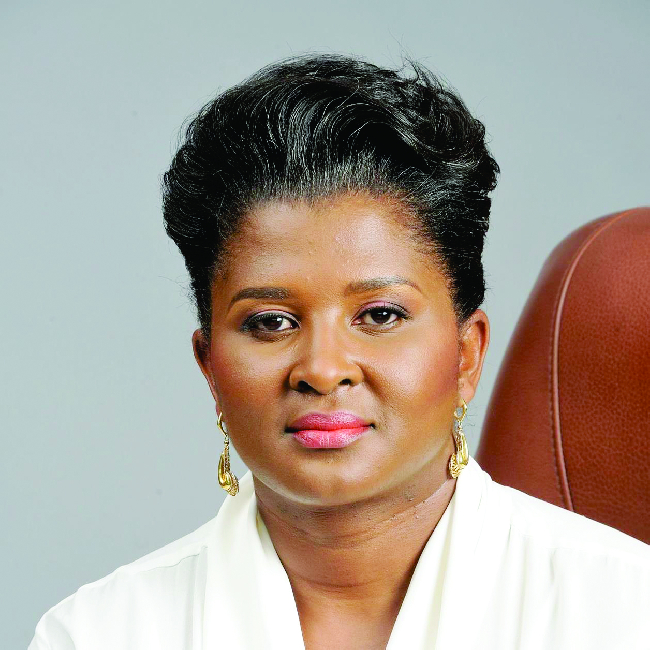
This year, however, Monica Geingos did something different.
The lawyer, entrepreneur and first lady of Namibia shared a video in which she spoke about the harassment and abuse she has faced, particularly online.
Displayed on screen were tweets and posts featuring hurtful, insulting and misogynistic comments about her, while she narrates: “When I’m not busy being a ‘manipulative, deceitful gold-digger’, I am ‘busy running the country’, as I have ‘bewitched my old sugar-daddy husband’, who is ‘too blind to see through my feminine charms’.”
The video went viral, and received widespread media coverage.
The world is not used to first ladies speaking so honestly, and Geingos received plenty of praise – but just as much criticism.
“It’s not regarded as the diplomatic thing to do,” Geingos says.
“But I was finding too many young women saying to me they did not want to be in the public eye because they were seeing what I was going through. It made me feel that through my silence, I was doing these young women a disservice.”
Geingos was speaking via Zoom from Namibia’s capital, Windhoek.
“As women, when we speak out on these issues, there is always backlash. People will say: ‘You’re talking about sluts and whores and prostitutes, are you not ashamed of yourself?’. The message is: ‘You can talk, but don’t annoy us.’”
GOLDEN THREAD OF MISOGYNY
Geingos married Hage Geingob shortly before he took office in 2015 in a ceremony described by The Namibian as “a low-key Valentine’s Day wedding”.
She was already, at the age of 38, one of the country’s most successful business leaders: managing director of a private equity fund, a member of the president’s Economic Advisory Council, and board chair of EBank Namibia – the first woman to chair a commercial bank in the country.
When Geingob was sworn in as president, the couple voluntarily declared their assets, which were worth around N$110 million (around US$7 million), of which nearly half came from Geingos.
Despite her stellar career, Geingos was expecting to be on the receiving end of abuse as the couple took up residence in State House.
There is, she says, a “golden thread of misogyny which runs through most of our countries”.
“The position of first lady is a very gendered role, and ultimately it is yours purely because of your proximity to a man and not on merit … Thus it is susceptible to abuse because there aren’t clear rules of how you engage with it,” she says.
It didn’t help that she did not feel entirely comfortable in her new, unelected position.
“The first shock was the legitimacy crisis. Suddenly I found myself with unearned privilege.”
This was seized upon mercilessly by online critics who called her a gold-digger.
Geingos was bemused: They clearly had not read her balance sheet, which, she says, shows a “material deterioration” in her personal fortune since she became first lady.
Instead, the insults seemed to be driven by assumptions based on the age difference between her and her husband.
Geingos is 44, and president Geingob is 80.
“I am not particularly fashionable or flashy. I don’t have an asset base which I accumulated after being first lady, so the only trope they can reduce me to is, ‘she married this older powerful man’, and I think our relationship deserves the grace of not being reduced to that.”
Underpinning the ‘gold-digger’ narrative is the idea that a woman is only successful because she has slept her way to the top or because of her proximity to a powerful man, that women do not have the skills or talent to succeed on their own.
Ironically, this same narrative will often hold women responsible for the decisions the men around them make.
She cites one example: A church leader was angered after she said publicly that Namibia’s law against sodomy should be scrapped. She made it clear that this was her personal opinion and that she has no influence over legislation. But the church leader would not believe her.
“He said to me: ‘You are the president’s wife and you will influence him,’ and that’s why I say the only time a man is willing to undermine the agency of another man, is when it’s time to blame his wife. All of a sudden my husband has no agency, and because his wife thinks a law should be scrapped, it will be.”
Sodomy remains a crime in Namibia.