



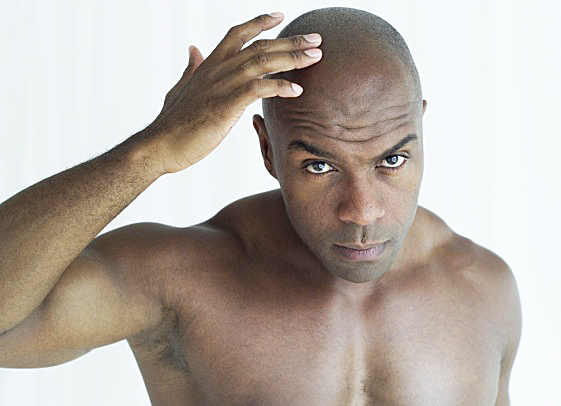
While it’s a well-known fact that many men dread going bald, did you know the fear of becoming bald or of bald people is called peladophobia? Even those men who’ve been genetically spared the bald spot are still unwilling to embrace the bles-kop.
Years of observing have led to a realisation that not many young men are keen on embracing a cheesekop.
Twenty-six year-old Moziah Pharoah says there are advantages to hairlessness.
“I have been shaving my hair since 2012, I do not have any issues with being bald because it is easy to groom and takes less time when dressing.”
Michaeal Kayunde, a 22-year-old freelance writer, feels he is still too young to embrace the style.
“I am fearful of going bald and it is not my type of style. Maybe when I am older I will embrace going hairless.”
The fear of cutting one’s hair may be compounded by the fact that sometimes society shuns bald men and young boys by mocking them, especially during the sensitive period of adolescence during which teens often mercilessly kids tease those who sport the bald look.
‘Kyk, daar kom bleskop’ (look, there’s bald head).
King Kennedy Shivute, a 22-year-old sales consultant, says he would never shave off all his hair.
“I don’t like the shape of my head,” he admits. “And my skin is very sensitive. The sun burn would be unpleasant.”
For those men who are going bald naturally, there are unfortunately few options, it is a natural inevitability. While some men spend thousands of dollars and much time trying to fight it, others embrace the change and live with it gracefully.
According to Wikipedia, hair production occurs in stages including growth (anagen), cessation (catagen), and rest (telogen) phases.
Hair grows during the anagen phase. During this phase, the root of the hair divides rapidly adding to the hair shaft. Scalp hair stays in this active growth phase for two to seven years and is genetically determined.
The catagen phase kicks in at the end of the anagen phase. It indicates the end of the active growing cycle. This phase can last for three weeks until hair converts to a club hair. A club hair is created during the catagen phase when the part of the hair follicle in contact with the lower portion of the hair becomes attached to the hair shaft.
This process severs hair connection to blood supply, as well as to cells that produce new hair. The hair follicle enters the telogen phase when club hair has formed.
This is the resting phase of the hair follicle. When the body experiences extreme stress, 70% of the hair follicle enters this stage. The hair falls causing a noticeable sign of a condition called telogen effluvium.
The club hair is the final product of a hair follicle in the telogen phase and is a dead fully keratinised hair. A normal scalp sheds 50 to a hundred club hairs daily.
According to webmd.com, the balding process often starts with a receding M-shaped hairline and thinning hair on top of the head, this which is known as male pattern baldness. It is called androgenetic alopecia and is caused by a by-product of testosterone called DHT. It only happens in the front and top of head because this is where hormone sensitive follicles live.
Here the anagen stage gets shorter and the resting (telogen) stage longer. The result is thin hair, very short hair and many follicles free of hair shafts.
Sem Ipinge, who has the condition described above, says he is comfortable with going bald. “I readily shave my hair when it grows and the bald patches are easily noticeable. I have no problem with the fact that I am a naturally bald man.”
When the immune system attacks the hair of a growing bulb, hair follicles are forced into the catagen stage. Hair breaks and falls out in patches scattered across the scalp.
When the immune system attacks only the hair bulb, hair can regenerate but when it attacks the stem cells in the bulge of the follicle, hair loss becomes permanent.
Men who do not want to go bald can breathe a sigh of relief as treatments have and are being developed to combat balding.
Men can buy a shampoo that consists of an ingredient called Minoxidil which fights androgenetic alopecia. It has been proven to have worked in most men that used it in accordance to prescription.
Propecia is another drug that can be used but it works only for men as it stops testosterone from developing its by-product DHT, which consists of signals that shorten the growth cycle and extend the rest stage of hair with hormone sensitive follicles.
There is also hair replacement surgery to consider, which can be painful and costly but has yielded positive results.
Balding men can find solace in the following findings. According to toolsformen.com, cutting one’s hair has a few benefits: When a person is bald, you can save money on weekly trips to the barber just to maintain your hair trim, you can even save more by buying yourself a hair clipper and cutting your own hair at home.
Some women are even more attracted to bald-headed men because bald men exude more confidence as shaving all their hair off says they are comfortable with their bodies. They seem more organised, they appear to be well put together and neat.
At the end of the day, it’s all about being comfortable in your own skin and letting that confidence shine through.
In an age of information overload, Sunrise is The Namibian’s morning briefing, delivered at 6h00 from Monday to Friday. It offers a curated rundown of the most important stories from the past 24 hours – occasionally with a light, witty touch. It’s an essential way to stay informed. Subscribe and join our newsletter community.

The Namibian uses AI tools to assist with improved quality, accuracy and efficiency, while maintaining editorial oversight and journalistic integrity.
Stay informed with The Namibian – your source for credible journalism. Get in-depth reporting and opinions for
only N$85 a month. Invest in journalism, invest in democracy –
Subscribe Now!