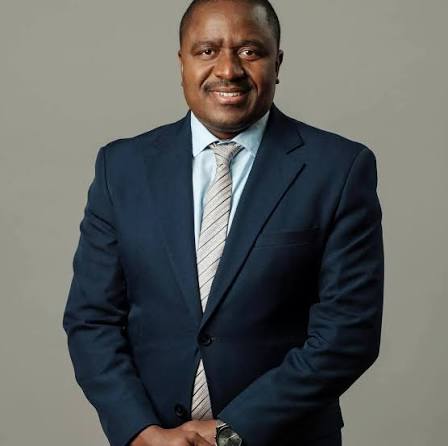








SHAUN WHITTAKER OVER the past few years, cases of hysterical behaviour among the youth have been reported at several schools (e.g. Mvula and St Theresia Junior Secondary Schools).
During March 2015, as another illustration, pupils at the Otjomuise Project School exhibited strange conduct such as screaming, speaking in deep voices and fainting.
This spectacle started when one teenager claimed to have encountered a ghost. Regrettably, there is a lack of public awareness of a scientific clarification of the actions of these young people and there is still too much talk about spirits, witches and demons than about this malady.
From a sociological view, this phenomenon is called ‘mass hysteria’. In psychology, Sigmund Freud – who was trained as a neurologist – simply wrote about ‘hysteria’. This was undeniably also one of the most regular psychological illnesses that traditional healers or shamans had to deal with during the feudal era.
Of course, indigenous communities have always had their own way of identifying mental disorders like, say, ‘amafufunyana’ (schizophrenia) in South Africa. Hysteria was, for instance, mentioned as ‘nervios’ among Egyptians or as ‘chindi’ sickness amid native Americans.
However, the contemporary diagnostic system refers to ‘hysteria’ as Functional Neurological Symptom Disorder (FNSD). FNSD is a new category in the (latest) Diagnostic and Statistical Manual of the American Psychiatric Association, which is used all over the world by psychiatrists, neurologists, general practitioners, educational psychologists and clinical psychologists.
Previously, this grouping was denoted as a Conversion Disorder which resorted under the broad and well-known classification of Somatoform (colloquially known as ‘psychosomatic’) Disorders. Nevertheless, FNSD is a more specific description.
FNSD simply indicates a neurological or physical symptom that serves a particular psychological function. This could involve many different kinds of neurological indications such as losing the use of one’s voice, the loss of consciousness or fainting, fits or dissociative attacks, numbness, muscle weakness, visual blurring, blindness, paralysis, etc.
It is essential to highlight the dissociative bouts that some people experience. These fits usually appear to be epileptic seizures, but do not result in any abnormal electrical activity in the brain. Even so, the psychological spasms are frightening encounters as people feel disconnected and depersonalised.
At a recent workshop, the South African neurologist, Taniel Townsend, cautioned that these convulsions ought to be characterised as ‘psychogenic’ instead of being discredited as ‘pseudo’ events. Alas, people tend to disregard this ailment by saying that ‘it is all in the mind’, yet the mind executes the decisive effect.
There is usually an underlying psychological reason for FNSD that includes emotional conflict, high distress or anxiety, fear, and so forth, that could arise from a threatening situation (e.g. tests, relationship break-ups, sexual abuse). These patients are not pretending and the signs are real and happening on a subconscious level.
FNSD can typically occur between ages 10 to 35. This kind of behaviour is especially common among young persons around examination time. It is more frequent among youthful girls as they – at the risk of generalising – tend to have close social bonds and are often more susceptible to this complaint.
The ailment is likewise more widespread among individuals with a low level of education who are inclined to misinterpret their bodily sensations.
FNSD is generally of short duration, i.e. symptoms often only ensue for a few hours or a limited number of days. In most cases, there is no need for any treatment. Nonetheless, in a minority of instances the indicators can reoccur within one year and such patients should be considered for professional care (and perhaps psychotropic medication).
It is similarly crucial that teachers, parents, journalists and community members do not perpetuate the unempirical perceptions around this disorder and emphasise that a logical explanation does exist.
*Shaun Whittaker is a clinical psychologist.