




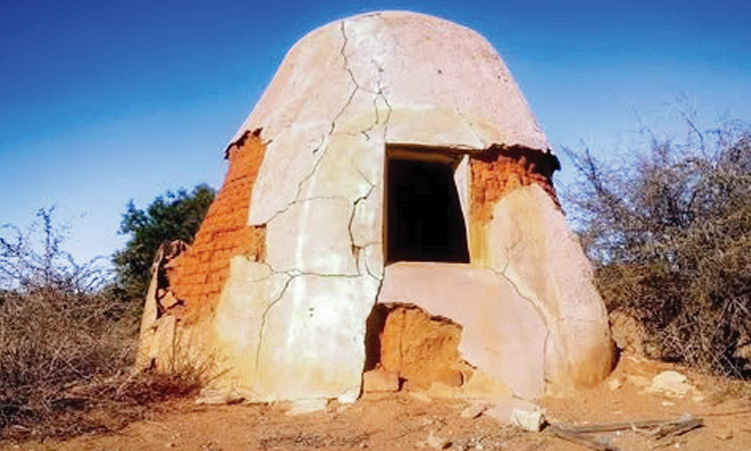
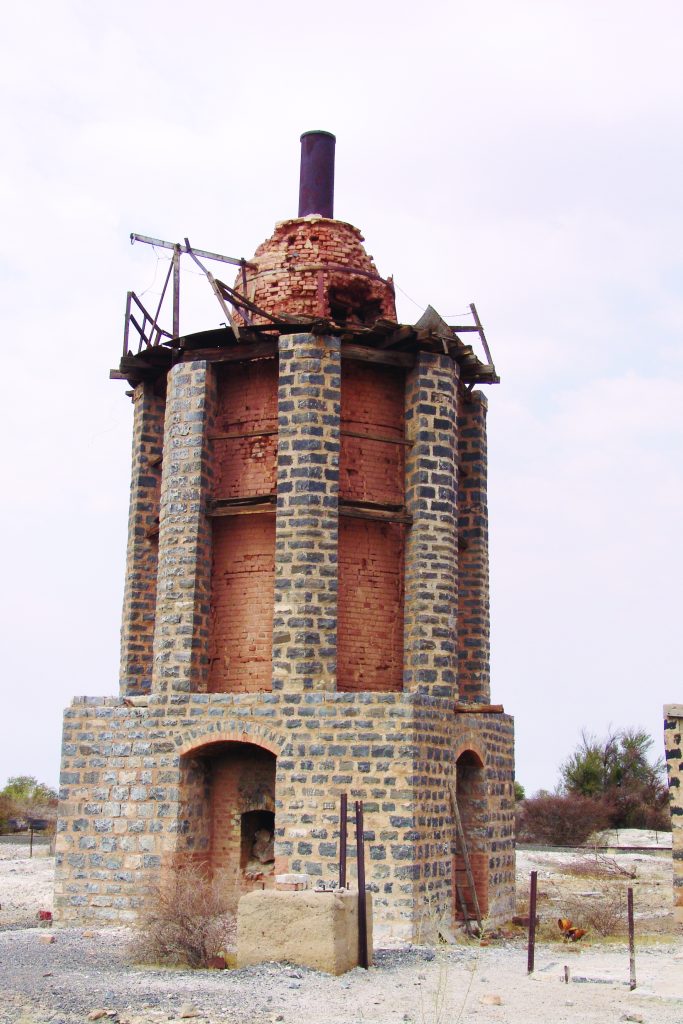
In my 20 years of chimney (or lime kiln) hunting, I’ve seen some strange and wonderful lime kilns, but the one I found east of the Gamsberg has the most fascinating tale.
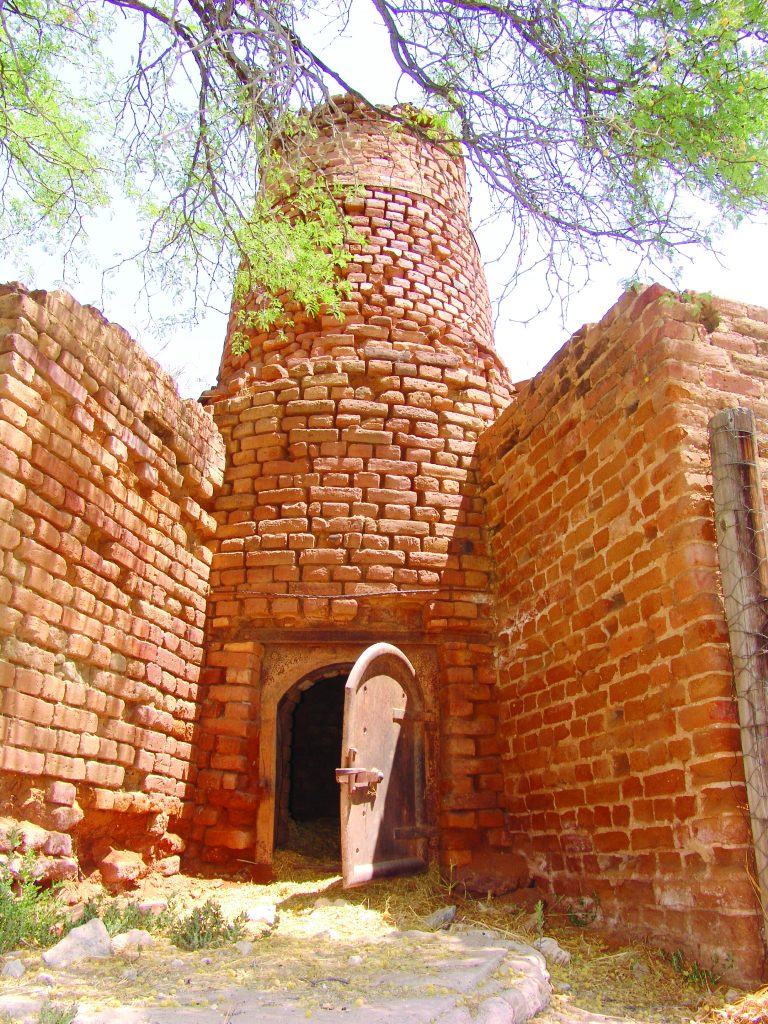
It was transformed from a lime kiln to a smokery to living quarters and then to a honeymoon suite, experiencing a whole gamut of functions in its lifetime.
I had noticed the structure several times as I passed on the way to Spreetshoogte Pass and Namib Desert Lodge, but could never work out what it was. Was it a lime kiln or an old storeroom?
It had me completely puzzled. I took some photos and thought that whatever it was, it must have a good story. I wasn’t disappointed when I met up with the owner of the farm, Joachim Cranz, and heard its unusual tale.
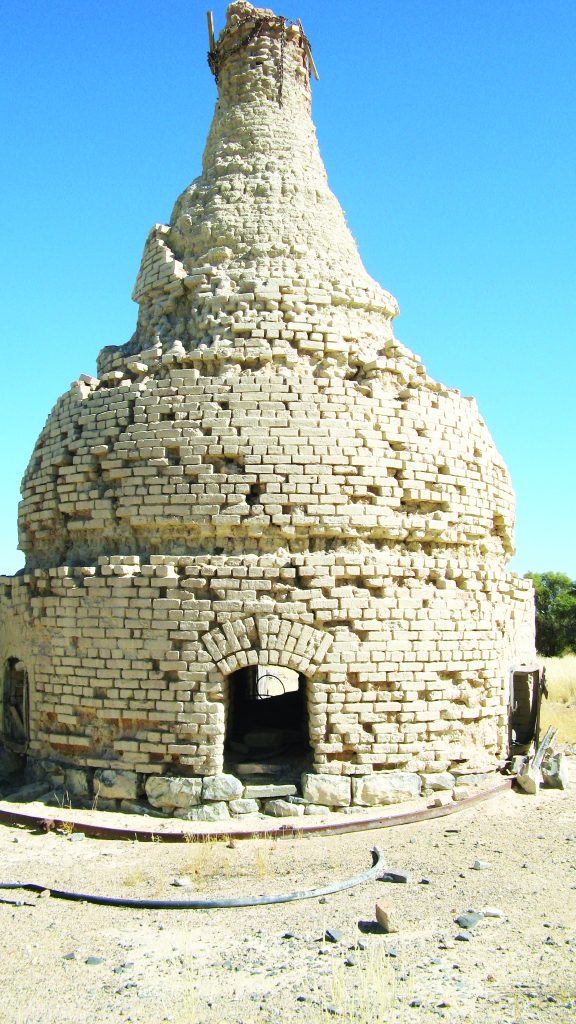
The first part of the story I knew well. Like many of the kilns built in the country in the first half of the 20th century, before cement was easily available, it was built to provide quicklime for the farmhouse.
The laborious process involved layering limestone (kalk) with wood and making a fire to produce the intense heat required to transform the carbonate rock into burnt lime (calcium oxide).
This was later raked from the bottom and mixed with water to produce slaked lime for use in mortar and plaster, and whitewash for the walls.
The lime kiln I had spotted on the Isabis farm was one of two lime kilns on the property. They were built by Joachim’s grandfather, Joachim Cranz Senior, in 1926.
As times changed and cement became more readily available, there was no use for them any longer. They would normally have been abandoned to the elements, as are the many that are still dotted through the Namibian countryside.
But long before upcycling and re-purposing became buzz words, the innovative Cranz family thought laterally and found that the lime kiln near the house could be put to further use.
It was first renovated by Joachim Sr and used as a smokery or smoke house for his meat. He converted it in the 1940s into a room to provide additional accommodation for the burgeoning household. When Joachim’s uncle, Dieter, was growing up, he had an affinity for the natural world and adopted all kinds of abandoned and injured animals.
Meerkats, birds and even an orphaned cheetah cub took over the house and left their mess behind them. Eventually, the family had enough of living in a zoo and Dieter was moved into the old lime-kiln bungalow, where he lived happily with all his animals.
After the Second World War, a wounded war veteran took up residence in the bungalow. While the doctors in Windhoek had given up hope, a few months of recuperation on the farm and wholesome home cooking delivered daily to his door led to a complete recovery.
The Cranz family gained an extra member in the early 1950s when a young woman, Vera Cloppenburg, arrived from Germany as a ‘Haustochter’ (‘house daughter’ – similar to an au pair, but with more focus on learning housekeeping than minding children).
One day she decided to have her siesta in the bungalow. Having recently heard of an acquaintance finding a snake under his pillow, her heart nearly stopped beating when she felt movement under the pillow.
Rather than running to the main house and shouting for help, she gathered her courage and moved the pillow aside with a stick to reveal a nest of squirming baby mice. The story has been told and retold with much laughter over the years.
It wasn’t too long after Vera’s arrival that the multi-functional lime kiln gained a further flourish of ingenuity and love when in 1953 it was Jürgen (Joachim’s father) and Vera’s turn to briefly stay in the old lime-kiln for their wedding night.
Jürgen gave it another facelift and converted it into an appropriate ‘honeymoon suite’.
The newly-weds travelled to the United States and imported the first 20 Brahman cattle into the country. The cattle’s journey included a voyage from New Orleans to Cape Town by ship (a first for the time) and after four-weeks of quarantine, a train journey back home.
The couple travelled with them on the ship and Jürgen attended to them personally on both journeys (sleeping alongside them on bales of lucerne on the long train trip), ensuring their safety.
He became a well-known Brahman breeder in Namibia.
Today, Joachim and his wife, Adele, run the Isabis farm and campsite and offer an exciting 4×4 trail on the property, keeping the farm lovingly in the family.
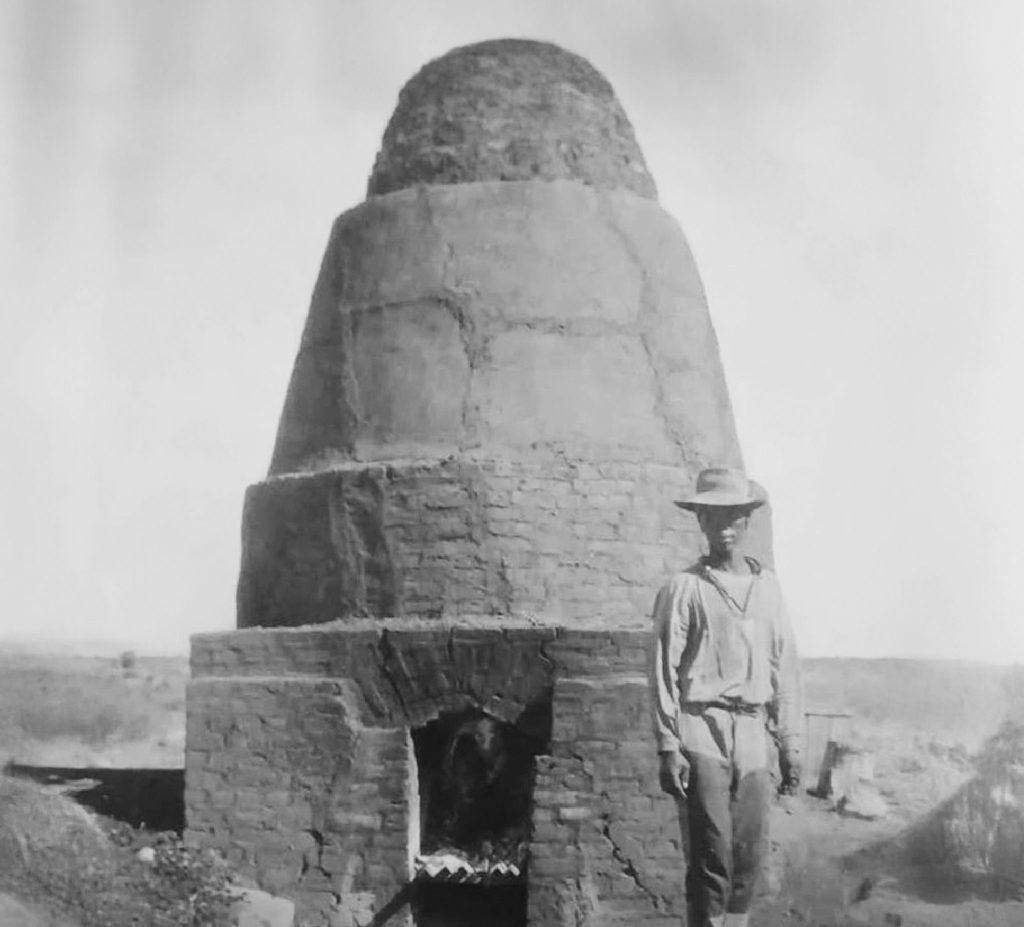
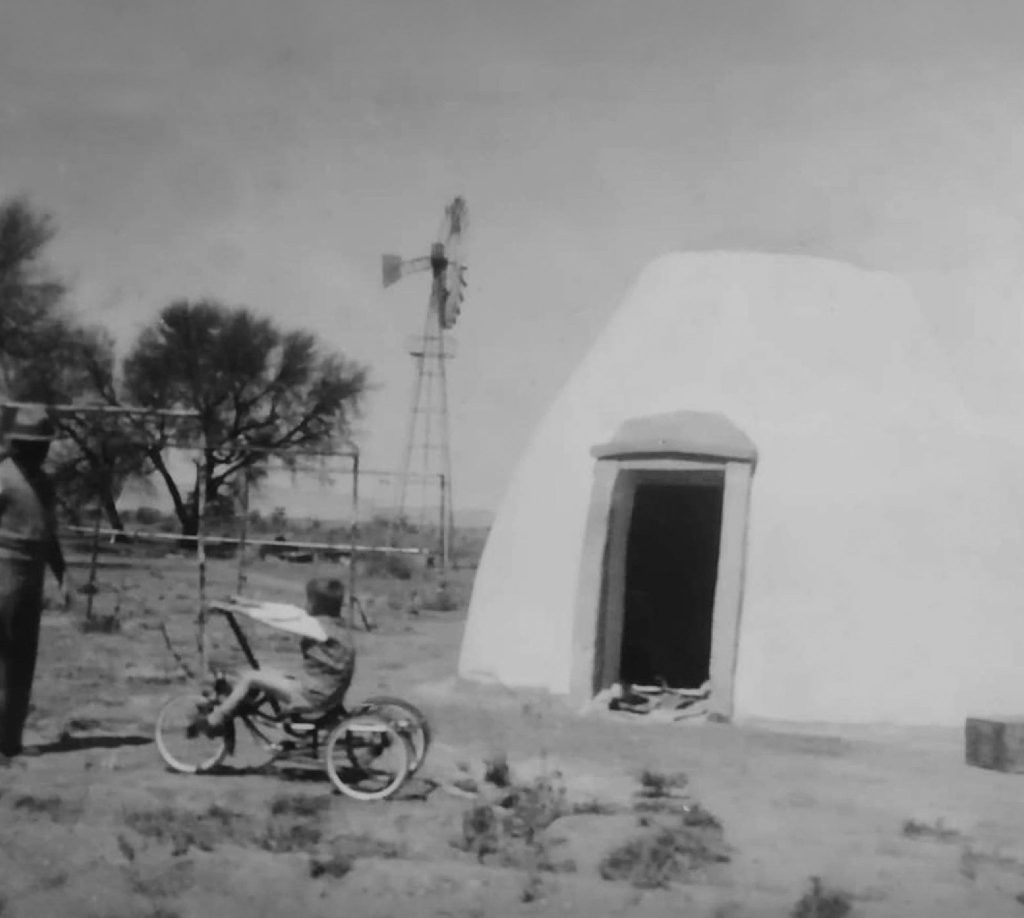
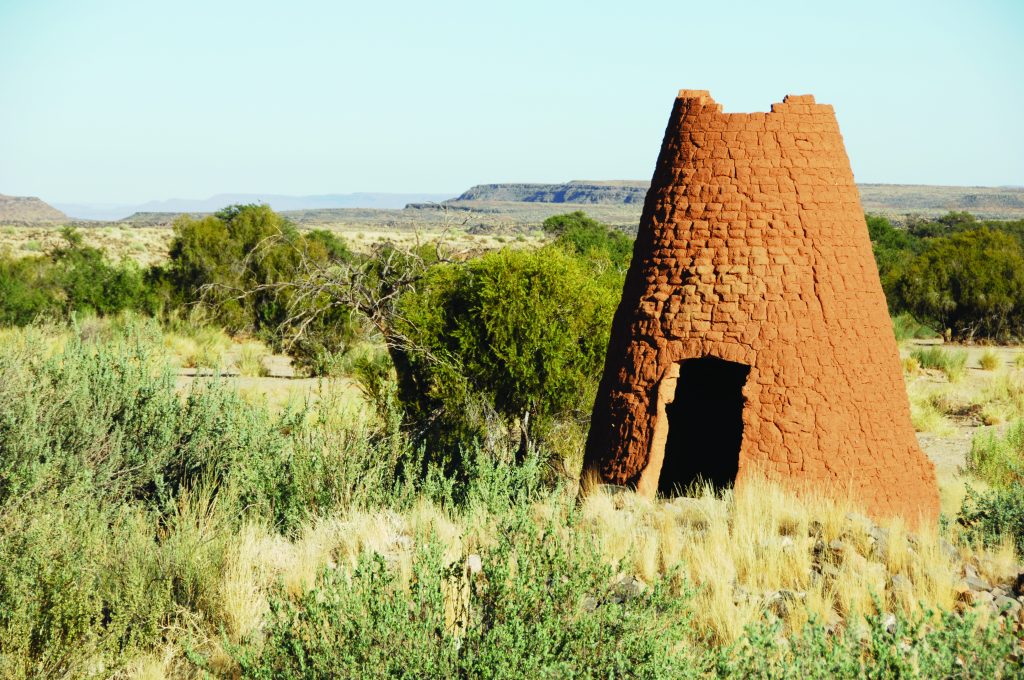
Among a pile of old black-and-white photographs, Joachim found two of the lime kilns for me to look at: The one photo is of the second conical lime kiln built further out on the farm, and the other shows the quaint little bungalow that is nearer to the farmhouse.
It’s a typical farm scene from last century with a father and son and the iconic windmill in the background – all except for the unusual mud-brick cottage.
All these years later, like most of the remaining lime kilns, the Isabis lime kiln crumbles into the earth as its facade deteriorates and small creatures and birds take up residence in its cosy interior, further extending its long and fascinating life.
The difference is in the lime kiln’s appearance and its rich history.
Now, when I pass it along the road, I see it in an entirely new way and wonder what other stories it could tell us, if its walls could talk.
In an age of information overload, Sunrise is The Namibian’s morning briefing, delivered at 6h00 from Monday to Friday. It offers a curated rundown of the most important stories from the past 24 hours – occasionally with a light, witty touch. It’s an essential way to stay informed. Subscribe and join our newsletter community.

The Namibian uses AI tools to assist with improved quality, accuracy and efficiency, while maintaining editorial oversight and journalistic integrity.
Stay informed with The Namibian – your source for credible journalism. Get in-depth reporting and opinions for
only N$85 a month. Invest in journalism, invest in democracy –
Subscribe Now!