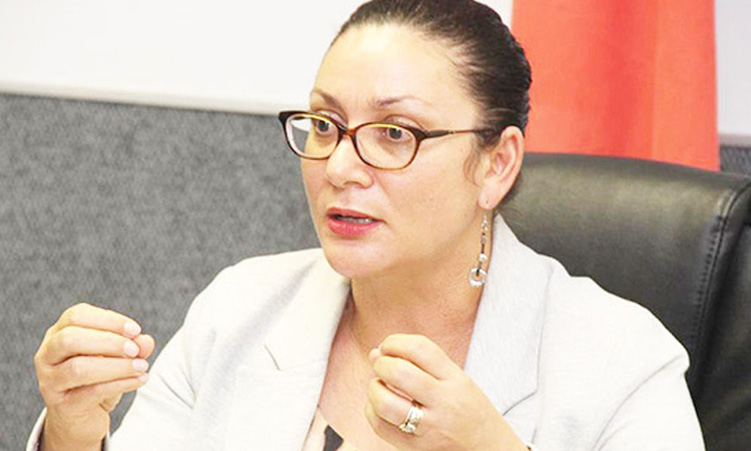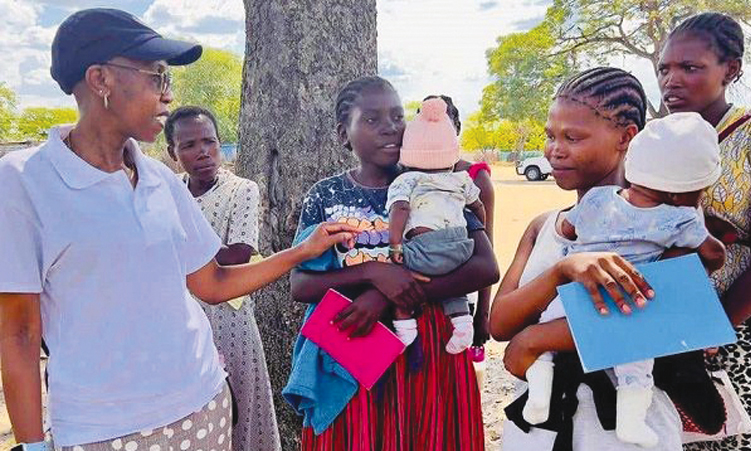
The Zambezi region recorded a total of 279 cases of teenage pregnancies last year, according to the Ministry of Education, Innovation, Youth, Sports, Arts and Culture’s deputy executive director Edda Bohn.
Bohn told The Namibian last week that teenage pregnancies are not only a concern in the Zambezi region, but in the country at large.
She added that between 2021 and 2023, the country recorded about 7 454 teenage pregnancies, with 77 from the Zambezi region during that period.
“This confirms that the teenage pregnancy rate has increased in the region. The lack of parental supervision is a contributing factor to these cases, as these children are free to engage in undesirable activities,” she said.
Meanwhile, Zambezi’s political and religious leaders have described the region’s 279 teenage pregnancy cases as disheartening.
Zambezi Regional Pastors Forum chairperson bishop Benjamin Limbo expressed dismay, saying pregnancy is already difficult for an adult to experience, let alone a child.
“On top of the physical and psychological implications pregnancy has on these young girls, it sets them back academically. As much as one would say she will give birth and go back to school, however, it’s not possible without a good support system and motivation. Raising a child is emotionally and financially draining,” he said.
Limbo also idenitified poor parental supervision as a contributing factor, as well as the lack of religious and moral education in schools.
“Parents are letting children grow as they wish; it’s not a human right. Children grow up without the teachings of the Lord as Bible studies have been removed from schools and parents are not encouraging their children to attend church,” he said.
Limbo also called for stern punishment for educators that impregnate young girls, as schools are supposed to be safe havens.
“The government should also look into creating a basic income grant for the girls in school to give them stability to avoid them asking for money from older men,” he said.
Limbo added that teenage pregnancy is a societal issue and that everyone should be alert and contribute to the reduction of what he called an evil destroying the destiny of many young children.
Katima Mulilo Urban constituency councillor Kennedy Simasiku says his heart breaks whenever he sees girls as young as 13 or 14 years old pregnant, and called for collective societal responsibility to curb the issue.
He says stern punishment should be given to older men that impregnate underage girls.
“We really need to start looking at who the fathers are, whether they are teenagers too or [if] they are older men. Some older men are taking advantage of these vulnerable girls due to their poor economic background, whereby they lure them with money,” he said.
Bohn encouraged parents to adopt openness regarding talks or discussions on sexual intercourse with their children, as well as to work closely with stakeholders by taking part in awareness programmes and talk shows.
“There is poor stakeholder involvement in preventing and managing pupil pregnancy in school settings, despite the ministry’s call to partner with stakeholders and line ministries. When you interview pupils themselves, they will tell you that stakeholders outside the classroom are not visible,” she said.
Bohn further noted that through the Education Sector Policy on the Prevention and Management of Learner Pregnancy, they aim to reduce the cases of pupils falling pregnant and increase pupil-parent completion of education.
She further added that if a pupil falls pregnant, she is allowed to continue attending school until four weeks before giving birth or is allowed to take a maternity break at any stage of pregnancy.
“After giving birth, pupil-mothers may choose to return to school, extend their break to one year, or transfer to another school. Schools may reserve pupil-mothers’ spaces provided pupils update their intended return date. The parents or caregivers are required to engage with the school and sign a statement to ensure someone will care for the infant while the mother attends classes,” she said.
In an age of information overload, Sunrise is The Namibian’s morning briefing, delivered at 6h00 from Monday to Friday. It offers a curated rundown of the most important stories from the past 24 hours – occasionally with a light, witty touch. It’s an essential way to stay informed. Subscribe and join our newsletter community.

The Namibian uses AI tools to assist with improved quality, accuracy and efficiency, while maintaining editorial oversight and journalistic integrity.
Stay informed with The Namibian – your source for credible journalism. Get in-depth reporting and opinions for
only N$85 a month. Invest in journalism, invest in democracy –
Subscribe Now!