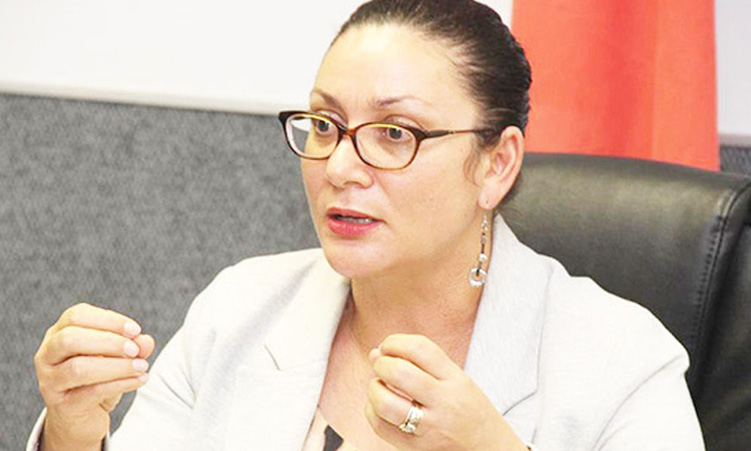
THE lack of teachers for the Khoekhoegowab language is hampering the teaching of the language in schools, education deputy minister has said.
Anna Nghipondoka said the language is currently only taught in a few schools in the Hardap and //Kharas regions, due to a shortage of teachers.
“According to the education policy, from Grade 1 to 3, children must be taught in their own language (mother tongue). From Grade 4 to 7, the home language is treated like any other language, depending on the availability of teachers,” she said.
Nghipondoka added that the lack of interest among students to take up the language at tertiary level is another challenge.
“The issue is teachers, because even if you have some of those languages at university, our children don’t prefer to take their own language, they prefer English. I have also been informed that many schools in the region prefer Afrikaans and do not want to offer Khoekhoegowab,” she said. Nghipondoka was responding to remarks by the Oranjemund constituency councillor Lazarus Nangolo, who called for the promotion of Khoekhoegowab language in schools in the two regions.
Nangolo made the call during the handover of !Garibams Secondary School by Namdeb to the Ministry of Education Arts and Culture at Oranjemund last Friday.
The handover of the school coincided with the International Mother Language Day which is observed annually on 21 February worldwide to promote awareness of linguistic and cultural diversity and multilingualism.
“There is a need for us as national leaders to ensure that we revive the language (Khoekhoegowab). It must be taught in every school in the //Kharas region like what is happening in the northern regions, in Kavango (East and West), Zambesi and Otjozondjupa and Omaheke regions. It must be the first language in the region as well,” remarked Nangolo.
The governor of //Kharas region Lucia Basson echoed Nangolo’s sentiments.
“I want Khoekhoegowab to be compulsory in all schools in the region,” said Basson. The Khoekhoegowab language, which was on the brink of extinction in South Africa, has been introduced in schools in Kuboes and Riemvasmaak settlements Northern Cape Province.
This is as a result of a 1999 twinning agreement between that province and //Kharas Regional Council. University of Cape Town last year also introduced a short course in Khoekhoegowab. It is estimated that there are about 167 000 speakers of Khoekhoegowab in Namibia and South Africa.
In an age of information overload, Sunrise is The Namibian’s morning briefing, delivered at 6h00 from Monday to Friday. It offers a curated rundown of the most important stories from the past 24 hours – occasionally with a light, witty touch. It’s an essential way to stay informed. Subscribe and join our newsletter community.

The Namibian uses AI tools to assist with improved quality, accuracy and efficiency, while maintaining editorial oversight and journalistic integrity.
Stay informed with The Namibian – your source for credible journalism. Get in-depth reporting and opinions for
only N$85 a month. Invest in journalism, invest in democracy –
Subscribe Now!