



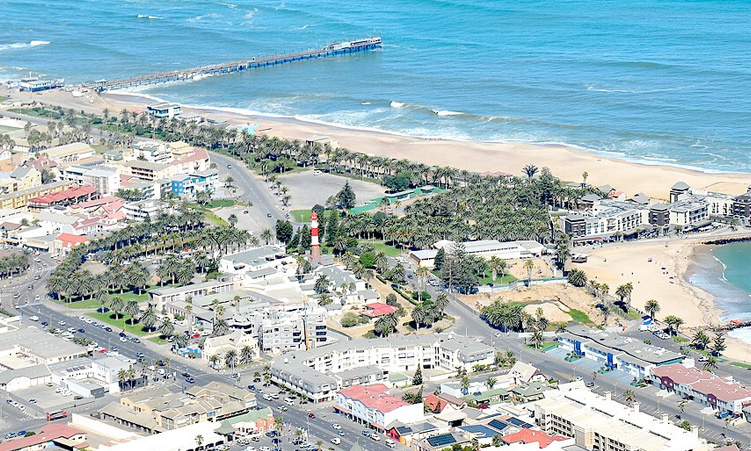
The Swakopmund municipality is donating 111 erven to low-income earners in the DRC proper area after a resolution taken in April.
According to Swakopmund chief executive Alfeus Benjamin, the land was serviced with central government funding years ago, but was never given to the “owner” who settled there first.
“After a three-year process of total census of the entire DRC, including the establishment of each beneficiary’s affordability, the council decided to donate the erf, meaning the beneficiary does not pay the full value of the erf, only a transfer fee of N$1 000 each for administrative transfer purposes,” he says.
Benjamin says the beneficiary becomes the owner of the plot and they can choose to build their own house or participate in the National Housing Enterprise/Swakopmund Municipality housing programme that was signed last year.
Benjamin says the council can fast-track land and house ownership in this way.
“The rest of the DRC beneficiaries identified through this process will be allocated land at Wagdaar and other identified portions of land at the area, currently known as Northern Wedge open area between Henties bypass and Henties Bay gravel road.
This area is planned,” he says.
Mbujaundja Kavari has been living at DRC since 2015.
She says residents are struggling as they cannot build permanent structures on unproclaimed land.
Most dwellings at DRC are built with cardboard and covered with plastic, while others are built with hardboard and pallets.
“There is no electricity in DRC. Some people use gas, but those who don’t have gas burn pallets or plastic containers to cook with.
“The sanitation situation here is very bad. We use the open areas to relieve ourselves, and some just use buckets and pour the waste out into bins,” Kavari says.
She welcomes the donation of the erven.
Another resident, Nokokure Hepute, says the construction of houses would help curb the incidence of fires, which have gutted many homes over the years.
“The donation will really help a lot of people to have their own place, and this might decrease the number of houses burning at Swakopmund.
“The land here is not serviced, but people still rent out rooms from N$200 to N$350. There is no water and electricity,” Hepute says.
He says the municipality gave residents erf numbers a while ago.
“We can buy fridges and televisions when they connect us to electricity,” Hepute says.
Community activist Caroline Kasenda also welcomes the land donation.
“We are part of three housing groups that have been advocating for land, and the residents that are getting land are happy.
It is always the low-income person who is the tenant of someone well off, because these people cannot afford land. So this donation is a good milestone for Namibians,” she says.
United Democratic Front spokesperson Mabasen Narib says there is a need for a thorough investigation to ensure low-income earners get land and that there is no corruption during the process.
“This is a good initiative, since the banking system will not help low-income earners with a salary of N$5 000,” he says.
In an age of information overload, Sunrise is The Namibian’s morning briefing, delivered at 6h00 from Monday to Friday. It offers a curated rundown of the most important stories from the past 24 hours – occasionally with a light, witty touch. It’s an essential way to stay informed. Subscribe and join our newsletter community.

The Namibian uses AI tools to assist with improved quality, accuracy and efficiency, while maintaining editorial oversight and journalistic integrity.
Stay informed with The Namibian – your source for credible journalism. Get in-depth reporting and opinions for
only N$85 a month. Invest in journalism, invest in democracy –
Subscribe Now!