


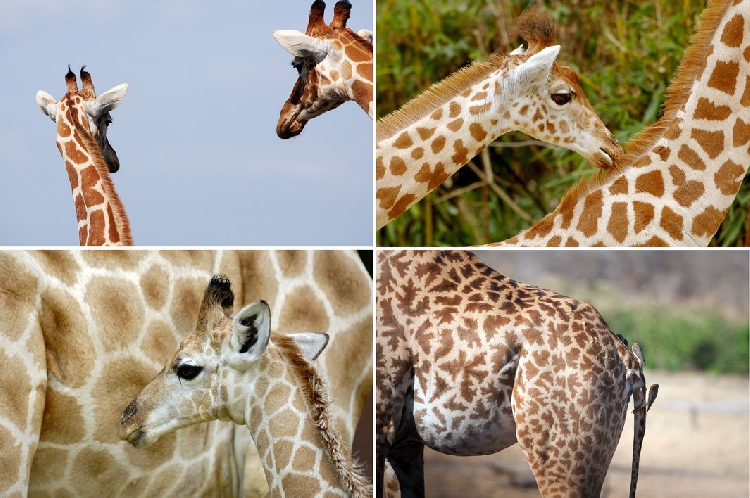
A DISCOVERY that giraffe across Africa have distinct genetic differences and actually consist of four separate species should have a major impact on the conservation of the planet’s tallest animals.
The Namibia-based Giraffe Conservation Foundation played a key role in the groundbreaking study of the genetic make-up of giraffe across Africa that resulted in a team of researchers concluding that these iconic African animals are actually not a single species, made up of several subspecies, but rather should be considered as four genetically distinct species.
The results of the study, described as the most inclusive genetic analysis of giraffe relationships to date, are published in the latest edition of the journal Current Biology.
The discovery of the genetic differences between giraffe has significant conservation implications, taking into account the rapid decline of giraffe numbers across most of the animals’ range in Africa over the past 30 years, according to the Giraffe Conservation Foundation (GCF).
Over the last three decades, Africa’s giraffe population has decreased from more than 150 000 animals to fewer than 100 000, the GCF says. Despite that, relatively little research has been done on giraffe in comparison to other large animals, such as elephants, rhinoceroses, lions, and gorillas.
Until now, giraffe have been recognised as a single species, Giraffa camelopardalis, encompassing nine commonly accepted subspecies. However, the genetic analysis of DNA samples collected through skin biopsies from 190 giraffe across Africa, including samples from all nine previously recognised subspecies, shows that there are four highly distinct groups of giraffe, the researchers reported in their Current Biology article.
Despite the similar appearance of these long-necked animals, the genetic differentiation between the four giraffe groups is strong, it is stated in the article. As a measure of comparison, the genetic differences among the suggested four giraffe species are at least as great as those between polar and brown bears, the GCF notes.
As a result of their findings, the research team suggests that giraffe should be recognised as four distinct species: the northern giraffe (Giraffa camelopardalis, with three subspecies), found in Niger, central and eastern Africa, South Sudan, Ethiopia, Uganda, and Kenya; the reticulated giraffe (Giraffa reticulata), occurring mainly in Kenya, Ethiopia and Somalia; the Masai giraffe (Giraffa tippelskirchi), with most of its population in Kenya and Tanzania and also a smaller population in Zambia; and the southern giraffe (Giraffa giraffa), consisting of two subspecies and found in Namibia, Botswana, South Africa, Zimbabwe, and Zambia.
The research team also reported that two previously recognised subspecies of giraffe turned out to be genetically identical to other subspecies. The genetic make-up of Thornicroft’s giraffe, which is found in eastern Zambia, is identical to that of the Masai giraffe, which occurs about 500 kilometres to the north, while Rothschild’s giraffe, occurring in Uganda and Kenya, was found to be genetically indistinguishable from the Nubian giraffe, principally found in South Sudan and Ethiopia.
While giraffe numbers have been in decline across Africa over the past 30 years, the GCF is crediting well-managed conservation efforts for the fact that Namibia’s giraffe population and the distribution of the animals in the country have increased over the same period.
With almost all of the giraffe in the country part of the Angolan giraffe subspecies, Namibia is home to about 12 000 of these animals, of which 6 500 are on private land, 3 500 live in national parks, and about 2 000 are on communal land, the GCF says. In Angola, the subspecies that carries that country’s name is all but extinct.
About 100 South African giraffe – like the Angolan giraffe also a subspecies of the suggested southern giraffe species – also occur in the Bwabwata National Park in the Zambezi region.
Across Africa, though, giraffe are under pressure, mainly due to human population growth and a need for more agricultural land, resulting in the loss, fragmentation and degradation of giraffe habitat and giraffe populations becoming increasingly isolated, GCF co-director Julian Fennessy says.
Fennessy is a conservation biologist and was a leading member of the team that carried out the research on giraffe genetics.
“The conservation implications from this work are immense and our findings will hopefully put giraffe conservation on the global map,” he says. “It is important to note that in addition to this work GCF has monitored the decline of giraffe populations throughout Africa as well as the continued and increasing threats they face.”
With four distinct species of giraffe, the conservation status of each species can be better defined and in turn hopefully added to the International Union for Conservation of Nature and Natural Resources (IUCN) Red List of threatened species, says Fennessy.
As an example, he says, northern giraffe number fewer than 4 750 animals in the wild, while the reticulated giraffe population consists of fewer than 8 700 individuals. “As distinct species, it makes them some of the most endangered large mammals in the world and requires doubling of protection efforts to secure these populations,” Fennessy comments.
Giraffe, as a species, are currently listed as “Least Concern” on the IUCN Red List. This is due to a lack of detailed assessment, the GCF says.
Two of the currently recognised subspecies – the West African and Rothschild’s giraffe – are already listed as endangered, though. A proposal to list giraffe as a threatened category of species has also been submitted to the IUCN recently.
The GCF says Fennessy and the other lead researcher on the genetic study, Axel Janke, who is a geneticist at the Senckenberg Biodiversity and Climate Research Centre and Goethe University in Germany, are now analysing the amount of gene flow between giraffe species in greater detail, in a bid to better understand the factors that limit gene flow and the animals’ differentiation into four species and several subspecies.
In an age of information overload, Sunrise is The Namibian’s morning briefing, delivered at 6h00 from Monday to Friday. It offers a curated rundown of the most important stories from the past 24 hours – occasionally with a light, witty touch. It’s an essential way to stay informed. Subscribe and join our newsletter community.

The Namibian uses AI tools to assist with improved quality, accuracy and efficiency, while maintaining editorial oversight and journalistic integrity.
Stay informed with The Namibian – your source for credible journalism. Get in-depth reporting and opinions for
only N$85 a month. Invest in journalism, invest in democracy –
Subscribe Now!