



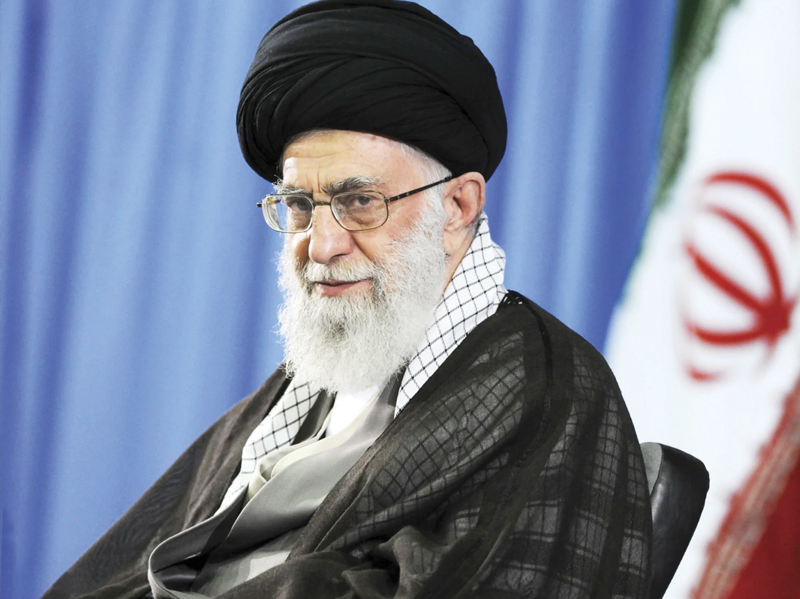
The Ayatollah Ali Khamenei is dead.
For decades, he held ultimate political and religious authority over a theocratic regime that continues to oppress Iranians at home and sponsor terrorism abroad.
For those who survived torture and other forms of ill-treatment at the hands of this regime, those who were forced to flee their homeland to escape persecution, and those who lost friends and family, including the thousands of protesters killed by Iranian security forces in January, this is a moment of relief.
What comes next is uncertain. A day after Khamenei was assassinated, a three-member council assumed the duties of the supreme leader, and the state machinery, albeit weakened, remains intact – for now.
The Iranian regime has been preparing for this scenario for a long time.
As for Donald Trump, there is little reason to believe that he and his team have a strategically sound plan for Iran.
Lindsey Graham, a United States (US) senator and longtime Trump ally, said as much in a recent appearance on TV.
Whatever Trump’s thinking may be, democracy and the well-being of Iranians are not at the forefront of his mind.
Hence, there is good reason to be sceptical that the US-Israeli military campaign will lead to a better future for Iranians or a more peaceful Middle East.
As of this moment, the war in Iran has already resulted in well over a thousand deaths, reportedly including more than a hundred young schoolgirls. Like all wars, it is tragic.
But it also reflects something deeper about who we are as humans and forces us to confront an uncomfortable truth: Wars are not aberrations of history but recurring expressions of a more general human failure.
It has been thousands of years since we left the cave, and in that time, we have built machines that split atoms and reach the stars. And yet, here we are – still killing each other.
We are unwilling to truly listen to each other and lack the courage to solve conflicts peacefully.
Instead of trying sincerely to put ourselves in the shoes of those we disagree with, we carve the world into comforting but lazy oppositions: friend and enemy, believer and non-believer, us and them.
Why are we looking at disagreement as a threat, rather than an opportunity to learn?
Unlike our prehistoric cave-dwelling ancestors, we now have food in abundance.
We have the knowledge and tools to ensure that nearly everyone can live a healthy and fulfilling life.
We have libraries filled with carefully argued books on dignity, rights, freedom, and tolerance.
And yet, we use hunger as a weapon, let people drown in the Mediterranean, resort to kidnapping, extrajudicial assassinations, and invasions as means of international politics, and sleepwalk into climate catastrophe.
Knowledge and abundance are meaningless without compassion and courage.
The tragedies we witness today are reminders of our shared responsibility – we must do better, as a species.
Life is precious.
About everything else, we can talk.
Rainer Ebert
In an age of information overload, Sunrise is The Namibian’s morning briefing, delivered at 6h00 from Monday to Friday. It offers a curated rundown of the most important stories from the past 24 hours – occasionally with a light, witty touch. It’s an essential way to stay informed. Subscribe and join our newsletter community.

The Namibian uses AI tools to assist with improved quality, accuracy and efficiency, while maintaining editorial oversight and journalistic integrity.
Stay informed with The Namibian – your source for credible journalism. Get in-depth reporting and opinions for
only N$85 a month. Invest in journalism, invest in democracy –
Subscribe Now!