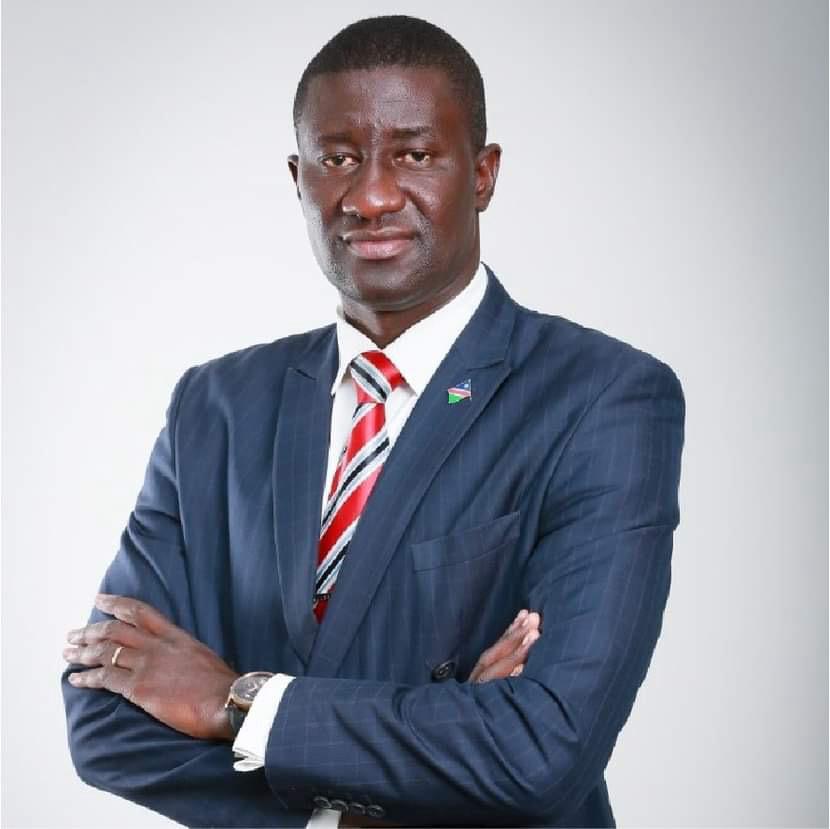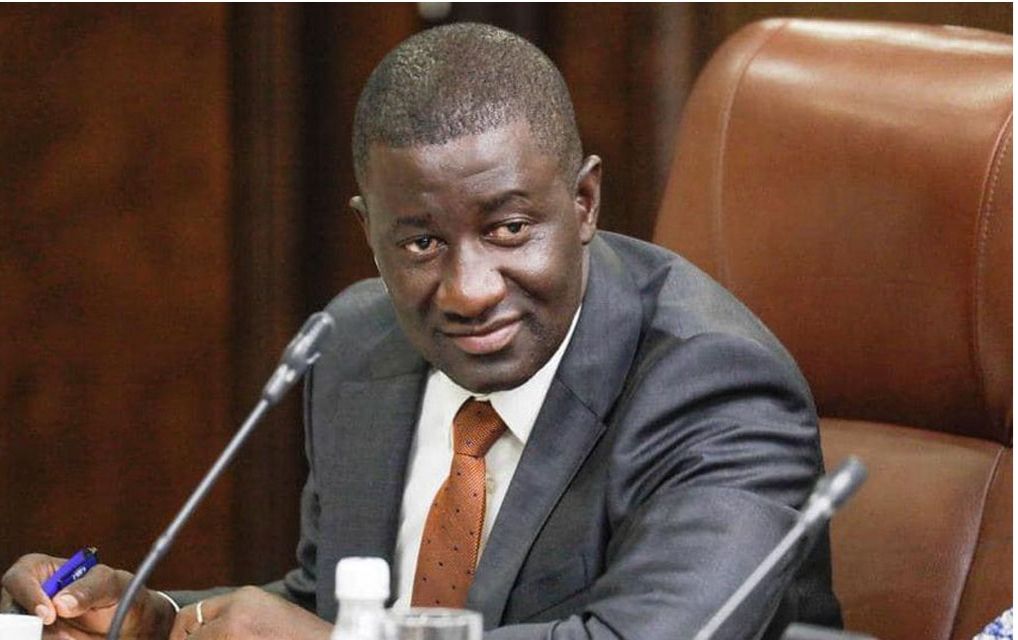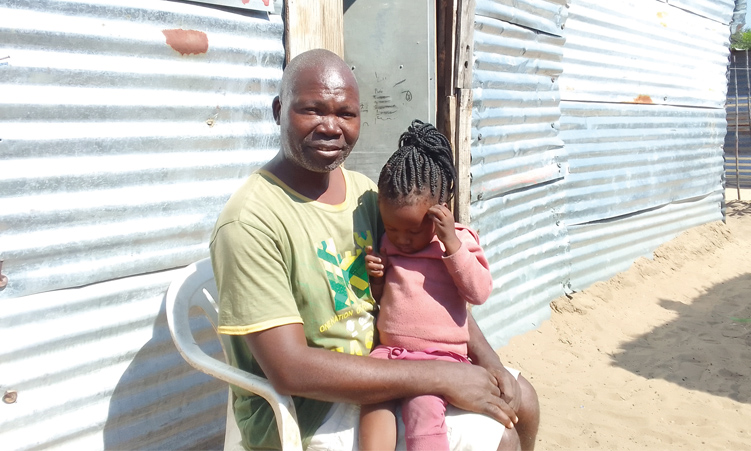
Conrad Sindimba (44) is a resident of Muveve village in the Kavango West region who has never had any official documents.
Sindimba has lived all his life without a birth certificate, national identity card, or passport. As a result, he is unable to access basic services, including government grants, apply for tertiary education, or open a bank account.
Sindimba has been working at a farm at Dordabis, where he is paid in cash because he does not have a bank account.
He earns between N$1 500 and N$1 700, he said.
His bosses have asked for his bank account details several times in order to pay his salary into it, but he is unable to provide this and has had to explain to his employers that he does not have any national documents with which to open a bank account.
When he wants to send money to his family, he must ask a colleague to assist him, while paying him in cash.
He is just one of the many stateless individuals living in the country, with no idea how to navigate the challenges associated with his plight.
RIPPLE EFFECTS
As if his situation is not bad enough, Sindimba’s daughter – Lioba Siremo, (23) – completed Grade 12 in 2020 with 18 points.
Siremo told The Namibian she wants to be a nurse one day so that she can assist her father.
“I took some days off from work to work on my papers, but now I’m stuck here. If I don’t get my papers now, maybe I have to look for another job because they won’t allow me to take days off again. I wanted to work as a security guard now because it pays better than farm work but I don’t have any documents,” said Sindimba.
Narrating his ordeal, Sindimba told The Namibian he left home a long time ago to seek greener pastures. Things turned for the worst when his father died in 2001.
He managed to get hold of his father’s death certificate and made attempts to register for a birth certificate at Nkurenkuru, but he was told to wait.
“I even left my work to come and apply for those national documents, but there is no assistance. I can’t sleep day and night,’’ said Sindimba, who was only given an application form in 2021.
Sindimba claims the home affairs ministry has sent him from pillar to post, because the Nkurenkuru regional office does not have a vehicle to visit villages and assist people to get their birth certificates.
None of his children – three sons and three daughters – have national documents.
“My father has been struggling to raise us, working at farms, because he cannot be employed anywhere without his papers. Sometimes it’s difficult for him to send us money because he receives his salary in an envelope. It has been like that until I finished school, but I still have siblings in school that do not have birth certificates,” said Siremo.
SAD TALE OF AFFAIRS
Another stateless individual is 86-year-old Shimafo Mbambi, who was admitted to the Rundu Intermediate Hospital early last month, after fracturing her leg.
Mbambi is still in the Rundu Intermediate Hospital, despite being discharged last month because there are no family members to fetch her from the hospital to take care of her.
Although a lot of people in Namibia are undocumented, some stateless people in the country are immigrants, especially in the Kavango region.
Although she was registered to receive her pension in 2011, using the old South African ID card, the last time she received her pension was in 2019, when it suddenly stopped, said Mbambi.
Homeless and without family members to look after her, Mbambi sometimes finds shelter at different houses at Donkerhoek.
Veronica Sivava, a community member familiar with Mbambi’s issue, said her challenges started in October 2019, when she stopped receiving her monthly pension grant.
Sivava said Mbambi sometimes sleeps at her place, however, she is worried about her welfare, especially during winter.
Another stateless individual is 55-year-old Batholeus Mayambi from Angola, who came to Namibia in 1990, after fleeing the civil war.
Mayambi is married to a Namibian woman, and the couple have three children together.
Fortunately, Mayambi’s children have national documents after they were registered using their grandfather’s papers.
“I have boys and they always ask me when am I getting Namibian national documents, because sometimes they see me leaving the house going to work, but I only work for a few months and lose that work,” Mayambi recently told The Namibian at his house at Rundu’s Kehemu informal settlement.
“Employers always ask for national documents and when one doesn’t have them, it’s difficult,” he said.
Despite the difficulties of accessing his national documents, when elections come, Mayambi said they are only required to have two witnesses with an affidavit to be issued a voter’s registration card.
Mayambi said he has voted in three presidential and National Assembly elections, but is still turned away when he applies for national documents.
He said Namibian citizenship is being sold to the highest bidder.
WORRYING STATISTICS
According to statistics released by the Ministry of Home Affairs, Immigration, Safety and Security in a recent report, Kavango West has a total of 21 630 undocumented people, while the Kavango East has 30 036.
The home affairs ministry told The Namibian the overall number of stateless individuals in the country stands at around 147 000.
In 2015, the United Nations said a third of the world’s population lacked official identification, and Namibians are no exception.
GOVERNMENT INTERVENTION
Yesterday, information and communication technology minister Peya Mushelenga painted a story of hope for those living as stateless individuals in Namibia.
He said the Cabinet has since approved the regulations of the stateless and citizenship bill, and forwarded it to the legal drafters. The bill seeks to find a way of dealing with the issue of stateless individuals.
In an age of information overload, Sunrise is The Namibian’s morning briefing, delivered at 6h00 from Monday to Friday. It offers a curated rundown of the most important stories from the past 24 hours – occasionally with a light, witty touch. It’s an essential way to stay informed. Subscribe and join our newsletter community.

The Namibian uses AI tools to assist with improved quality, accuracy and efficiency, while maintaining editorial oversight and journalistic integrity.
Stay informed with The Namibian – your source for credible journalism. Get in-depth reporting and opinions for
only N$85 a month. Invest in journalism, invest in democracy –
Subscribe Now!