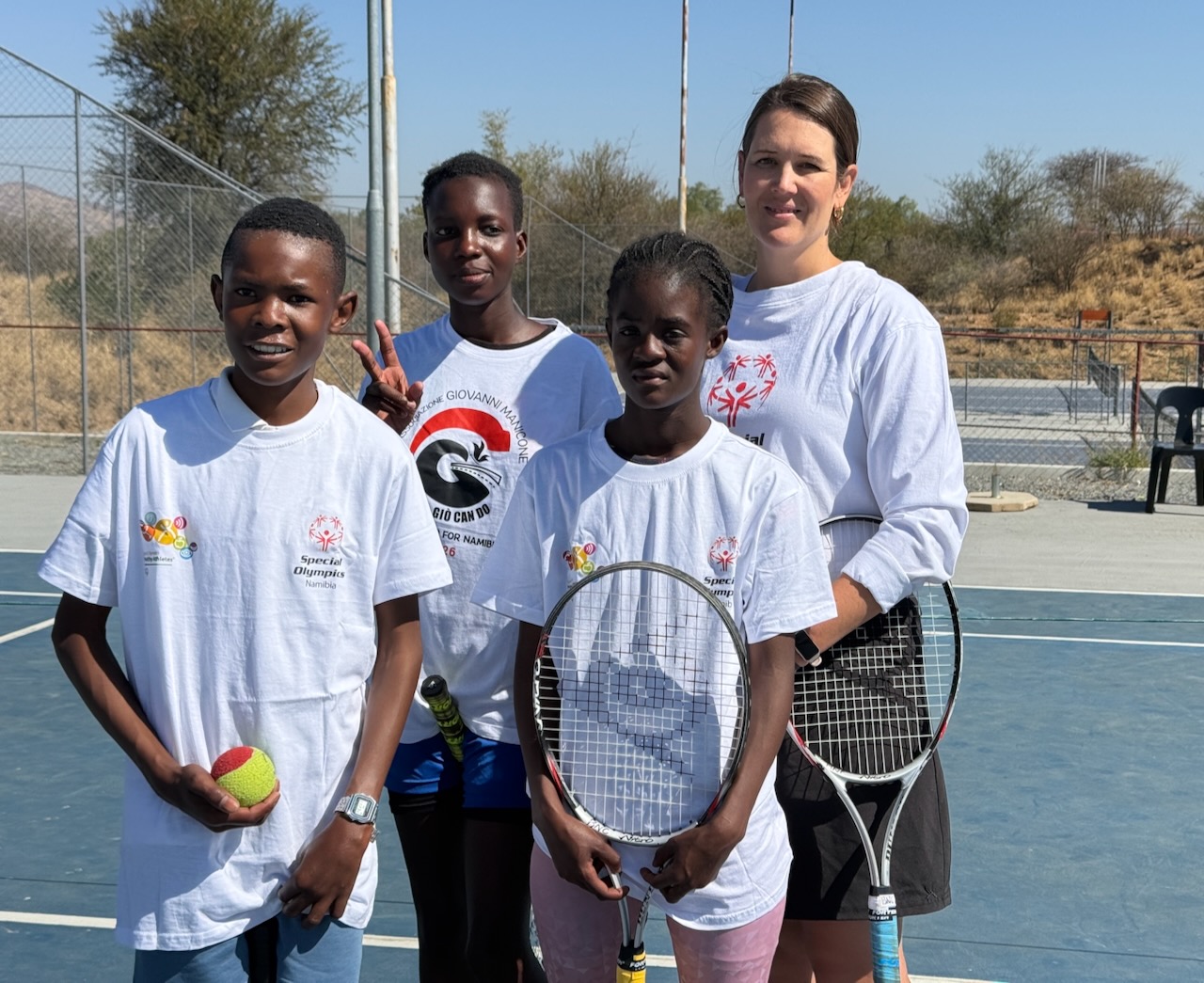
Sport for people with intellectual disabilities is steadily growing in Namibia although many challenges still remain.
Last weekend, one of the highlights on Special Olympics Namibia’s (SON) sporting calendar, the Sports for Solidarity Partnership Initiative was held over four days to promote inclusion and opportunities for people with intellectual disabilities and multiple disabilities in Namibia.
The visit brought together representatives from the Associazione Giovanni Manicone (Italy), Special Olympics Namibia, Bernhard Nordkamp Centre (BNC), Namibia Tennis Association (NTA), Side by Side, Club Italiano, Namibia Ascent Empowerment and Development Foundation and other community partners.
The partnership was established following the support received from the Italian Consulate in 2025, when Special Olympics Namibia’s (SON) floorball team represented Namibia at the Special Olympics World Winter Games in Turin 2025 in Italy.
Since then, the relationship has grown through the Sports for Solidarity Programme, creating opportunities for collaboration, skills development, athlete leadership, health education, Unified Sports, and community inclusion.
The national director of SON, Levien Smit gave more information about the aim of the initiative:
“This year’s visit aimed to strengthen partnerships, exchange expertise, and explore sustainable support structures that will empower children and young people with intellectual and developmental disabilities through sport, health initiatives, and community engagement.”
Through the support of Associazione Giovanni Manicone, a donation of N$27 377 was made to support activities during the visit and contribute to the ongoing development of partner programmes.
The partnership initiative included a Motor Activity Training Programme at Dagbreek School, unified tennis activities at Central Tennis Club in Olympia, and a tennis celebration day at the Katutura Sports Complex.
A driving force at SON
Since becoming involved with SON about three years ago, Smit has become a driving force at SON, helping the association spread its presence to 10 regions throughout Namibia while it now also includes more than ten sport codes.
“We are now present in 10 of Namibia’s regions and our athletes and coaches have grown to more than 3 000 for which we are very thankful. We are now also offering more than ten sport codes which is a big achievement for us,” she says.
Smit became involved in SON about three years ago, mainly through her son who has down syndrome.
“My son Beaux has down syndrome – he’s 10 years old now and he completely changed my life for the better. I came from an entrepreneurial background and had a catering business, but when Beaux came into our lives, we realised that our lives would have to change. We realised all the needs that our community has in Namibia and the services needed for our community so we started employing young adults with intellectual disabilities,” she says.
“A few years ago I came in the top three of the Economist Business Women of the Year competition and through that Special Olympics Namibia asked if I could serve on their board as a business advisor, so I did that for a few years. Our programme was not very active during Covid but in 2023 I went to the World Summer Games in Berlin and my heart was won over to Special Olympics during that beautiful event. It was the cherry on top for our kids, so when we came back I was really fired up and motivated to do a whole lot more for our community and for my own son,” she adds.
“Then a position opened at the office at Special Olympics, so I resigned from the board and joined the office and now I am the national director. I’m also involved at the Down syndrome Association of Namibia and Side by Side Early Intervention Centre where I lead the education programmes, and I am absolutely loving it,” she says.
Despite the progress made Smit says they still face many challenges.
“I think one of our major challenges is that people don’t really understand the term intellectual developmental disability. It’s often confused with mental illness or people think that it’s one category of disability while every person has their own set of challenges and strengths and every person is different.
“So there’s still a whole lot of awareness that we need to do about intellectual developmental disability. And also about Paralympics versus Special Olympics. We are not Paralympics – we are Special Olympics and we serve people with intellectual developmental disability. We have 3 200 registered athletes across Namibia and our aim is to provide year round sports training in different sport codes so that athletes can come together.
“Some of our athletes are still hidden in their villages and their homes, and people are ashamed of them. We need to bring them out, to celebrate them, to make them part of everyday life in our country, and include them in sports so that they can have fun, make friends and develop healthy lifestyles and skills. If we play together, we communicate and learn different life skills that we need day to day,” she adds.
“We definitely have financial challenges as well, to cover all our costs. We receive international funding but we also need local funding, for running costs, salaries and expenses and it’s really difficult to get that,” she says.