


Across southern Africa, thousands of girls still face the harsh reality of managing their periods with cow dung, toilet paper, tree leaves, and even sitting in dug-out holes.
Despite some progress, period poverty continues to force young girls out of school, with long-term consequences for their education and futures.
For many, menstruation is not just a biological process, it is a barrier to education, dignity, and participation in society.
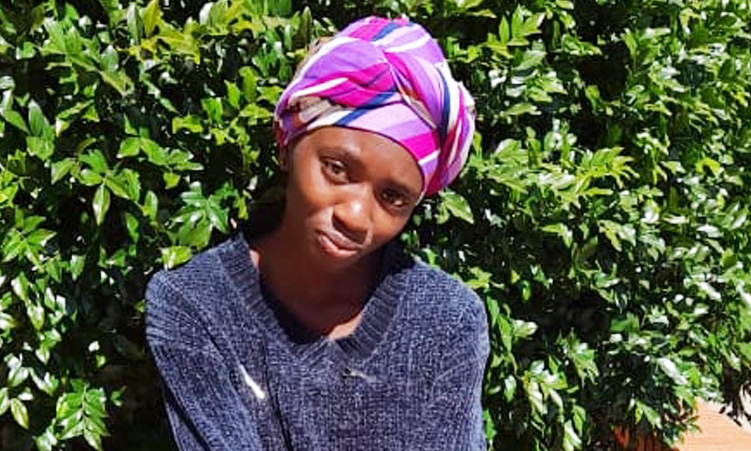
For Rauna Kalomo (21), a single mother from Katutura’s Goreangab area, menstruation often means isolation.
“Sometimes it’s very hard to get sanitary pads, so you just stay home. You don’t even go out, because you know you will embarrass yourself,” she says.
On days when she cannot afford pads, she is forced to use toilet paper – an unreliable and unhygienic alternative.
“I have to change the toilet paper every 10 minutes.
But it’s not always available, and toilet paper is also expensive,” she says.
Kalomo, who is studying education at the International University of Management, says period poverty affects her schooling.
“I have had to miss classes because I didn’t have pads. One time, I tried using toilet paper at school, but it wasn’t enough, and I ended up messing myself. It was so embarrassing that I had to rush home,” she recalls.
She believes the government should step in to provide free sanitary pads, especially for pupils and students.
“Many girls are losing out on their education. The government must start providing pads in schools, just like they distribute condoms,” she says.
THE BUSINESS OF MENSTRUATION
In Tanzania, menstrual products are still seen as a business rather than a necessity, according to menstrual health advocate Florah Ndaba.
“Menstruation is life, yet we have something called period poverty.
Private companies manufacture different types of pads, turning menstruation into a business rather than a basic necessity,” she says.
She points out that even well-off families rarely budget for menstrual products.
“Families plan for food, but how many say, ‘We have two daughters, let’s allocate money for pads every month’?” she asks.
Ndaba highlights that in remote areas, some girls are forced to use unsanitary materials or miss school entirely.
“In some areas, girls dig a hole, sit in it, and let the blood flow. Others use dried cow dung to absorb the blood,” she says.
A class divide also exists in Tanzania, where some girls are judged by the brand of pads they use.
“There are pads that, if you use them, you’re considered poor,” Ndaba says.
UNSAFE SANITATION AND HEALTH HAZARDS
In South Africa, many rural schools lack proper water and sanitation facilities, worsening the situation.
“Our children travel long distances to school, using pit toilets that are unhygienic.
Some girls develop infections because they cannot wash their hands after changing pads,” says civil society representative Bosa Ledwaba.
She questions why governments provide free condoms but fail to supply sanitary pads to schoolgirls.
“If every girl received sufficient pads, they wouldn’t have to miss school,” she argues.
Ledwaba warns that poor menstrual hygiene can lead to reproductive health issues later in life.
“Many young women suffer from ovarian problems and other reproductive diseases, because they did not have access to proper menstrual hygiene in their teenage years,” she says.
NAMIBIA: THE GAPS THAT REMAIN
In Namibia, deputy minister of health and social services Esther Muinjangue acknowledges that many girls still miss school due to menstrual challenges.
“Statistics show that many girls stay out of school when on their menstrual cycle because of poor toilet facilities,” she said on World Menstrual Hygiene Day at Rehoboth last year.
A 2014 Wash Needs Assessment Report by the Society for Family Health found that only 29% of Namibian schools have flush toilets, while 51% lack proper facilities for girls to manage menstruation.
“When girls do not have adequate sanitation facilities, when they struggle to access sanitary pads, and when they face cultural taboos around menstruation, they are deprived of opportunities to participate fully in school and society,” Muinjangue says.
She stresses that menstruation should not be a shameful topic.
“Talking about menstruation should not make people feel uneasy or embarrassed. It is a normal biological process, and girls should not be made to feel ashamed of it,” she says.
THE REALITY
For Anna(17) from Windhoek’s Havana settlement, getting her period means missing school. “I cut up old T-shirts and use them as pads.
It’s uncomfortable and unhygienic, but I have no choice,” the Grade 10 pupil says. Her friend Tutaleni (15) shares a similar struggle.
“Why can’t the government make pads affordable?” she asks.
Hildegard Titus, a member of Power Pad Girls, an organisation that distributes reusable pads among schoolgirls, says the demand is still high.
“Despite government efforts, many girls still struggle. We do fundraisers and use the money to buy reusable pads because they are cheaper and more environmentally friendly,” she says.
BREAKING THE STIGMA
Miss Namibia 2023 Jameela Uiras is among those advocating for open discussion on menstruation.
“When we speak about menstruation, people act like it’s a secret. But it’s a normal part of life.
It’s not something to be ashamed of,” she says. Rehoboth High School head girl Camisha Einbeck urges boys to stop mocking girls for menstruating.
“I know accidents happen at school. If a girl stains her dress, boys should not laugh but rather help her get assistance from a teacher,” she says.
CALLS FOR ACTION
Kalomo and many other young girls are calling on the government to provide free sanitary pads in schools.
“Girls are missing school every month because they can’t afford pads. This is not just a personal issue; it’s a national crisis.
Education is our future, and menstruation should not stand in the way,” she says.
With governments investing heavily in sexual health programmes, menstrual hygiene advocates argue that ensuring access to sanitary pads should be just as important.
“If condoms can be freely available, why not pads?” Kalomo asks.
*Not their real names
In an age of information overload, Sunrise is The Namibian’s morning briefing, delivered at 6h00 from Monday to Friday. It offers a curated rundown of the most important stories from the past 24 hours – occasionally with a light, witty touch. It’s an essential way to stay informed. Subscribe and join our newsletter community.

The Namibian uses AI tools to assist with improved quality, accuracy and efficiency, while maintaining editorial oversight and journalistic integrity.
Stay informed with The Namibian – your source for credible journalism. Get in-depth reporting and opinions for
only N$85 a month. Invest in journalism, invest in democracy –
Subscribe Now!