


KUMARAKAPAY – At dawn on 22 February, as Venezuela’s opposition was preparing to bring humanitarian aid into the country, a convoy of military vehicles drove into the indigenous village of Kumarakapay on its way to the Brazilian border.
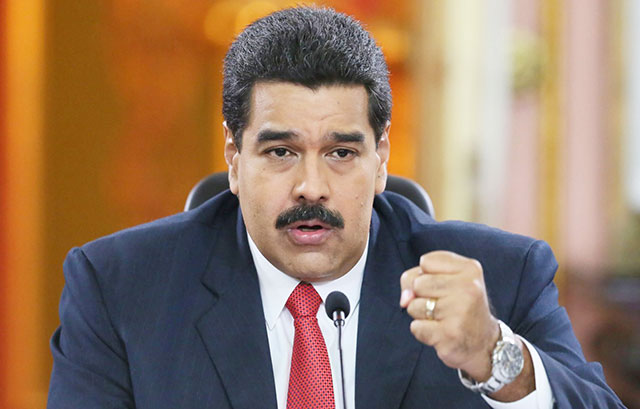
Members of the Pemon community, a tribe whose territory includes the road to Brazil, wanted to keep the border open to ensure the aid got through, despite president Nicolas Maduro commanding the military to block it.
Before dawn, the villagers had ordered military vehicles headed towards the border to turn around, citing the tribe’s constitutionally guaranteed autonomy over their territory.
But the army convoy that arrived at dawn was moving quickly, and the tribesmen were only able to stop the last of the four vehicles – a Jeep carrying four national guard officials, who told the villagers they were working on a mining project.
Believing the officers were on their way to block the aid, several villagers pulled them from the vehicle, seized their weapons and detained them, according to interviews with 15 villagers.
Some of the other soldiers, who had stopped several hundred metres ahead, got out of their vehicles with weapons in hand, and approached. Shooting broke out, and one of the soldiers fired a shot downward onto the road, according to the villagers and a cellphone video seen by Reuters that was filmed by a resident.
The remaining soldiers began firing repeatedly in the direction of the village as they ran back towards their vehicles, according to witnesses and the video.
The shooting would leave dozens of villagers wounded and three villagers dead, an unusually bloody confrontation between Venezuelan troops and indigenous people.
The incident itself was widely reported on the day it took place, but has drawn little scrutiny until Reuters examined it.
The repercussions included the arrest of 23 Pemon tribesmen, some of whom say they were beaten in custody. Pemon villagers also held more than 40 members of the military hostage, some of whom suffered severe bites after being left half-naked atop ant nests in retribution for the killings, according to interviews with Pemon tribe members.
The incidents are a stark illustration of how Venezuela’s economic and political crises have undermined the once-close relationship between impoverished indigenous communities and a socialist movement launched two decades ago by Maduro’s predecessor, president Hugo Chavez, which had promised to help them.
“We couldn’t understand the attitude of Maduro’s regime of using arms against indigenous people,” said Guillermo Rodriguez, brother of Zoraida Rodriguez, one of the people killed in Kumarakapay.
Rodriguez now lives in the Brazilian border town of Pacaraima after fleeing the violence in late February. He is one of nearly 1 000 members of the Pemon tribe who crossed into Brazil, many on foot, according to the Brazil office of the International Organisation for Migration.
They now live in wooden huts they built themselves, or camp under canvas donated by the United Nations refugee agency. The incident followed recent tensions in southern Venezuela between military officers and Pemon tribesmen involved in informal gold mining operations. The Pemon complain of extortion and shakedowns by troops.
The national guard, the information ministry – which handles media enquiries for the Venezuelan government – and the defence ministry did not respond to requests for comment on this story.
However, Maduro’s government has in the past denied mistreatment of the Pemon. It says the Pemon, who live in southern Venezuela and northern Brazil and number about 30 000 in total, have benefited from state resources and increased autonomy. – Nampa-Reuters
In an age of information overload, Sunrise is The Namibian’s morning briefing, delivered at 6h00 from Monday to Friday. It offers a curated rundown of the most important stories from the past 24 hours – occasionally with a light, witty touch. It’s an essential way to stay informed. Subscribe and join our newsletter community.

The Namibian uses AI tools to assist with improved quality, accuracy and efficiency, while maintaining editorial oversight and journalistic integrity.
Stay informed with The Namibian – your source for credible journalism. Get in-depth reporting and opinions for
only N$85 a month. Invest in journalism, invest in democracy –
Subscribe Now!