







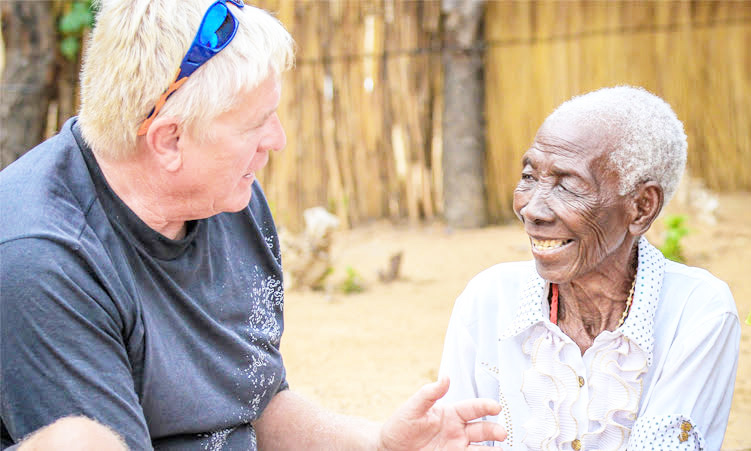
Local activist and chief executive officer of Alzheimer Dementia Namibia (ADN) Berrie Holtzhausen has voiced concerns about the delayed implementation of Pan African Parliament guidelines concerning harmful practices, witchcraft allegations and ritual attacks.
The Pan African Parliament introduced these guidelines in March, aiming to inspire African legislators to counteract such practices pervasive in many communities.
“This document offers practical solutions and calls on lawmakers to address harmful practices. Unfortunately, my attempts to approach our government have been unsuccessful,” Holtzhausen told The Namibian.
Despite these setbacks, he remains committed, citing his extensive experience witnessing rights violations linked to witchcraft beliefs in rural Namibia.
“I’ll persistently approach our leaders to champion the rights of the unheard,” he vowed.
Toni Hancox, the director of the legal Assistance Centre (LAC), encouraged him to continue his advocacy in the media and among government officials.
Muluka-Anne Miti-Drummond, a United Nations expert on human rights for persons with albinism, emphasised the need to address the root causes of harmful beliefs rooted in ignorance and misinformation.
Holtzhausen sees the guidelines as a key framework for Namibia, advocating laws that shield affected individuals’ rights and public education about the risks.
“Members of parliament and ministers must be made aware of how these guidelines relate to the human rights of various groups. Clear and specific laws must be implemented,” he insisted. “It seems, to me, that parliamentarians rather choose to keep themselves busy with unconstitutional laws to violate the rights of marginalised groups like the LGBTQI+ (lesbian, gay, bisexual, transgender, queer, intersex and other) community, who are not harming anyone or violating any person’s human rights.
They should instead implement the recommendations of this very timely document from the Pan African Parliament, which will definitely complement the human rights envisaged of the authors of our Constitution.”
Walters Kamaya from the health ministry highlighted the challenges of integrating the guidelines with traditional health systems, but hopes for eventual consensus.
Emphasising the importance of indigenous remedies, he said, “Not everything labelled as ‘witchcraft’ is harmful. Sometimes it’s about blending modern methods with our traditions.”
Justice minister Yvonne Dausab reaffirmed Namibia’s commitment to the African Union and the guidelines’ role in legal discussions on harmful practices. She referenced existing legislation, the “Witchcraft Suppression Proclamation 27 of 1933,” which condemns witchcraft-related violence.
Addressing Holtzhausen’s concerns, Dausab said the ministry was not previously aware of the guidelines, but recognised their significance. She encouraged Holtzhausen to liaise with the Office of the Speaker for clarity.
“There is no doubt that we all have a role to play in the implementation of these guidelines and that our people are protected against unwarranted attacks on their dignity because of these types of allegations,” she stressed.