



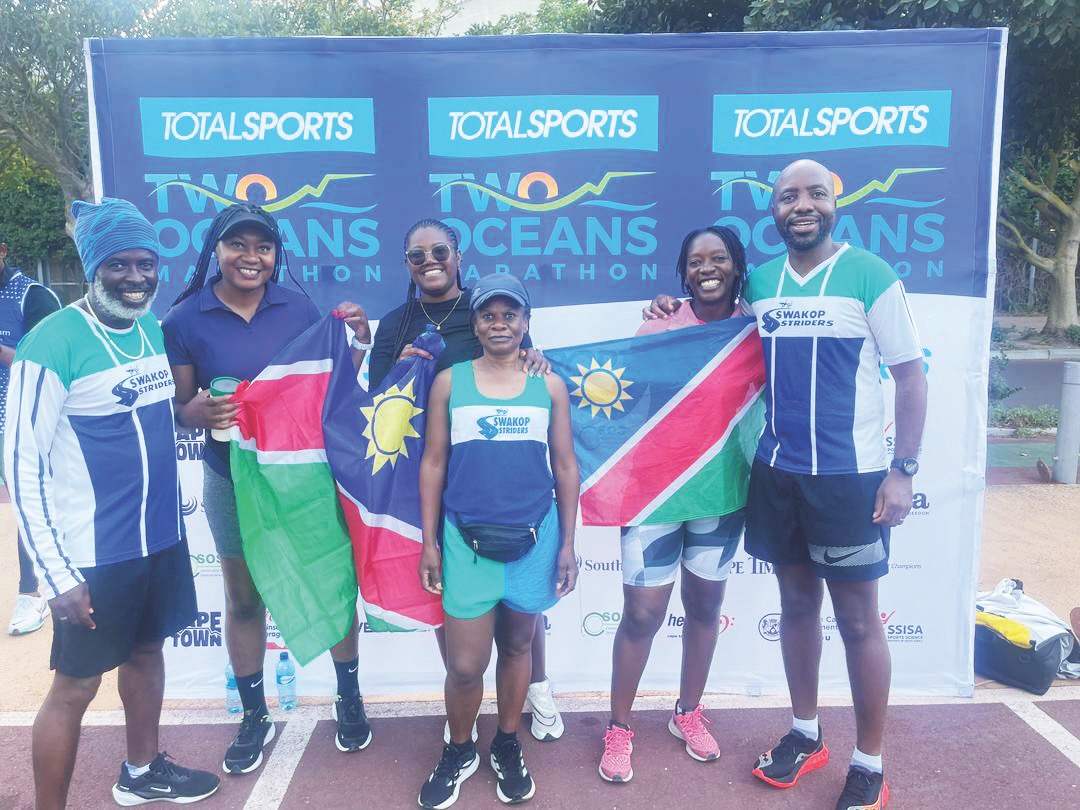
Forty-seven years is a long time to be running, but there seems to be no slowing down for Swakop Striders Athletics Club runner Sieglinde Gontes.
The stocky marathon runner, who made her first introduction to athletics while still a pupil at Okombahe-based Dibasen Secondary School in 1978, was the only black participant in the gruelling seven-day 250km Racing the Planet ultramarathon in 2009.
Born at Swakopmund and raised at Okombahe until she was six years old, Gontes went back to Swakopmund were she started her education journey at Festus Gonteb Primary School. She completed her primary school career at Vrederede Senior Primary School in 1977.
“My parents felt it was better that I should go to a boarding school, and it just had to be Dibasen because Okombahe is where our family originates from. Little did we all know that the decision they made would change my life for the better,” the long-distance runner says.
“It was in that same year when I went to Dibasen that I decided I wanted to be an athlete, something I never thought about during primary school. It was athletics season and I decided to run in the 1 500m and 3 000m races. I couldn’t believe my luck as I won both.”
Gontes became the queen of the middle distance in the region by dominating all her races, but things were not so rosy during the nationals, contested in Windhoek, and Gontes had to be content with often finishing outside a podium spot.
“Competition during the nationals was very tough. I just did not have the speed to match the other athletes in the 1 500m and 3 000m races. Moreover, I was not trained with the same top coaching methods and competition the city athletes were exposed to,” she says.
“I then joined Swakop Striders, for whom I am still running until today, and things started to change for the better for me when I switched to the longer 10 000m event. I had endurance, and the Striders’ coach, Frank Slabbert, specialised in long distances.”
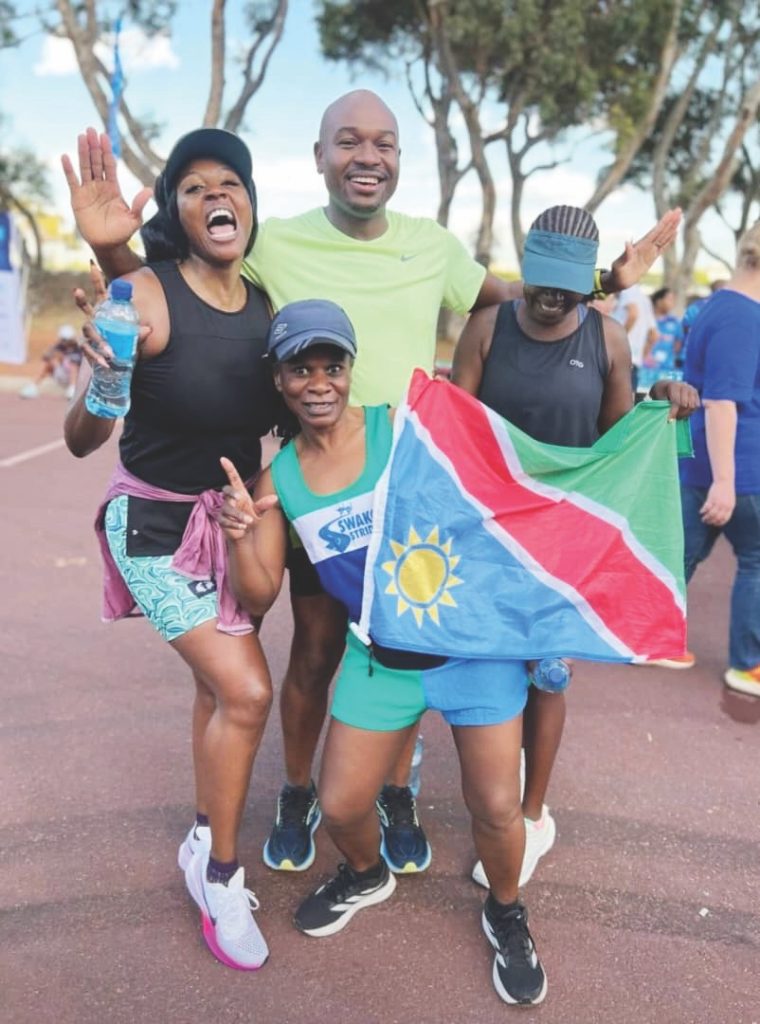
Gontes moved to Windhoek in 1994, where she still lives, and started developing a stronger bond with athletics.
“Coming to Windhoek was like a dream come true for me. It changed me as an athlete completely. It changed my mindset completely, I started to think like an athlete, trained differently, and I even became careful with what I was eating,” she says.
“I just wanted to improve myself as an athlete, to learn from the experts, take advice from my fellow athletes and improve everywhere I needed to improve. It was particularly wonderful working with a knowledgeable coach like Lucky Gawanab at the University of Namibia (Unam).”
Gontes says she was always fired up for the Rössing Marathon, “which is understandable because I am competing back home at the coast”.
“I just felt that I shouldn’t let my people down and I really represented Swakopmund with pride,” she says.
“I received the winners’ medal three or four times, because we had very good women runners back in the days. It was either I won or it will be Elizabeth Mongudji-Leino or Rauna Paulus, who have always been my very close friends in athletics throughout the years.”
The highly competitive runner was part of the Tertiary Institutions Sports Association of Namibia (Tisan) team that won the women’s 4x400m relay during the Confederation of Universities and Colleges Sports Association (Cucsa) Zone VI Student Games in Zimbabwe.
Agnes Samaria, Claudia Imbili and Mongudhi-Leino were the other members of the team.
Gontes also shone with the Tisan team in India, returning with gold medals in the 1 500m and 3 000m.
She also clinched gold in Malawi with the Tisan team in the 5 000m, while Samaria won the 800m and Mongudhi-Leino completed the hat-trick for Namibia by winning the 1 500m.
There were also other winners’ medals for Gontes in the Cucsa Games in Lusaka in Zambia, Roodepoort in Johannesburg, and Maputo in Mozambique.
Gontes, who is an ever-present competitor at the annual Two Oceans Marathon in Cape Town, is excited at the prospect of receiving a milestone double blue number.
“A runner who has completed 10 ultra or half-marathons or trial marathons, or who has claimed a gold receives a blue number, which is quite literally a badge of honour. Currently I am a one-badge holder, and God willing I will get my double blue next year.
“It is an honour two have a blue number because you receive special treatment and you get to keep your race number. You are also able to access the special blue number club hospitality area both at the registration and after crossing the finish line.”
In an age of information overload, Sunrise is The Namibian’s morning briefing, delivered at 6h00 from Monday to Friday. It offers a curated rundown of the most important stories from the past 24 hours – occasionally with a light, witty touch. It’s an essential way to stay informed. Subscribe and join our newsletter community.

The Namibian uses AI tools to assist with improved quality, accuracy and efficiency, while maintaining editorial oversight and journalistic integrity.
Stay informed with The Namibian – your source for credible journalism. Get in-depth reporting and opinions for
only N$85 a month. Invest in journalism, invest in democracy –
Subscribe Now!